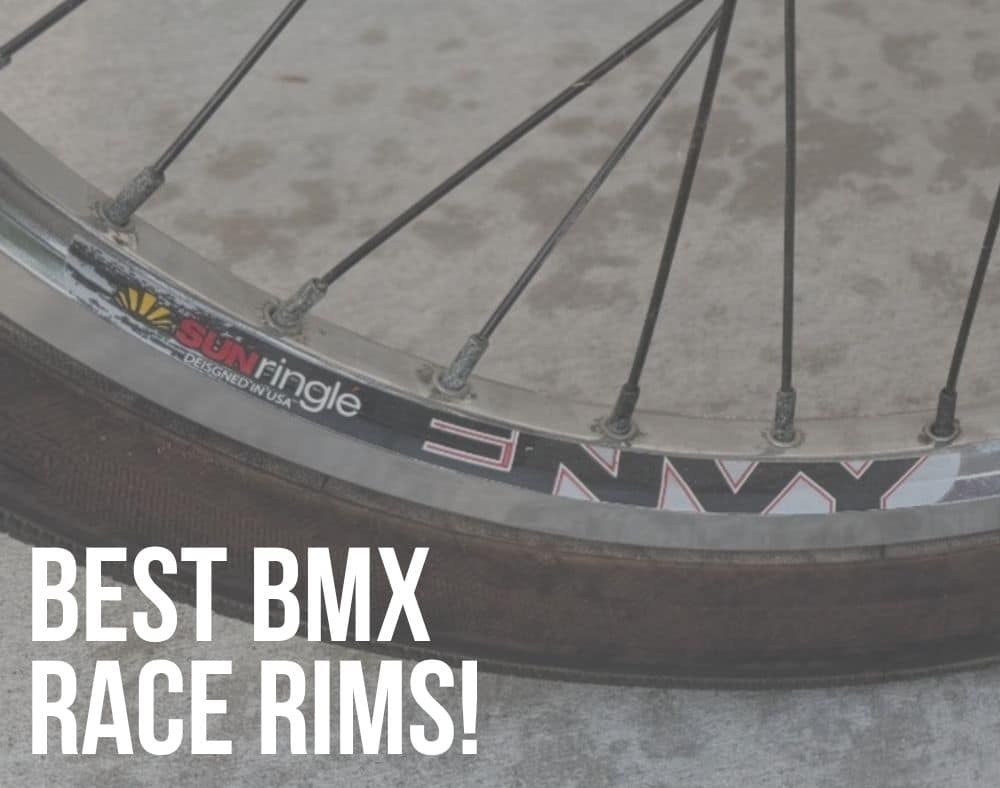

A good BMX race rim can make a bigger difference than it first seems.
You want something light enough to help you accelerate, but still strong and stiff enough to handle hard gates, rough landings (yup, crashes, too!), and full-speed laps without constant attention.
And this is where things get a little more complicated.
Some riders are better off with a proven aluminum rim. Others may want to spend more on carbon.

Then you also have to think about 28H vs 36H, front vs rear compatibility, brake setup, rim size, and tire fit.
So this is not just about picking the lightest rim and calling it a day.
For this roundup, I focused on BMX race rims that balance strength, low weight, stiffness, and real-world usability.
I also included options for different rider sizes and budgets, from lightweight Mini/Expert setups to premium carbon race builds.
Let’s get into my top picks.
This post covers:
- My Quick BMX Race Rim Picks
- Best BMX Race Rims Compared
- What Makes A Good BMX Race Rim?
- Aluminum Vs Carbon BMX Race Rims
- Front Vs Rear BMX Race Rims
- Common BMX Race Rim Buying Mistakes
- Conclusion: Which BMX Race Rim Should You Get?
- FAQs About BMX Race Rims
Note: If you would rather skip the whole hub, rim, spoke, and wheel-building process, check out my guide to the best BMX race wheelsets instead.
My Quick BMX Race Rim Picks
- Best Overall Rim: Odyssey A-Track Race Rim
- Best Premium Carbon Rim: Answer Pro Carbon BMX Rim
- Best Lightweight Aluminum Rim Option: Box One Focus Rim
- Best Rim For Mini/Expert Riders: Answer Pinnacle Mini Universal Rim
- Best Rim For Smaller Racers: Answer Alumilite Mini Rear Rim
- Best Proven Race Rim Option: Sun Ringle Envy BMX Race Rim
Best BMX Race Rims Compared
1. Odyssey A-Track Race Rim (Best Overall)
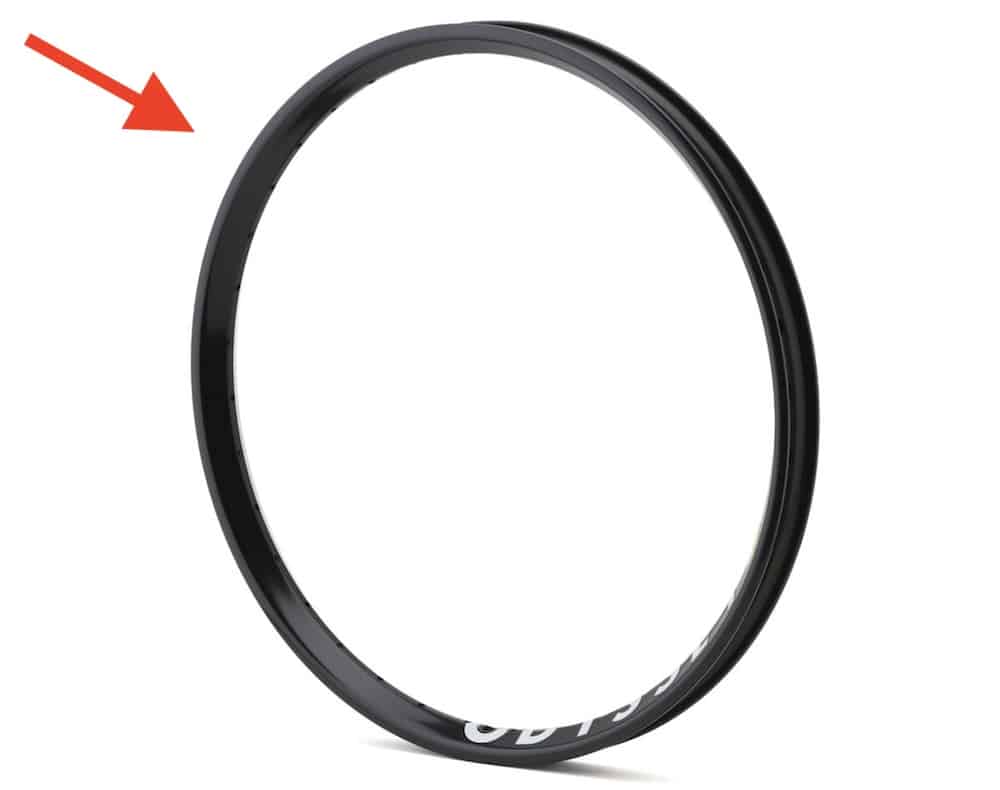
The Odyssey A-Track is exactly the kind of rim I like seeing in a BMX race roundup because it does not chase low weight at the expense of everything else.
Odyssey uses 6069-T6 aluminum with an ultralight cross-section, hollow bead hooks, reinforced spoke nipple seats, and a fully welded joint.
In other words, this is a proper race rim, not a freestyle rim that happens to be light.
At 12.9 oz, it is impressively light for a 36H aluminum rim.
That should help keep rotational weight down, which is exactly where you want to save grams on a race bike.
The 34mm width also gives it a modern, supportive profile without going overboard.
I also like that Odyssey didn’t get silly with the design.

No weird gimmicks. No flashy “space-age” nonsense.
Just a light, welded, race-focused alu rim from a brand that knows BMX inside and out.
The main downside is price. At around $119.99, it is not cheap for an aluminum rim.
But if you want a strong, light 20″ race rim without stepping up to carbon, this is probably the one I would look at first.
Odyssey A-Track Race rim specs:
- Width: 34 mm
- Joint: Welded
- Spoke holes: 36H
- Brake compatibility: Disc only
- Weight: 12.9 oz (365.7 g)
- Price: $129.99
2. Answer Pro Carbon Rear + Front Rim (Best Carbon)
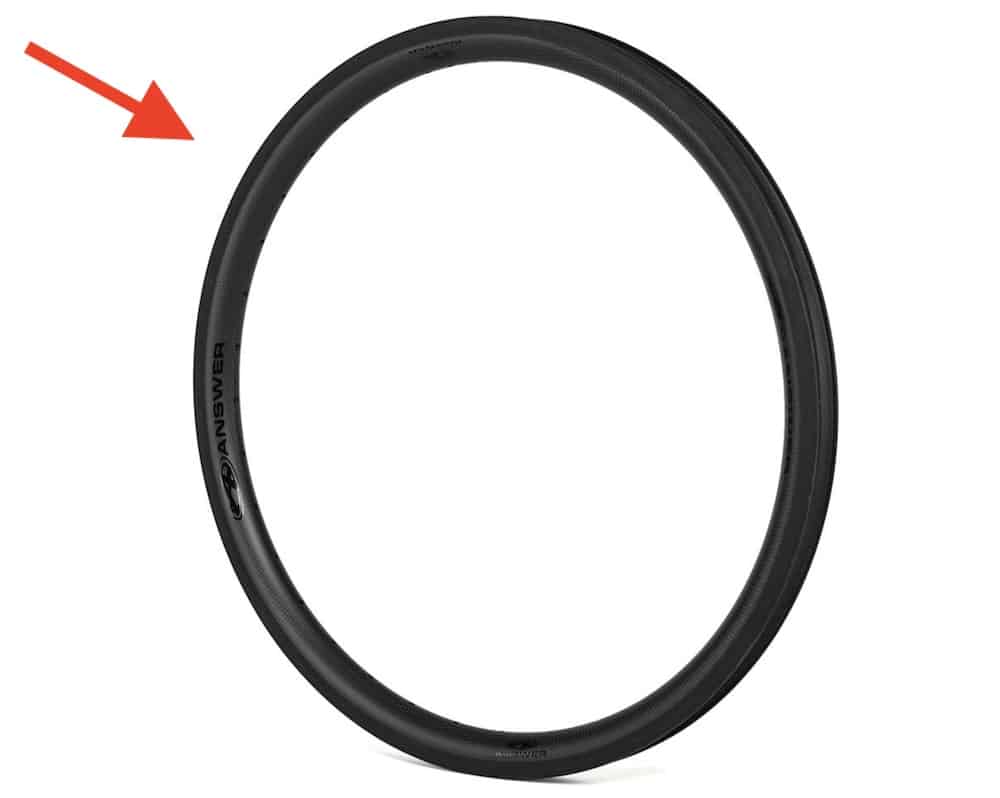
If you are building a high-end race wheel and want to cut weight where it really matters, the Answer Pro Carbon is the obvious premium pick here.
Answer uses a 3K matte black carbon weave, and the Pro rims come in separate front and rear versions.
The rear rims get an added braking surface, while the front rim can also work on the rear if you are running a disc brake.
That little detail is worth knowing before you order.
The Pro rims are also properly race-focused.
The 20″ Pro front rim is 30 mm wide, 36H, Presta drilled, and weighs just 10.6 oz (300 g). It is also tubeless ready.
The 20″ Pro rear uses the same 30mm width and 36H drilling, but weighs 11.0 oz and uses a 406 mm bead diameter.
That is seriously light for a race rim.
And yes, you are paying for it.
But this is not the kind of rim I would recommend just because carbon sounds cool.
It makes the most sense for racers already building around lightweight race parts and willing to spend more for lower rotational weight and extra stiffness.
Note: These are also available for 24″ wheels.
Answer Pro Carbon rim specs:
- Width: 30 mm
- Joint: One-piece molding
- Spoke holes: 36H
- Brake compatibility: Disc only (rear version), Rim brake (front version)
- Weight: 11.0 oz (311.9 g) rear, 10.6 oz (300.5 g) front
- Price: $350.00
3. Box One Focus Rim (Best Light Alu)
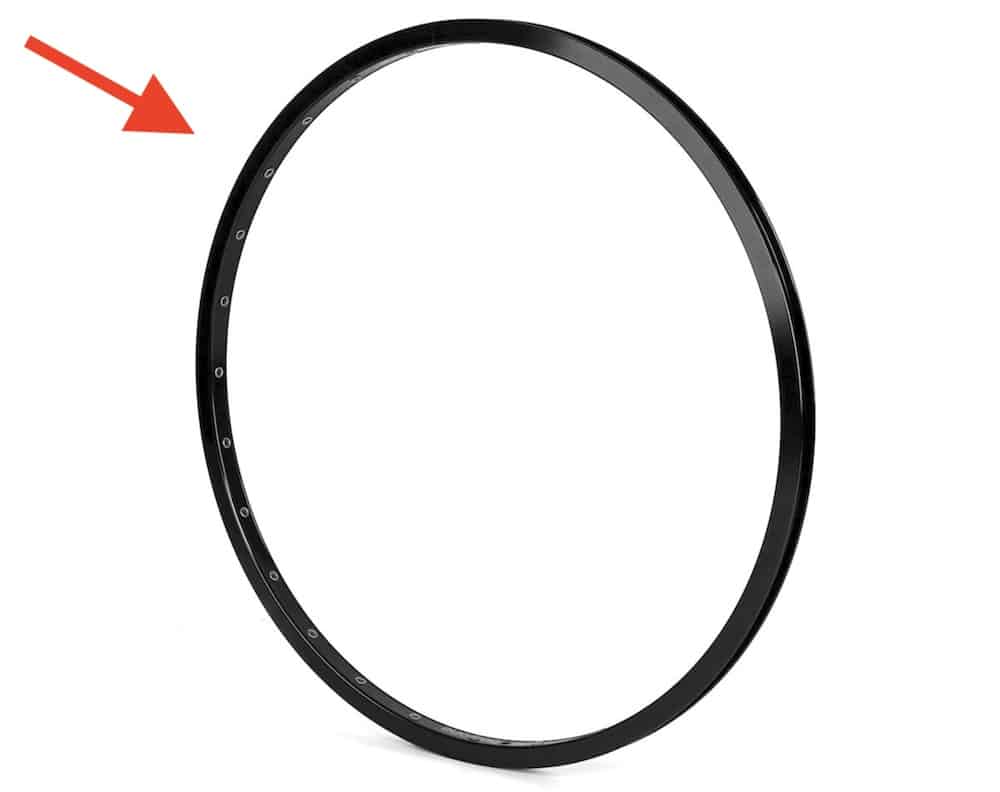
The Box One Focus is a nice pick if you want to keep weight low without jumping straight into carbon.
Box uses a low-profile, double-wall aluminum design with eyelets around the spoke holes.
Why?
That helps support higher spoke tension and reduces the chance of spoke pull-through.
There are a few versions, so this one is worth noting before ordering.
The 20 x 1-1/8″, 28H rear rim is the lighter Mini/Expert-style option. Box lists the rear at 9.9 oz, with an 18mm external width, and it uses a Presta valve.
Then you have the wider 20 x 1.75″, 36H rear rim, which is the better fit for a Pro-style build. That one measures 28mm external / 22.5mm internal and weighs 12.8 oz).
The rear versions get a machined brake track, while Box also makes matching front Focus rims without a brake track for extra weight savings.
I also like the simplicity.
No crazy shapes. No “look at me, I’m aerospace” nonsense.
Just a light alloy rim, eyelets, a pinned seam, and a proper race-focused profile.
Box One Focus rim specs:
- Width: 28 mm
- Joint: Pinned
- Spoke holes: 36H
- Brake compatibility: Rim brake
- Weight: 12.8 oz (362.9 g)
- Price: $59.99
4. Answer Pinnacle Mini Universal Rim (Best Mini/Expert)
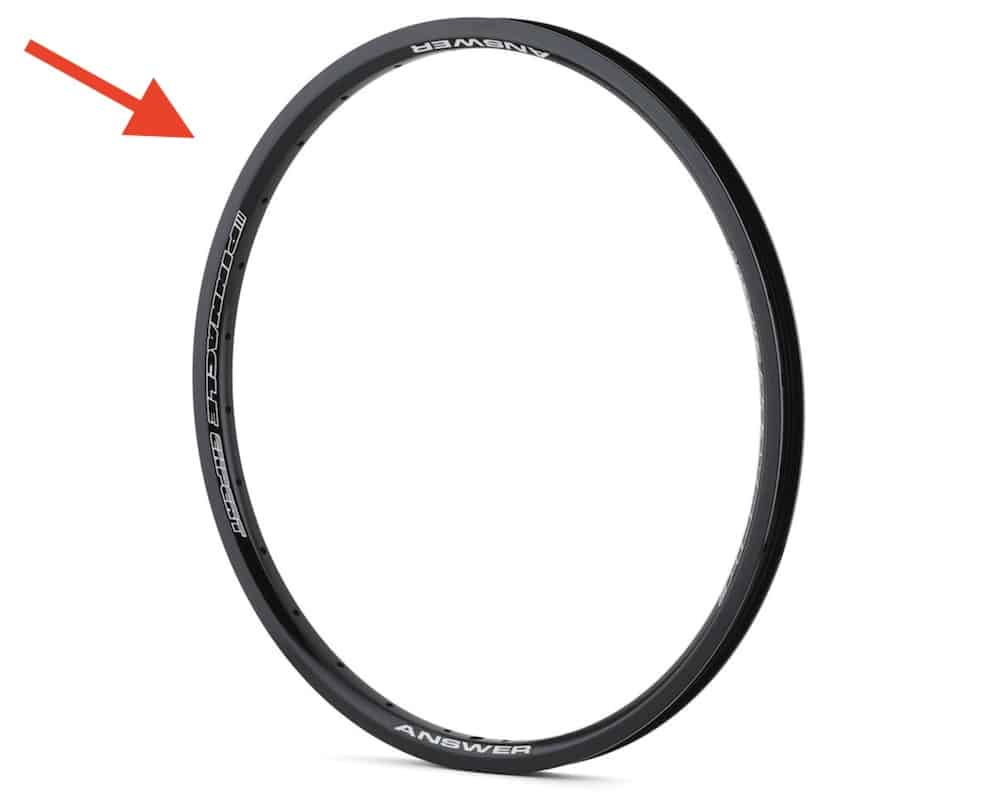
Answer’s Pinnacle Mini Universal is one of the better picks here for smaller racers who need a properly light 28H setup.
And yes, this is where BMX race rim sizing gets a little confusing.
Answer offers the Pinnacle Mini in both a 20 x 1-1/8″ Mini version and a 20 x 1.50″ Expert version. Same family, but they are not the same rim size, so check your tire and wheel standard before ordering.
The 20 x 1-1/8″ Mini rim uses a 451 mm bead diameter, 28 holes, and a sleeved seam. Answer lists it at just 10 oz, which is very light for a race rim.
Then there is the 20 x 1.50″ Expert Universal version with a 406 mm bead diameter, 28H drilling, and the same claimed 10 oz weight.
That is what I like most about this rim family.
It gives smaller riders a lightweight setup without forcing them into a super-expensive carbon build.
The 28H drilling also fits the purpose perfectly. You save weight while still getting a proper race rim built for Mini/Expert use, rather than trying to adapt a heavier Pro rim.
The button below links to the 1.5″ version, but click here if you want to check the narrower 1-1/8″ Mini setup directly.
No need to turn a simple rim purchase into a geometry exam.
Answer Pinnacle Mini Universal rim specs:
- Width: 19 mm
- Joint: Sleeved
- Spoke holes: 28H
- Brake compatibility: Rim brake
- Weight: 10.0 oz (283.5 g)
- Price: $64.99
5. Answer Alumilite Mini Rear + Front Rim (Best For Smaller Racers)
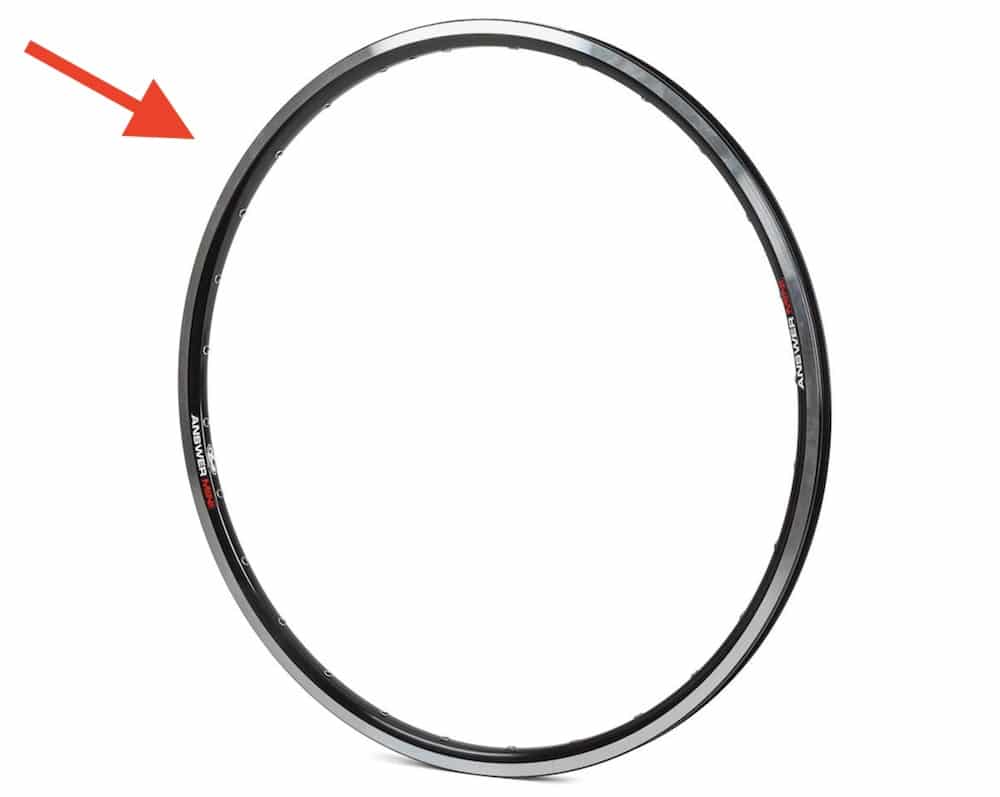
Small riders do not need a heavy-duty Pro rim hanging off the back wheel.
And that is exactly where the Answer Alumilite Mini fits in.
It is built around a lighter race setup, with 28H drilling, a narrow profile, and a simple aluminum construction.
Answer uses a double-wall design, single hollow chamber, eyeleted spoke holes, and a pinned seam.
Nothing exotic here, but that is kind of the point.
The 24″ rear rim comes in at just 11.1 oz, which is very light for a rear race rim.
The rear also gets machined sidewalls for braking, while the matching front Alumilite Mini rim uses color-matched sidewalls and weighs 11.9 oz.
This rim aims at smaller racers who want a light, proper race wheel without spending a ton.
Answer Alumilite Mini Rear rim specs:
- Width: 18.7 mm
- Joint: Pinned
- Spoke holes: 28H
- Brake compatibility: Rim Brake
- Weight: 10 oz / 283.5 g (20″), 11.1 oz / 314.7 g (24″)
- Price: $64.99
6. Sun Ringle Envy Rear + Front Rim (Best Proven Solution)
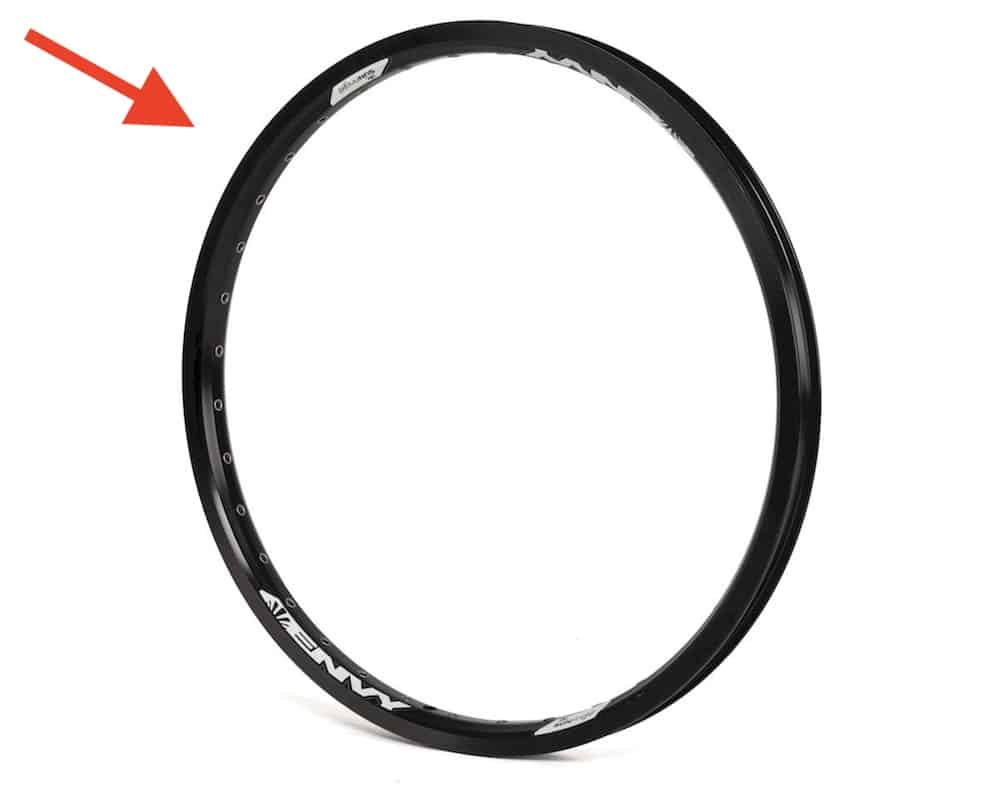
The Sun Ringle Envy has been around BMX racing for a long time, and for good reason it still shows up on serious race builds.
This one is not chasing some wild ultralight number.
Instead, Sun Ringle focuses on a stiff, durable double-wall aluminum design, with eyeleted spoke holes, a welded seam, and 36H drilling.
That is a very sensible recipe for riders who want something proven and dependable.
Another thing I like is that the front and rear rims are actually different.
The front uses a narrower profile at 27 mm external / 19mm internal, while the rear is slightly wider at 28 mm external / 22 mm internal.
Sun Ringle says that split is designed around grip up front and speed out back.
Weight is still reasonable, too.
The 20″ front comes in at 13.9 oz, while the matching 20″ rear is 14.3 oz. Move up to 24″, and you are looking at 17.4 oz front / 17.7 oz rear.
No mystery there.
If you want matching race rims front and rear, Sun Ringle already did the homework for you.
Sun Ringle Envy rim specs:
- Width: 28 mm
- Joint: Welded
- Spoke holes: 36H
- Brake compatibility: Rim brake
- Weight: 13.9 oz (394.1 g) – front 20″
- Price: $59.99 (rear), $57.99 (front)
What Makes A Good BMX Race Rim?
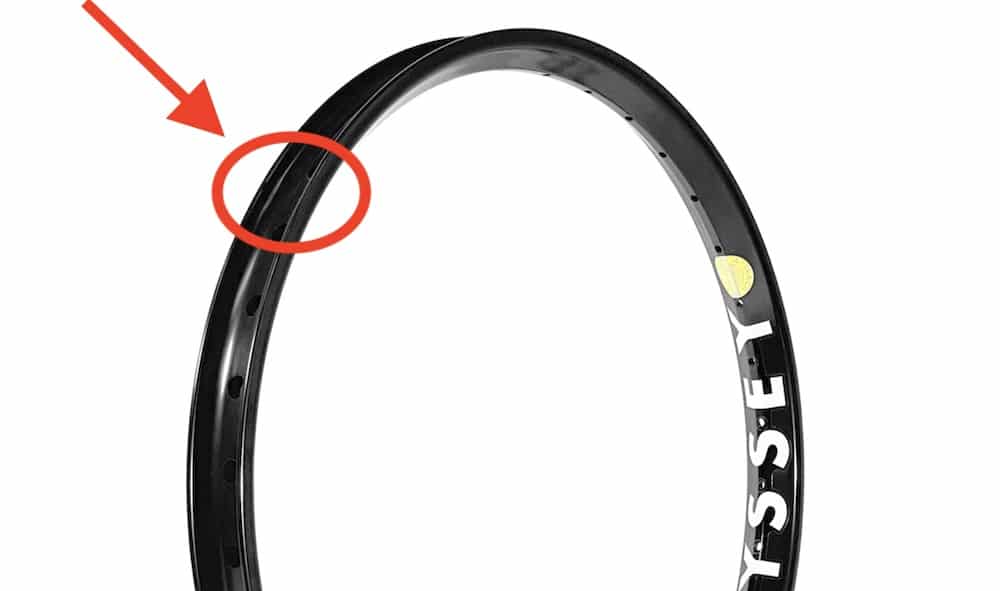
A good BMX race rim needs to do two things really well:
Stay light and stay strong.
Sounds simple, but that balance matters a lot in racing.
Here is what I would look at:
- Low weight: Rotational weight matters, especially when you are accelerating hard out of the gate.
- Good stiffness: A stiff rim helps keep the wheel tracking clean under power and through corners.
- Strong construction: Welded or well-built pinned joints, reinforced spoke areas, and quality aluminum or carbon all matter.
- Correct width: Rim width needs to match the tire properly, not just look good on paper.
- Right spoke count: 28H is common on lighter Mini/Expert builds, while 36H is more typical on larger Pro setups. (If you’re building new wheels, check out my guides to the best BMX race front hubs and best BMX race rear hubs.)
- Brake compatibility: This is easy to overlook. Some rims are front-only, some use machined sidewalls, and some only work on the rear with disc brakes.
- Correct size: 406, 451, 507, OS20, Mini, Expert, Cruiser… BMX race sizing can get confusing fast. Always check the actual bead seat diameter.
- Good spoke support: Eyelets or reinforced spoke beds can help with spoke tension and long-term durability.
- Tubeless compatibility: Nice to have if that is how you want to run your setup, but definitely not a must for everyone.
- Reasonable price: Carbon is cool, but a great aluminum rim can still be the smarter buy for many racers.
Aluminum Vs Carbon BMX Race Rims
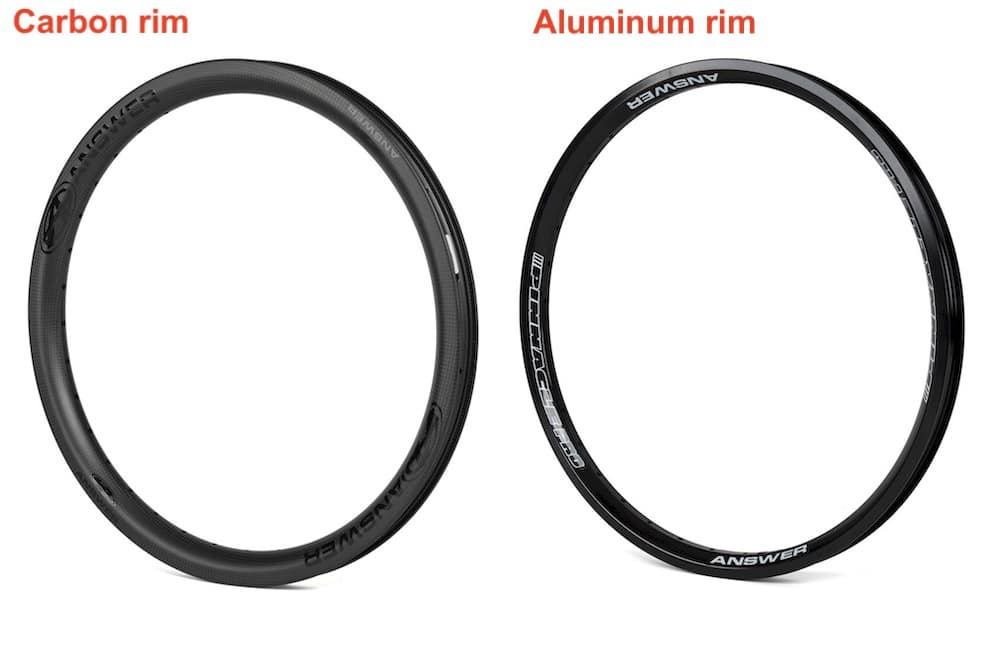
This is one of the biggest choices when building a race wheelset.
And no, carbon is not automatically the better option.
Aluminum rims are still incredibly common in BMX racing because they can be light, stiff, durable, and much easier on the wallet.
They are also simpler to replace if you damage one.
For a lot of riders, especially beginners and intermediate racers, a good aluminum rim is all you really need.
Carbon rims take things further.
They can save rotational weight, add stiffness, and help build a really light race wheelset.
That is why you see them on higher-end setups.
But they also cost a lot more.
And that extra money only makes sense if you are already building around lightweight race parts and want to squeeze out every bit of performance.
Here is the simple breakdown:
- Aluminum: cheaper, proven, easy to replace, still very light
- Carbon: lighter, stiffer, more expensive, more race-focused
- Aluminum is better for: beginners, budget-conscious racers, everyday race builds
- Carbon is better for: serious racers, premium builds, riders chasing lower rotational weight
One thing I would not do is buy carbon just because it looks faster and more premium.
A well-built aluminum wheel can still be an excellent race setup.
For most riders, I would spend the money where it matters most first.
But if the rest of your bike is already dialed and you want to cut more weight from the wheels, carbon becomes much more interesting.
Front Vs Rear BMX Race Rims
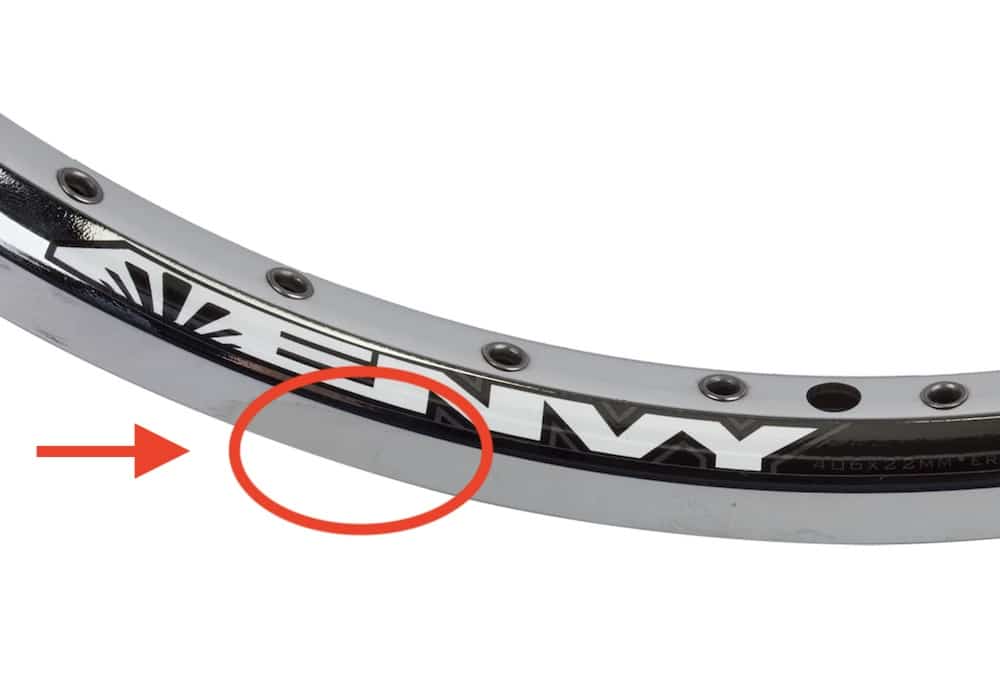
Front and rear BMX race rims can look almost identical, but they are not always interchangeable.
The biggest reason is braking.
A rear rim often needs a proper braking surface because many BMX race bikes use a rear rim brake.
That is why you will see features like machined sidewalls on many rear-specific rims.
The front rim does not need that braking surface on a brakeless front setup, so manufacturers can sometimes save a little weight there.
That is also why some front rims are lighter than the matching rear.
Here are the things to watch:
- Brake surface: Rear rims may have machined sidewalls for rim brakes.
- Weight: Front rims can be slightly lighter because they do not need the same brake track.
- Width: Some brands use slightly different front and rear widths.
- Disc compatibility: Some front rims can also work on the rear if you are running a disc brake.
- Spoke count: Front and rear may use the same drilling, but not always.
- Don’t assume they are interchangeable: Always check what the manufacturer recommends.
The Answer Pro Carbon is a good example.
Answer makes separate front and rear carbon rims, and the rear version gets the braking surface needed for rim-brake use. The front can also work on the rear with a disc setup.
Moreover, the Sun Ringle Envy takes another approach and uses a slightly different width front to rear.
So before buying, do not just match the color and hole count and call it a day.
Check whether the rim is meant for the front, rear, or both, and make sure it works with your brake setup.
Common BMX Race Rim Buying Mistakes
- Buying the wrong rim size: A 20″ rim is not always just a 20″ rim. Check the actual bead seat diameter and tire standard before ordering.
- Ignoring spoke count: A 28H rim needs a 28H hub. Same with 36H. Pretty basic, but still easy to miss.
- Mixing up front and rear rims: Some rear rims have machined braking surfaces, while front rims may not. Do not assume they are interchangeable.
- Forgetting about brake compatibility: Rim-brake and disc-brake setups can change which rim actually works for your build.
- Chasing the lightest rim possible: Low weight is great, but not if the rim is too light for the rider or needs constant attention.
- Assuming carbon is always better: Carbon can be lighter and stiffer, but a good aluminum rim can still be the smarter choice for plenty of racers.
- Ignoring tire width: Rim width and tire width need to work together. A badly matched setup can hurt support and handling. (If you are still choosing rubber, my BMX race tire guide covers the race-specific tire sizes, weights, and tread options I would look at.)
- Buying based on looks first: Color is nice. Compatibility is nicer.
- Forgetting rider size and power: Smaller riders can often get away with lighter setups, while bigger, stronger riders may want more support and stiffness.
- Not checking exact product variants: Some rim families come in different widths, hole counts, valve types, and front/rear versions. Always check the exact one before clicking buy.
Conclusion: Which BMX Race Rim Should You Get?
The best BMX race rim depends on your rider size, wheel size, brake setup, spoke count, and budget.
No single rim is perfect for every build.
If you want a light, race-focused aluminum option, the Odyssey A-Track is one of the strongest all-around picks here.
If you are building a premium setup and want to cut rotational weight, the Answer Pro Carbon is the obvious step up.
For smaller riders, the Answer Pinnacle Mini Universal and Answer Alumilite Mini give you lightweight options without forcing you into an expensive carbon build.
The Box One Focus is another very solid choice if you want a light alloy rim with race-specific sizing options.
And if you prefer something proven and straightforward, the Sun Ringle Envy is still easy to recommend.
For me, the main rule is simple:
Do not buy the lightest rim first. Buy the right rim first.
Sort out the size, spoke count, brake compatibility, and front/rear use.
Then compare weight, material, and price.
That is how you end up with a race wheel that’s fast, strong, and worth the money.
FAQs About BMX Race Rims
What is the best BMX race rim?
The best BMX race rim depends on your wheel size, rider size, spoke count, brake setup, and budget.
For a strong all-around aluminum option, the Odyssey A-Track is hard to ignore. If you want premium carbon, the Answer Pro Carbon is the higher-end choice.
Are carbon BMX race rims worth it?
They can be, especially if you are building a lightweight race bike and want lower rotational weight and more stiffness.
Are aluminum rims good for BMX racing?
Yes. Modern aluminum race rims can be light, stiff, strong, and much cheaper to replace than carbon.
Is 28H or 36H better for BMX racing?
Neither is automatically better. 28H is common on lighter Mini and Expert builds, while 36H is more common on larger Pro setups.
What size rim does a BMX race bike use?
That depends on the rider class and bike.
You will see several standards in BMX racing, including 406, 451, 507, OS20, Mini, Expert, and Cruiser sizes. Always check the actual bead seat diameter instead of relying on the “20-inch” or “24-inch” label alone.
What is the difference between 406 and 451 BMX race rims?
Both can be called 20-inch rims, but they are not the same size.
A 406mm rim uses a smaller bead seat diameter than a 451mm rim, so the tires are not interchangeable.
This is one of the easiest race-rim mistakes to make.
Can I use a front BMX race rim on the rear?
Sometimes, but not always.
Some front rims don’t have a braking surface, while others can work on the rear with a disc brake.
Can I use tubeless tires on BMX race rims?
Only if the rim and tire are both compatible with tubeless use.
Do lighter rims make a BMX race bike faster?
They can help. Reducing rotational weight can improve how quickly the bike accelerates, which matters in BMX racing.
What rim width is best for BMX racing?
There is no single best width. It depends on the tire size, rider class, and rim standard.
The key is to match the rim width to the tire you plan to run.
How often should BMX race rims be replaced?
There is no fixed schedule.
Replace a rim if it develops cracks, major flat spots, badly worn brake tracks, repeated spoke issues, or damage that prevents the wheel from staying true.