
I think more BMX riders should start a YouTube channel.
Not because everyone needs to become a creator. And definitely not because every session needs to look polished, technical, or impressive.
I started my YouTube channel for a few reasons: to document my riding, push my progression, support The BMX Dude, and show that you really don’t need to be some insanely skilled rider to put yourself out there.
That last part matters a lot to me.
I think one of the biggest things holding riders back is the idea that what they’re filming isn’t “good enough.”
Maybe the trick isn’t hard enough. Maybe the riding isn’t clean enough. Maybe the spot isn’t interesting enough.
But I honestly think that mindset misses the point.
If you love BMX, that’s already enough reason to film it.
You get better over time anyway. And when you document the whole process, you end up with something even better than a polished highlight reel — you get to actually see your progression happen.
That’s been a big part of it for me.
If I’m filming a trick, I’m much more likely to keep pushing until I land it. I rarely give up unless something gets in the way, like ridiculous heat, a crash, or simply knowing it’s smarter to stop for the day.
Having the camera there adds just enough accountability to make me take progression more seriously.
And at the same time, I think more regular riders sharing their sessions could be genuinely good for BMX.
Not everyone needs to see the craziest riding in the world all the time.
Sometimes seeing someone at your own level, struggling with the same tricks and slowly getting better, is WAY MORE motivating.
That’s really what this article is about.
Why I think more BMX riders should start filming, why your skill level doesn’t matter nearly as much as you think, and why having a YouTube channel can make BMX even more fun.
This post covers:
- I’d Love To See More BMX Riders Start A YouTube Channel
- You Don’t Need To Be A Great BMX Rider
- Documenting Regular Riders Could Help BMX Grow
- A YouTube Channel Can Push Your BMX Progression
- You’ll Build An Archive Of Your Riding
- You Don’t Need Expensive Camera Gear
- What Should You Film?
- Don’t Let YouTube Add Pressure
- So, Should You Start A BMX YouTube Channel?
I’d Love To See More BMX Riders Start A YouTube Channel

I’d genuinely love to see more BMX riders start YouTube channels.
Not just the really advanced riders.
Not just sponsored riders.
Not just people who can make every clip look perfect.
I mean regular riders, too. Like you and me.
- The rider learning manuals.
- The rider trying to get cleaner 180s.
- The rider who just built a new bike.
- The rider who found a cool local spot.
- The rider who only gets one proper session in during the week.
That stuff matters too. In fact, that matters even more!
For me, BMX has always been much more interesting when you can see the actual process behind the riding. Even with pro riders. And that’s why I really like Dakota Roche’s “Let’s Lurk” videos.
Not only the final polished clip, but the attempts, the little wins, the ugly landings, the progression, and the sessions that don’t go exactly as planned.
Hey, that’s what BMX really is all about. It’s the process.
That’s also why I started my own channel.
Sure, it supports THE BMX DUDE and gives me another way to share what I’m doing. But I also wanted to show that you don’t need to be some crazy-level rider to put videos out there.
You can just ride, film, share, and improve over time.
And I think BMX as a whole would benefit from having more of that.
The more riders we see sharing their own version of BMX, the more relatable the sport becomes.
Someone watching might think, “Okay, that actually looks doable,” instead of only seeing pro-level riding that feels miles away from where they are.
At the end of the day, I think BMX content should be about sharing the love for riding.
If you enjoy BMX, that’s already enough of a reason to start documenting it.
You Don’t Need To Be A Great BMX Rider
From what I’m seeing, one of the biggest reasons riders never start filming is simple: they think their riding isn’t good enough yet.
And that’s the wrong way to look at it.
You don’t need huge tricks, perfect style, or years of experience to make BMX videos worth watching.
A rider learning their first proper bunny hop can be just as interesting as someone working on a much harder trick.
Because the interesting part isn’t always the trick itself.
It’s the progression.
Maybe your 180s are sketchy today. Six months from now, they might be clean. Maybe you can only manual a few meters. A year later, you might be holding them across the entire parking lot.
If you wait until you’re “good enough” to start filming, you miss documenting the most interesting part.
I also think EGO gets in the way here.
It’s easy to look at other BMX channels and think, Why would anyone watch me when that rider is so much better?
But your channel doesn’t need to compete with theirs. In fact, it shouldn’t compete with any.
We are all unique, so show that uniqueness, and suddenly there’s no competition.
You’re documenting your BMX journey.
And there’s always somebody at a similar level to you who will enjoy watching it.
A beginner could actually relate much more to another beginner learning a 180 than to a professional rider doing tricks they can’t even imagine trying yet.
That can make BMX more approachable too.
So film the basic stuff. Keep it simple.
Film your first bunny hop. Your first manual. Your first 180. Your first grind. Film the trick you’ve landed hundreds of times if you simply enjoy doing it.
Everything counts.
And the cool thing is that if you keep riding, you’re going to get better anyway.
Note: You can even build videos around simple tricks — here are 14 beginner BMX tricks worth learning and documenting.
Documenting Regular Riders Could Help BMX Grow
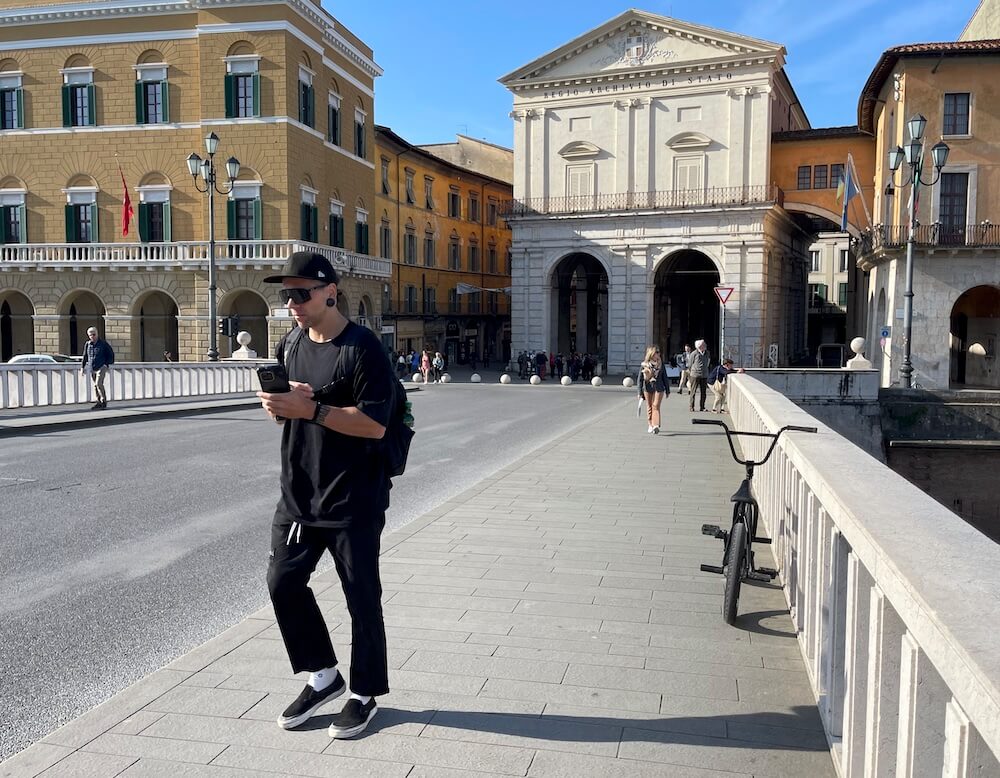
BMX would benefit from showing more regular riders.
A lot of BMX content naturally focuses on the best riders in the world, and that’s awesome. Watching someone send huge gaps, ridiculous rails, or technical combos can be insanely motivating.
But it can also make BMX look intimidating to someone who’s just getting started.
That’s where regular riders MATTER.
When beginners see someone learning the same tricks they’re working on, riding similar spots, crashing, retrying, and slowly improving, BMX suddenly looks much more approachable.
They can actually picture themselves doing it.
And I think that matters if we want more people to get into the sport.
You don’t need to represent BMX at some elite level to contribute to it.
Just sharing your sessions, progression, local spots, bike builds, and the stuff you genuinely enjoy can expose more people to BMX in a way that FEELS real.
It also shows how broad BMX actually is.
Not everyone wants to ride huge street rails or compete. Some riders just love cruising, manuals, flatland, trails, park sessions, learning basic tricks, building bikes, or riding with friends.
The more we document that, the more sides of BMX people get to see.
And maybe someone watching thinks:
That actually looks fun. I could try that.
BMX needs more of the simple stuff.
And if you’re still new to BMX, my complete beginner’s guide to starting BMX can help with the basics.
A YouTube Channel Can Push Your BMX Progression
This is probably the biggest benefit I’ve noticed personally.
When I’m filming a trick for a video, I’m much more likely to keep working on it until I land it.
Without the camera, it’s easier to say, “I’ll get it next time.”
But once I’ve decided that this trick or session is going into a video, I usually keep pushing.
That doesn’t mean forcing it when things are going badly. Everyone should learn their limits and stop at the right moment. There’s no point in injuring yourself for the video – at least not in the beginning.
Most of the time, filming gives me just enough extra motivation to stick with it.
And that can make a real difference over time.
You start setting little GOALS for yourself.
Land the trick cleaner. Hold the manual longer. Try the line again. Get one more clip before going home.
Those small pushes add up.
A YouTube channel can also make your progression more intentional.
Instead of just riding whatever comes to mind, you might decide:
- Today I’m finally getting that 180 cleaner
- This week I’m working on nose manuals
- I want to land this line before the next upload
- I’m going back to that spot to finish what I started
That gives your sessions a bit more direction without turning BMX into a chore.
At least, that’s how it works for me.
The camera doesn’t magically make you better.
But it can give you another reason to keep trying, keep refining, and keep progressing.
Note: Filming yourself can also help you spot mistakes and improve faster — I actually recommend it in my BMX beginner tips.
You’ll Build An Archive Of Your Riding
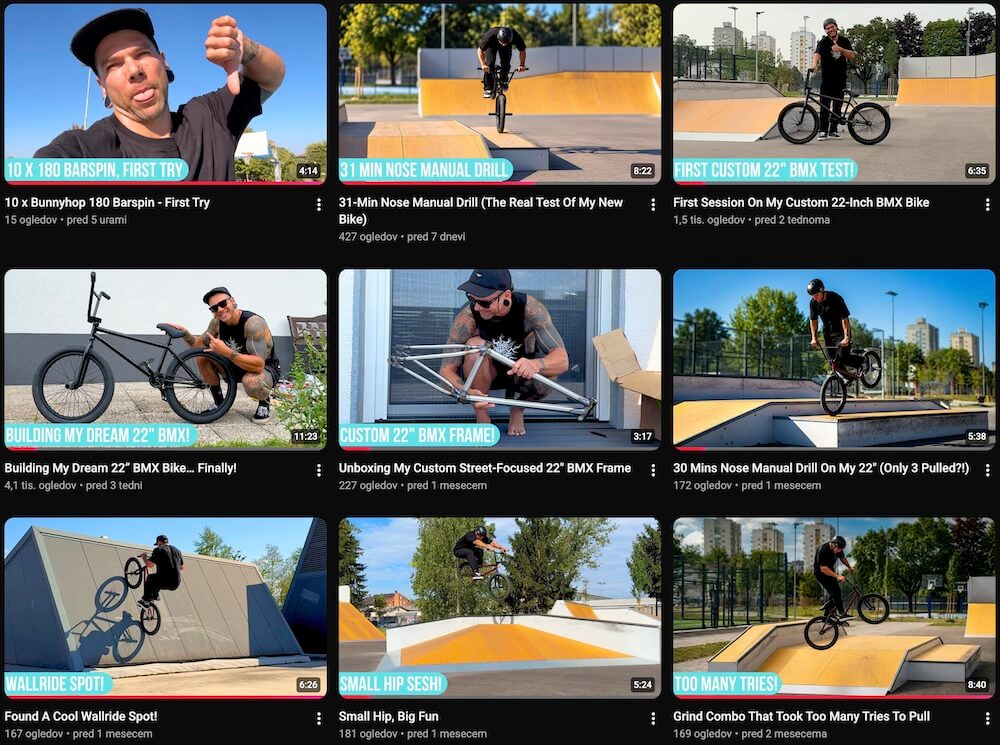
This is one of those benefits that becomes more valuable the longer you keep doing it.
Every video you upload becomes part of your BMX history.
You’ll be able to look back at old sessions, old bikes, old spots, tricks you were learning, tricks you eventually landed, and riding that might otherwise just disappear from memory.
And over time, that archive becomes PRETTY SPECIAL.
You might notice things you completely forgot about.
- How sketchy a trick used to be.
- How different your bike setup was.
- How much your style changed.
- How much faster, smoother, or more confident you became.
Sometimes progression is hard to notice while it’s happening.
But when you compare a video from three years ago with one from today, the difference can be MASSIVE.
That’s something I really like about documenting BMX.
Even if a video never gets many views, it still has value.
It’s yours.
It captures that period of your riding life exactly as it was.
And because BMX changes so much over time, that matters.
Spots disappear. Bikes get rebuilt. Friends move away. Tricks come and go. Your riding changes.
Having all that documented gives you something to come back to years later.
Trust me, it’ll bring a big smile to your face watching your old videos.
You Don’t Need Expensive Camera Gear
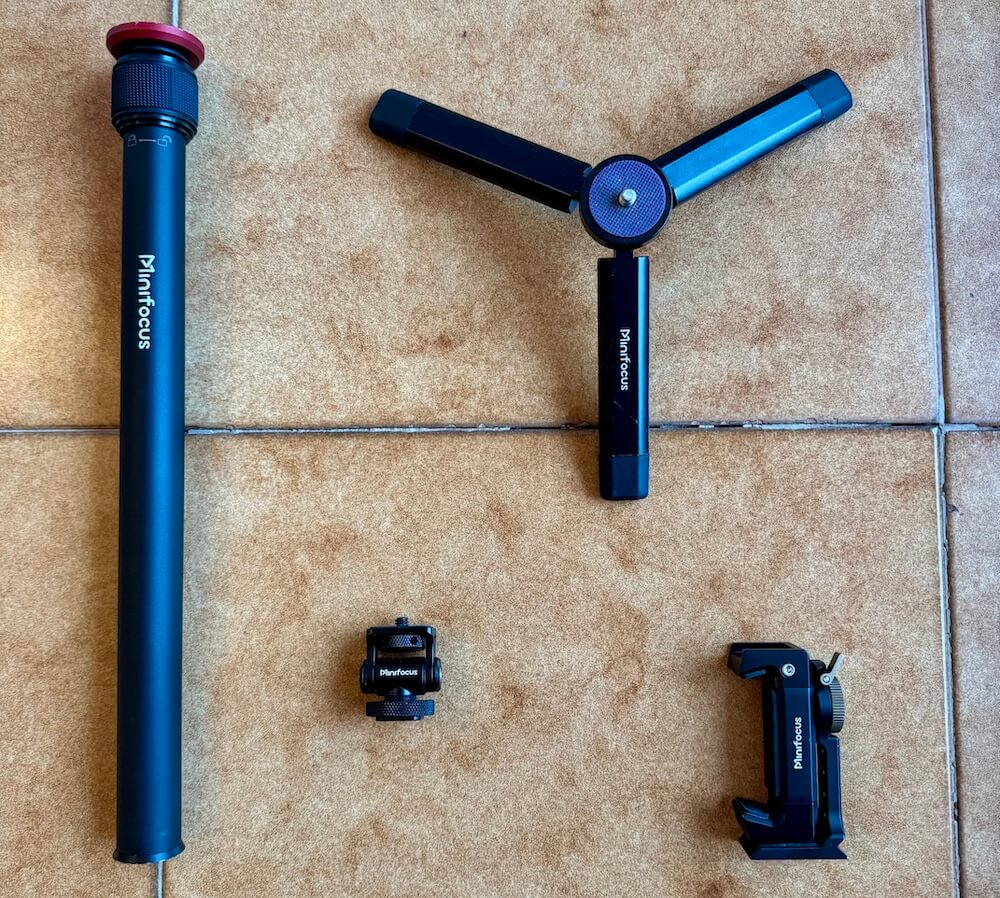
You really don’t need much to start a BMX YouTube channel.
A phone is enough.
That’s especially true in the beginning, because the most important thing is getting used to filming, talking to the camera, and actually uploading something.
You can always upgrade your setup later. But honestly, an iPhone is more than enough.
A simple starter setup could be:
- Your smartphone
- A cheap tripod
- A phone clamp or small action-camera mount (optional)
- A basic external mic if you talk a lot on camera (optional)
- A power bank for longer sessions (optional)
That’s already plenty to film riding, progression sessions, bike checks, trick attempts, and plenty more.
I also wouldn’t get too obsessed with image/video quality.
Good lighting, a decent angle, and a clean lens matter more than having the latest camera.
Note: I have my iPhone camera setting set to 4K at 60 fps.
And for BMX, simple is often better anyway.
You don’t want to spend half the session setting up gear when you could be riding.
I’d rather see someone consistently upload fun BMX videos filmed on a phone than buy an expensive camera setup and barely use it.
Start with what you have!
Pro tip: I recently talked to a professional skateboarding filmer about what he recommends I should use for filming, and he immediately said, “iPhone is the best.”
What Should You Film?
Pretty much anything connected to your BMX riding.
You don’t need every video to have some huge concept behind it.
In fact, some of the best ideas are usually the simplest ones because they’re easy to make and actually reflect what you do on the bike.
I usually don’t plan anything. I set up the camera, start filming, and see where it takes me.
You could film:
- Regular riding sessions
- Trick progression
- Learning one specific trick
- First attempts at something new
- Bike checks
- Part upgrades
- Testing new BMX parts
- Local skateparks and street spots
- Dirt jumps and trails
- Pump track sessions
- Riding with friends
- BMX challenges
- Fails and crashes
- Comeback sessions after a break
- Sessions where nothing really goes to plan
- Before-and-after progression videos
- Trying an old trick you haven’t done in years
- Riding a new bike for the first time
- Comparing two different bike setups
I also think it’s worth filming normal sessions where nothing crazy happens.
Not every video needs a big payoff.
Sometimes a relaxed session, a few tricks, a new spot, or a small progression win is ENOUGH.
You can also turn one riding goal into several videos.
For example, if you’re learning nose manuals, you could film the first attempts, a progression update, a breakthrough session, and eventually the day you finally get them consistent.
That gives your channel a natural story without forcing one.
The easiest rule is simple:
Film what you’re already doing anyway.
Don’t Let YouTube Add Pressure
A YouTube channel should make BMX more fun, NOT turn every session into work.
It’s easy to start paying too much attention to views, subscribers, upload schedules, thumbnails, and whether your latest video performed better than the previous one.
Do not let that stuff take over.
The whole reason you started was probably that you enjoy riding BMX.
Keep that at the center.
If filming starts making a session stressful, LEAVE the camera at home.
If you don’t have anything interesting to upload this week, don’t force a video.
And if a video gets 20 views instead of 2,000, who cares?
You still rode your bike, documented something you enjoy, and added another little piece to your BMX archive.
That’s already VALUABLE.
I’d also avoid falling into the trap of thinking every session needs to produce content. Sometimes you should just ride with your friends, try tricks, cruise around, and completely forget about YouTube.
Or set a camera and forget about it.
For me, the channel works best when it gives me an extra push to progress without taking over the reason I ride in the first place.
So, Should You Start A BMX YouTube Channel?
Yes — I think you should.
Not because you need thousands of subscribers.
Not because every BMX rider needs to become a content creator.
And definitely not because YouTube needs to become another job.
Start one because you enjoy BMX and want to document it.
That’s enough.
You can use it to track your progression, share your riding, connect with other riders, support another BMX project, or simply build an archive you’ll be glad to have years from now.
And remember: your riding doesn’t need to be “good enough” first.
Start where you are. It’s already good enough!
Film the basic tricks. Film the sketchy attempts. Film the first makes. Film the normal sessions.
Then keep going.
You might be surprised how much your riding changes when you can actually look back and see the progress.
And if your videos help one other rider get motivated to ride, try a new trick, or even buy their first BMX bike, that’s pretty awesome too.
So grab your phone, prop it up somewhere, and film your next session.
Don’t overthink it.
JUST START.