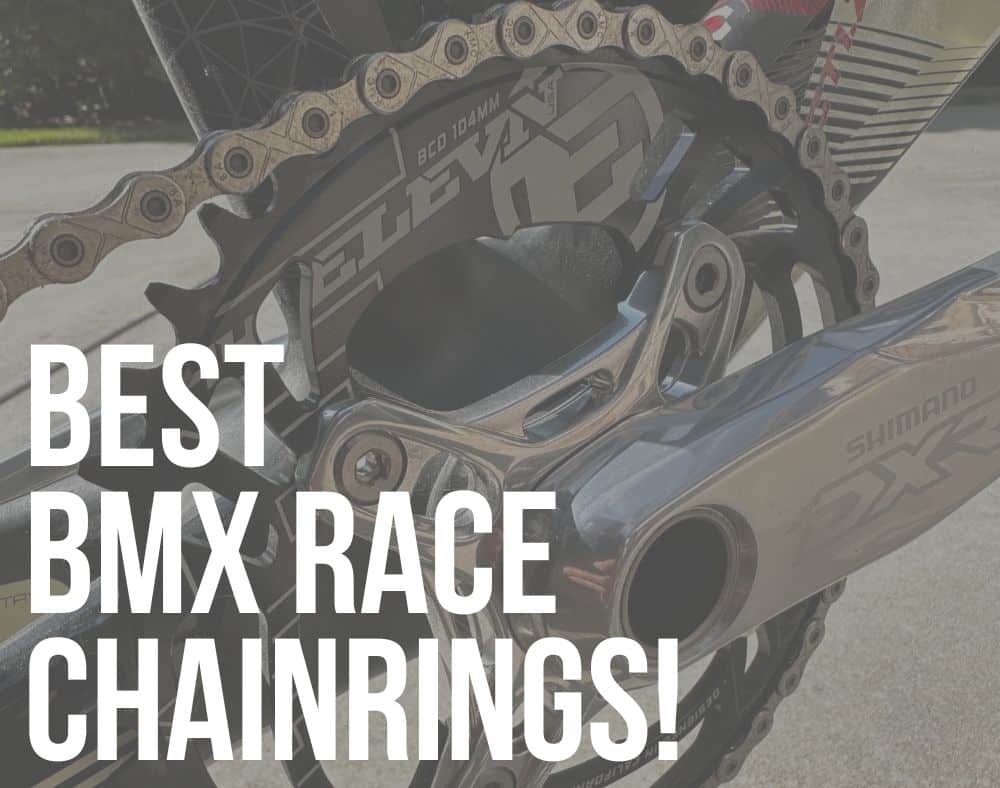

Searching for the best BMX race chainrings?
Then don’t just pick the lightest one or the color that matches your bike.
The chainring changes how your bike accelerates, how hard it feels to pedal, and how much speed you can carry once you’re moving.
It also needs to work with your cranks.

That part matters a lot.
Before buying, you need to check whether your setup uses a 4-bolt or 5-bolt pattern, confirm the BCD, choose the right tooth count, and think about your rider category, track type, crank compatibility, and budget.
A Mini rider needs something very different from a strong Pro.
Same bike part.
Completely different job.
That’s why this roundup includes the best BMX race chainrings for riders ranging from Mini to Pro, with both 4-bolt and 5-bolt options covered.
I checked each chainring with real BMX race compatibility and gearing needs in mind, not just looks and weight.
Let’s do this!
This post covers:
- Quick BMX Race Chainring Comparison
- Best BMX Race Chainrings: 4-Bolt
- Best BMX Race Chainrings: 5-Bolt
- What To Look For In A BMX Race Chainring
- 4-Bolt vs 5-Bolt BMX Race Chainrings
- My Advice Before Choosing A BMX Race Chainring
- Conclusion: Choose The Right BMX Race Chainring
- FAQs About BMX Race Chainrings
Quick BMX Race Chainring Comparison
| Chainring | Bolt Pattern | Tooth Options | Material | Weight | Price |
|---|---|---|---|---|---|
| Answer Typhoon C4 | 4-bolt | 34T–48T | 7075-T6 aluminum | 4.2 oz (42T) | $48.95 |
| Insight 4-Bolt | 4-bolt | 34T–44T | Aluminum | 4.33 oz (42T) | $26.99 |
| Box Two | 4-bolt | 38T–47T | 6061-T6 aluminum | 3.2 oz (42T) | $49.99 |
| Elevn Flow | 4-bolt | 38T–50T | 6061-T6 aluminum | 4.3 oz (44T) | $47.99 |
| Answer Typhoon C5 | 5-bolt | 34T–46T | 7075-T6 aluminum | 4.0 oz (44T) | $48.95 |
| Insight 5-Bolt | 5-bolt | 34T–44T | Aluminum | 2.8 oz (44T) | $21.99 |
| MCS 5-Bolt | 5-bolt | 33T–48T | 6061-T aluminum | 3.7 oz (44T) | $35.99 |
| Rennen Pentacle Decimal | 5-bolt | Standard & decimal sizes | 7075-T6 aluminum | 2.3 oz (44.7T) | $56.99 |
Best BMX Race Chainrings: 4-Bolt
1. Answer Typhoon C4 Chainring
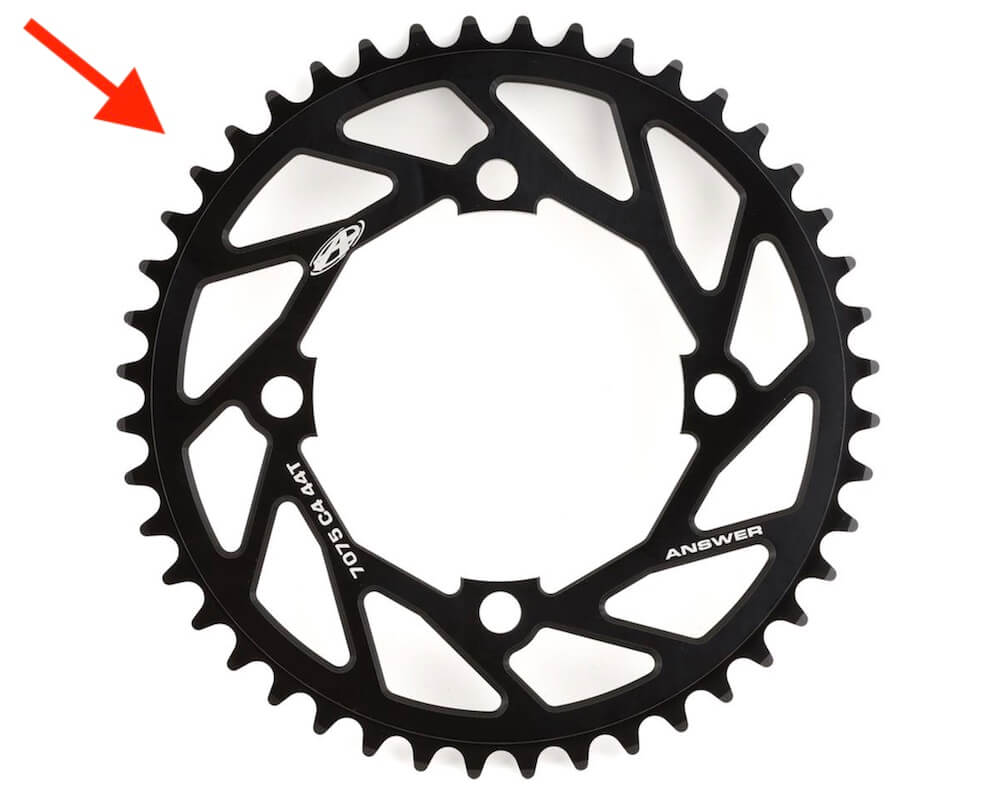
Strong, clean, and available in a seriously useful size range, the Answer Typhoon C4 is an easy chainring to recommend for many BMX race builds.
Answer CNC-machines it from solid 7075-T6 aluminum, a tougher premium alloy that helps keep the ring stiff without adding unnecessary bulk.
Its 5mm thickness should also hold up well when stronger riders put real pressure through the drivetrain.
Compatibility is straightforward.
The C4 uses a four-bolt 104mm BCD pattern and is designed for single-speed 3/32” chains, so check both details against your cranks and chain before ordering.

Tooth options run from 34T to 48T. That wide spread makes it suitable for various rider categories, rear-cog combinations, and track setups.
Just remember that chainring bolts are a separate consideration if your current hardware does not fit.
Need compatible cranks first? Check out my roundup of the best BMX race cranks.
Why I like it: The C4 combines strong 7075 aluminum, broad gearing options, and a widely used 104 BCD format without going crazy on pricing. It’s a sleek all-around choice for racers who want reliable stiffness and easy setup planning.
Answer Typhoon C4 chainring specs:
- Weight: 4.2 oz (42T)
- Price: $48.95 (may vary)
2. Insight 4-Bolt Chainring
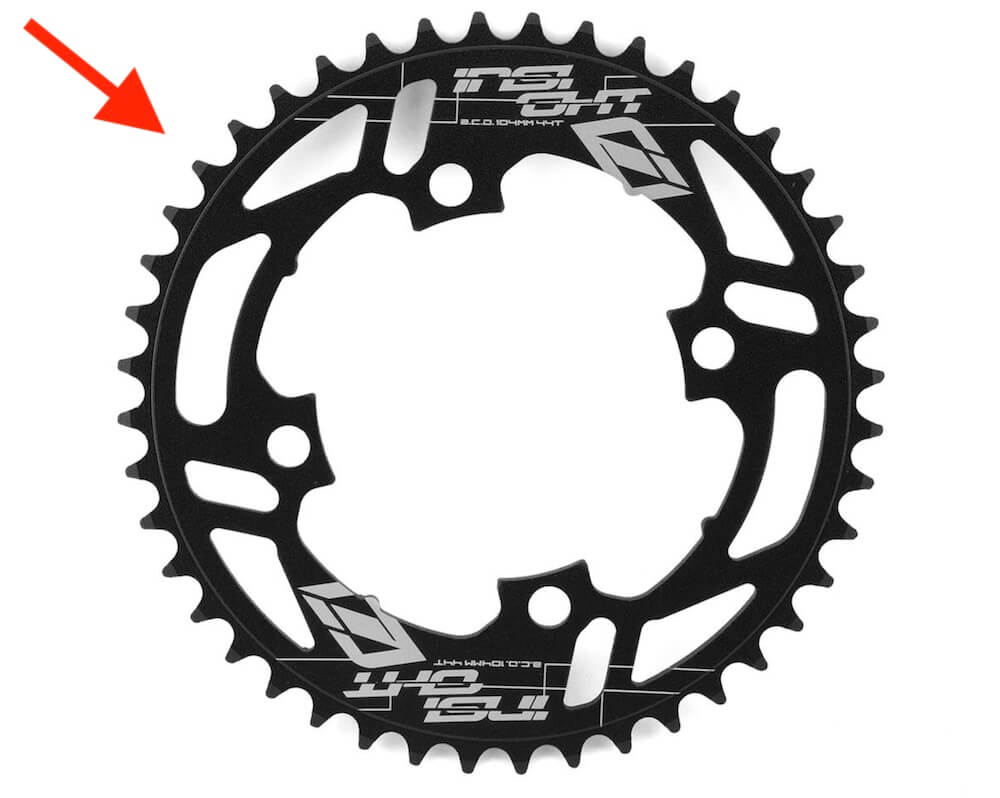
Keeping a race build affordable gets much easier with the Insight 4-Bolt chainring.
It uses a standard 104mm BCD four-bolt pattern, making it a practical match for many BMX race cranksets.
The ring is also 5mm thick, giving it a useful balance between low weight and strength.
Tooth options run from 34T to 44T.
That range covers plenty of gearing combinations for Expert through Pro-sized riders, depending on the rear cog, wheel size, and track.
Insight stamps the tooth count on the back and finishes the ring with clean laser-etched graphics. Color choices include black, red, blue, and polished.
The 42T version weighs 123g, so it won’t add much unnecessary weight to the bike.
It uses 3/32” teeth and works with single-speed, 8-speed, or 9-speed chains.
Why I like it: This is a simple, affordable chainring that covers the important stuff: common compatibility, useful tooth sizes, and a sturdy 5mm profile.
Insight 4-Bolt chainring specs:
- Weight: 4.33 oz (42T)
- Price: $26.99 (may vary)
3. Box Two Chainring
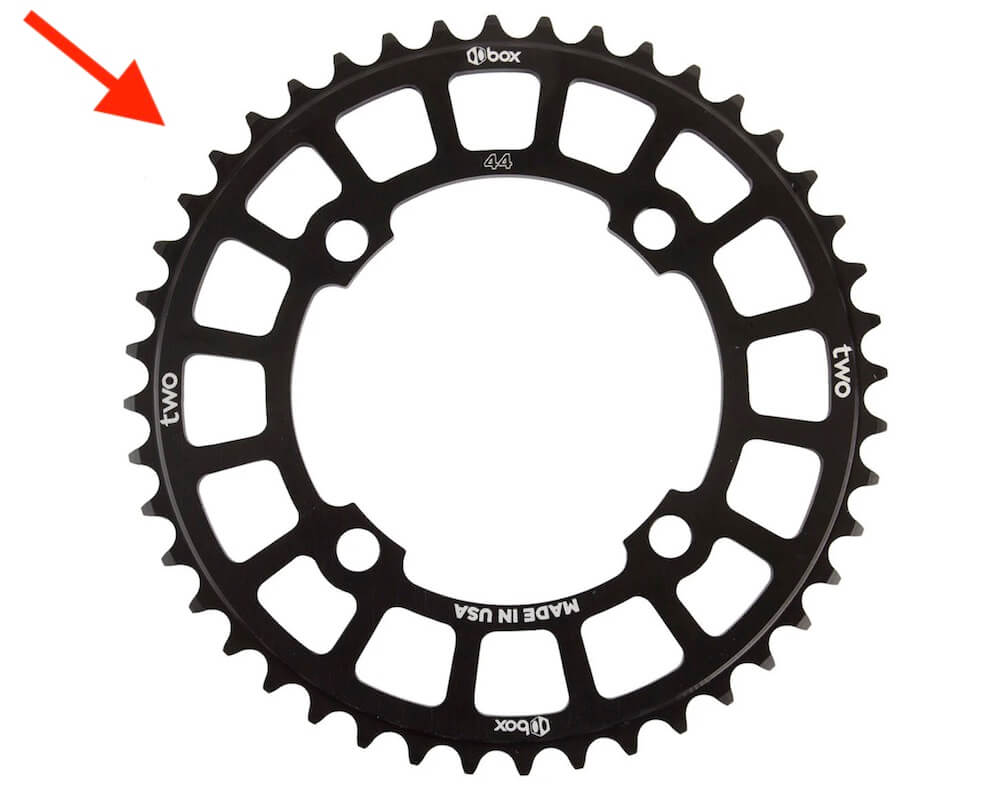
Want to cut weight without ending up with a flimsy-looking chainring?
The Box Two is CNC-machined in the USA from 6061-T6 aluminum, with lightweight cutouts shaped to maintain stiffness where it matters.
It uses the familiar 104mm four-bolt pattern and works with 3/32” chains, so it fits plenty of popular BMX race cranksets with ease.
At just 3.5mm thick, this is slimmer than the previous two chainrings.
It’s also seriously light.
The 38T weighs only 2.6 oz, while the 44T comes in at 3.3 oz.
Available sizes run from 38T to 47T, giving larger Expert, Pro, and Cruiser riders plenty of gearing options.
The black anodized finish and laser-etched graphics keep the look clean and race-ready. I like its minimalism a lot!
The only thing I’d think about is whether you want maximum thickness or minimum weight.
Stronger, more powerful riders may prefer a thicker ring, while weight-focused racers will appreciate this design.
Why I like it: Box keeps this ring light without making it feel cheap or unfinished.
Box Two chainring specs:
- Weight: 3.2 oz (42T)
- Price: $49.99 (may vary)
4. Elevn Flow Chainring
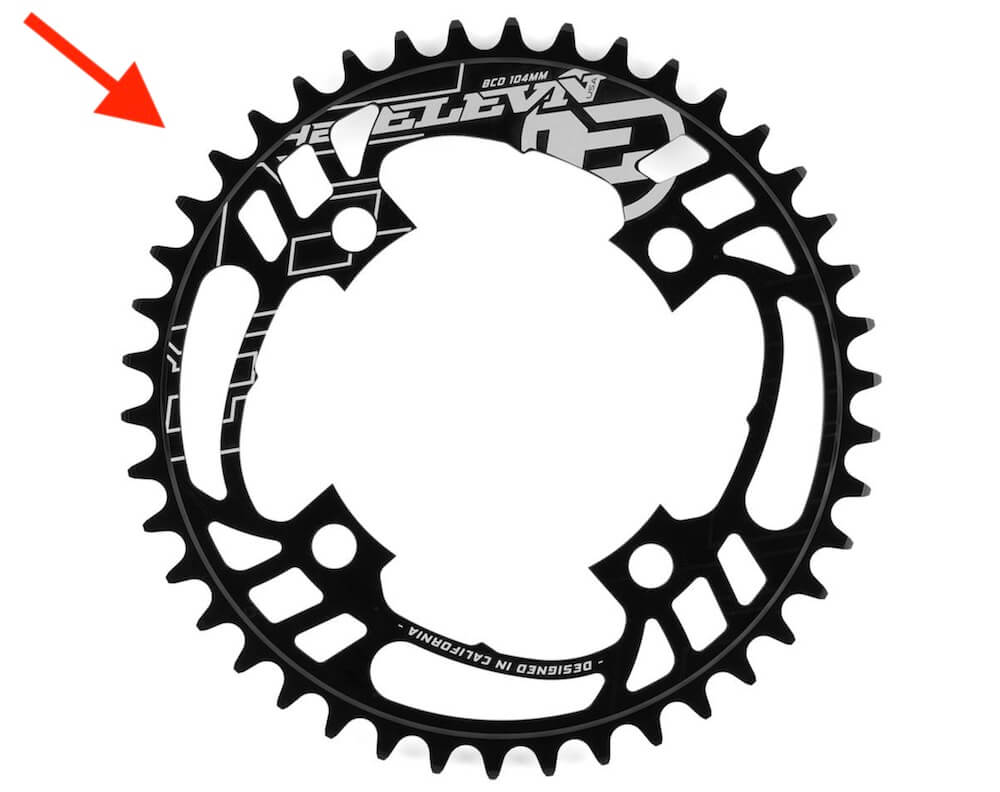
Few chainrings cover as many gearing options as the Elevn Flow.
It comes in sizes from 38T all the way to 50T, giving racers plenty of room to fine-tune acceleration, rollout, and top-end speed around their rider category and rear cog.
Elevn CNC-machines it from 6061-T6 aluminum and gives it a 4.4mm-thick profile. That keeps the ring reasonably light while still providing the strength needed for hard gates and strong sprints.
Compatibility is simple but worth checking.
It uses a 104mm BCD four-bolt pattern and is designed for 3/32” chains.
The 44T version weighs a comfortable 4.3 oz, while the double-anodized finish adds a clean, durable look.
It was also tested and approved by the Chase team riders, which gives it some proper race credibility.
Why I like it: The huge 38T–50T range is the real win here. It makes the Elevn Flow easy to recommend for riders who want precise gearing choices without moving away from the common 104mm 4-bolt standard.
Elevn Flow chainring specs:
- Weight: 4.3 oz (44T)
- Price: $47.99 (may vary)
Best BMX Race Chainrings: 5-Bolt
5. Answer Typhoon C5 Chainring
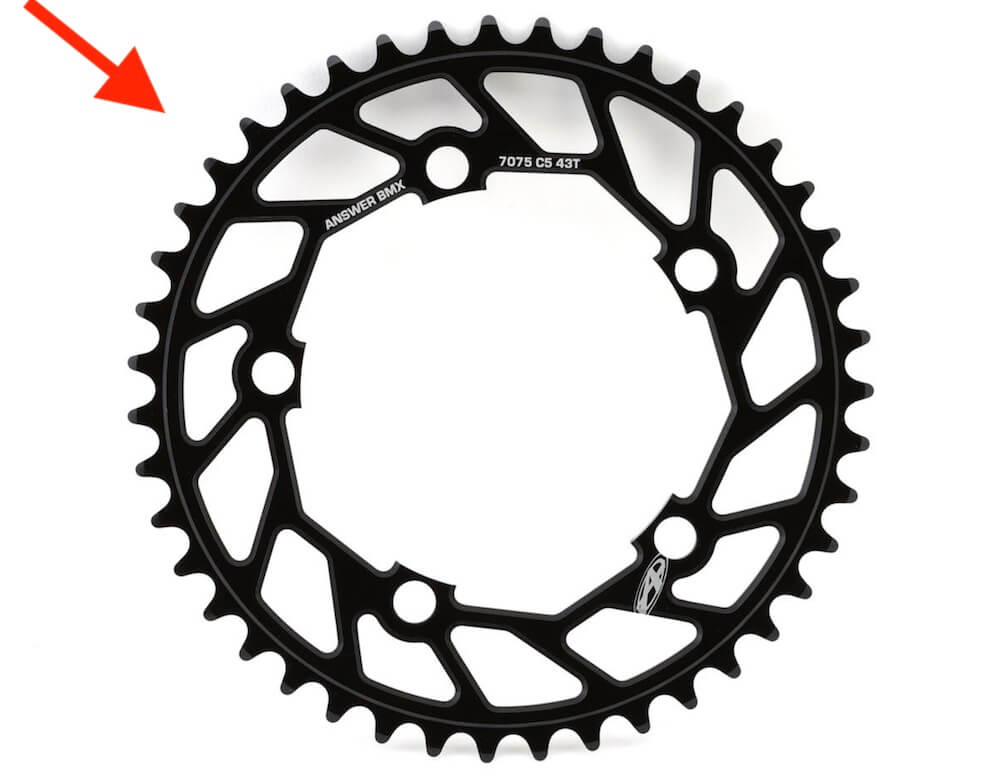
If your cranks use a five-bolt spider, the Answer Typhoon C5 is one of the easiest options to recommend.
It’s CNC-machined from 7075-T6 aluminum, giving it a stronger, stiffer construction than many basic 6061 rings.
The 5mm thickness also helps it stay solid when you’re sprinting hard out of the gate.
Fitment is simple, too.
The C5 uses a 110mm BCD five-bolt pattern and is made for 3/32” chains, so confirm both details before ordering.
Available sizes run from 34T to 46T, giving Mini, Junior, Expert, and larger riders plenty of gearing options depending on their setup and preference.
Weight starts at 2.0 oz for 34T, while the 44T, 45T, and 46T versions weigh around 4.0 oz.
Why I like it: The C5 brings the same premium 7075 construction and thick profile as the C4, but in a five-bolt format.
Answer Typhoon C5 chainring specs:
- Weight: 4.0 oz (44T)
- Price: $48.95 (may vary)
6. Insight 5-Bolt Chainring
Building a light race setup doesn’t have to cost much.
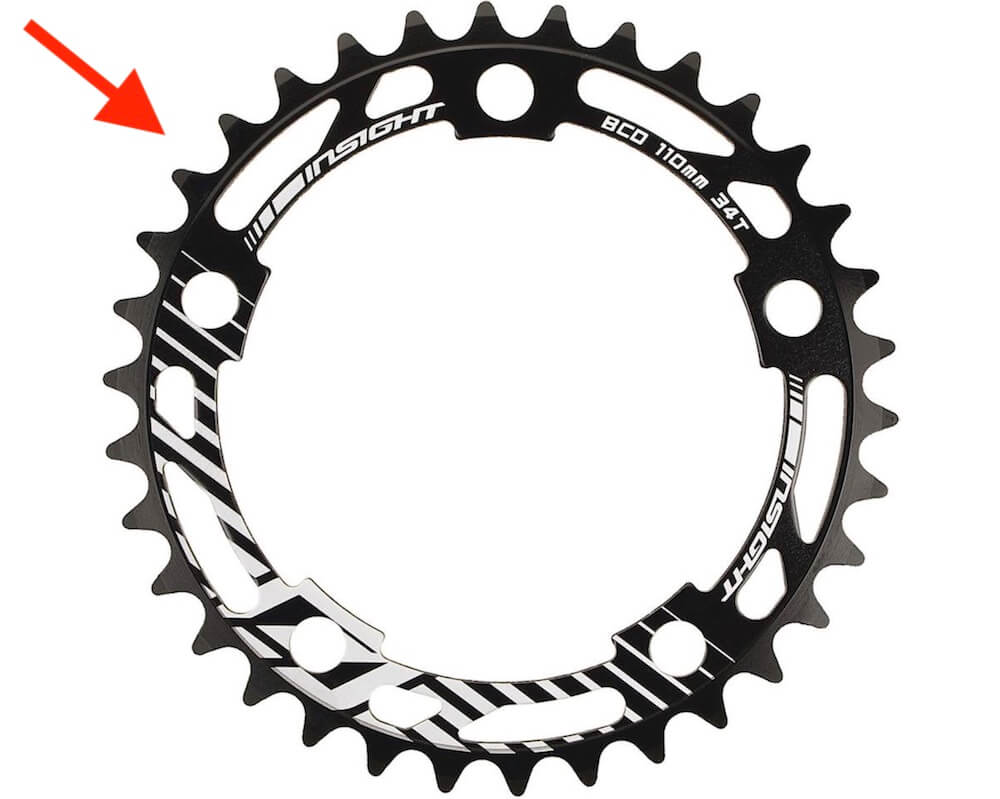
The Insight 5-Bolt chainring uses a 110mm BCD five-bolt pattern and comes in sizes from 34T to 44T, offering racers multiple options to find the right gearing.
It’s made from 3mm-thick aluminum, with several cutouts around the ring to reduce weight.
So, yes, it is light.
The 44T version weighs just 2.8 oz, which makes it one of the lightest 5-bolt options in this roundup.
Just like the 4-bolt verions, Insight also stamps the tooth count on the back and adds laser-etched graphics for a clean finish.
Compatibility is straightforward: this ring works with 110mm five-bolt spiders and uses 3/32” chains.
Note: The thinner 3mm profile may not be the first choice for the strongest Pro riders, but it makes plenty of sense for lighter racers and budget-focused builds.
Why I like it: The Insight gives you a huge tooth range, very low weight, and standard 110mm compatibility for barely over twenty bucks. That’s hard to beat.
Insight 5-Bolt chainring specs:
- Weight: 2.8 oz (44T)
- Price: $21.99 (may vary)
7. MCS 5-Bolt Chainring
Versatility is the big attraction with the MCS 5-Bolt chainring.
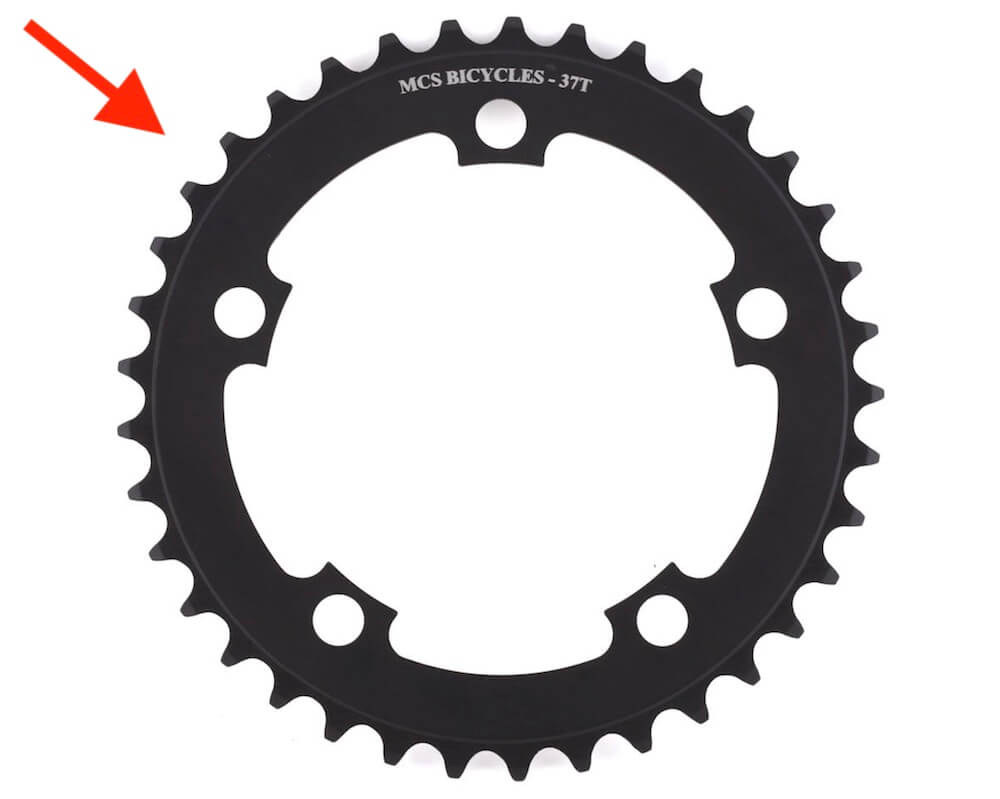
It’s CNC-machined in the USA from 3mm-thick 6061-T aluminum, keeping the ring light while offering enough strength for advanced race use.
Sizes run from 33T to 48T, so you get plenty of room to fine-tune gearing around wheel size, rear cog, strength, and track layout.
Compatibility is especially useful on the larger versions.
The 33T–35T sizes use a 110mm five-bolt pattern, while both 110mm and 130mm BCD mounting on 36T and larger rings.
It also works with 3/32” and 1/8” chains.
MCS highlights the ring’s nearly-round circumference, designed to help maintain more even chain tension throughout the pedal stroke.
Weight starts at just 1.5 oz for 33T, while the 44T version weighs 3.7.
Why I like it: The wide tooth range, USA machining, and dual-BCD compatibility on larger sizes make this one unusually flexible. It’s a smart option when you want more setup options without paying a premium.
MCS 5-Bolt chainring specs:
- Weight: 3.7 oz (44T)
- Price: $35.99 (may vary)
8. Rennen Pentacle Threaded Decimal Chainring
Tiny gearing changes can matter in BMX racing, and that’s exactly where the Rennen Pentacle stands out.
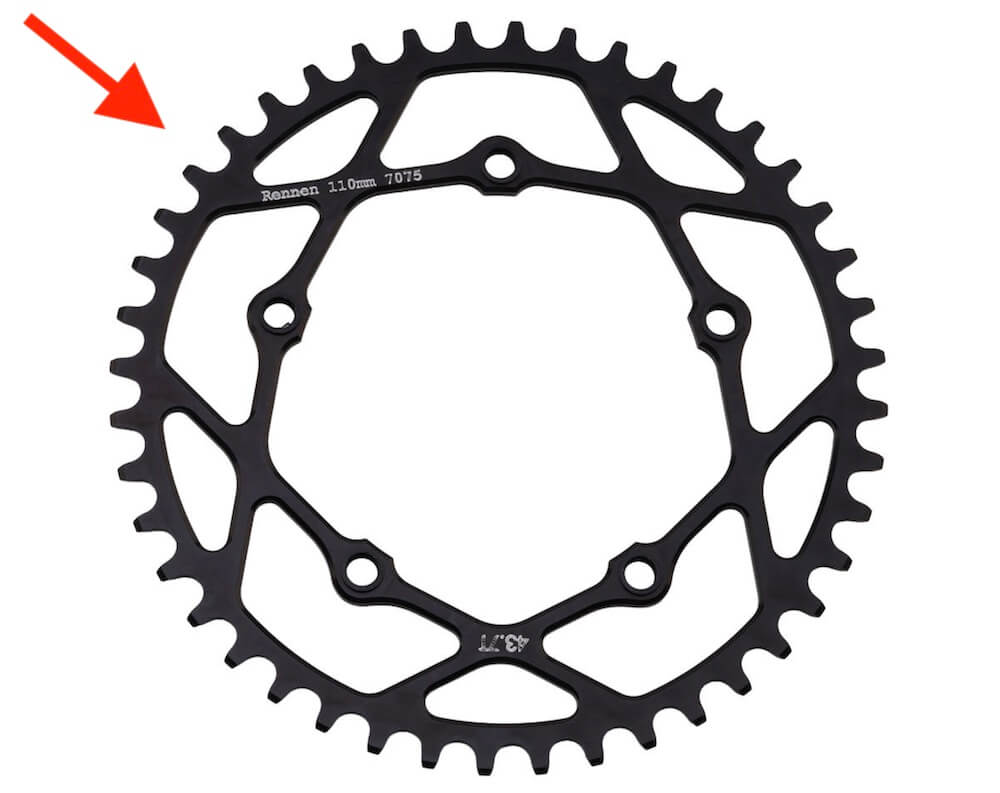
Instead of limiting you to whole tooth sizes, Rennen offers decimal options such as 43.2T, 43.7T, 44.2T, and 44.7T. That lets racers fine-tune rollout without making a full one-tooth jump.
The ring is CNC-machined in the USA from 7075-T6 aluminum and uses a 110mm five-bolt pattern.
Rennen also machines the chainring bolt threads directly into the ring.
That means you don’t need separate chainring nuts or a chainring wrench during installation, which makes setup cleaner and less frustrating.
Its single-speed-specific tooth profile is designed to extend tooth life, while compatibility covers 8- and 9-speed chains.
One important note: Rennen recommends these 110 BCD rings for riders aged 14 and under who weigh 150 lbs or less.
Why I like it: Decimal gearing gives serious racers much finer control over rollout than a regular whole-tooth chainring.
Rennen Pentacle chainring specs:
- Weight: 2.3 oz (44.7T)
- Price: $56.99 (may vary)
A 5-bolt chainring is often more useful on youth race setups because smaller tooth counts are easier to find. You can also compare suitable setups in my Mini BMX race bike and Junior BMX race bike guides.
What To Look For In A BMX Race Chainring
1. Bolt Pattern
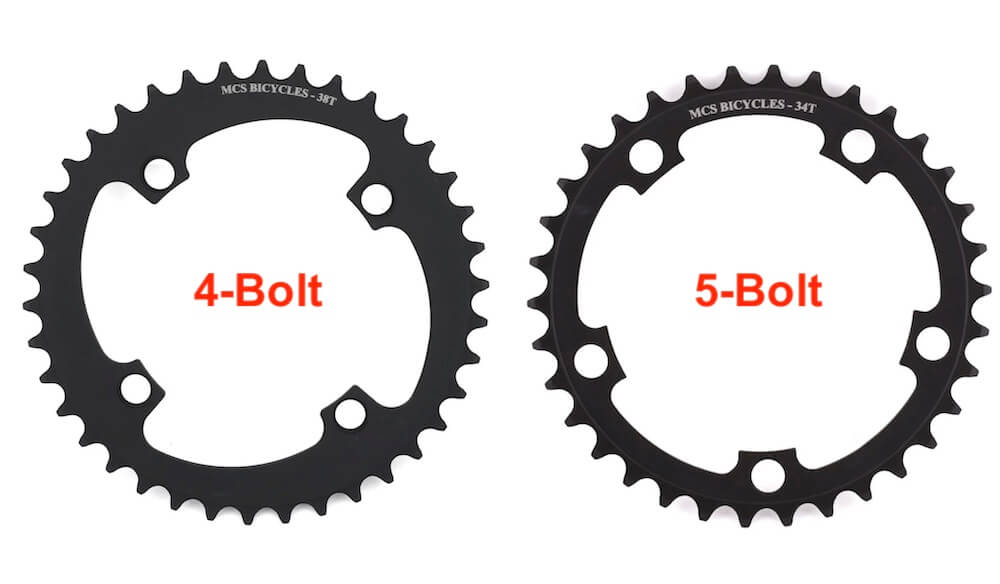
BMX race chainrings usually use either a 4-bolt or 5-bolt mounting pattern.
They are not interchangeable.
A 4-bolt chainring will not fit a 5-bolt crank spider, and a 5-bolt ring will not fit a 4-bolt spider.
Before looking at tooth count or color, confirm your crank’s bolt pattern first.
That one check can save you from ordering a chainring you cannot install.
2. BCD
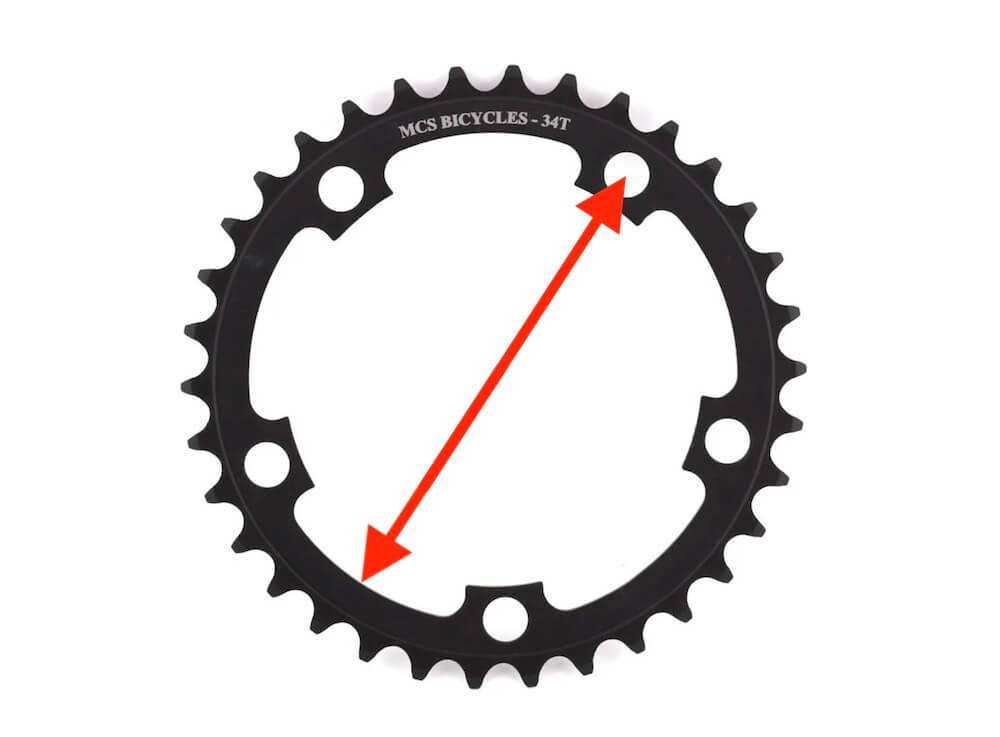
BCD means Bolt Circle Diameter.
It measures the diameter of the circle formed by the chainring bolts.
Common BMX race standards include:
- 104mm BCD: Common on many 4-bolt cranks
- 110mm BCD: Common on many 5-bolt cranks
But don’t assume every 4-bolt ring is 104 BCD or every 5-bolt ring is 110 BCD.
Some chainrings use less common standards, and a few larger rings support more than one BCD.
Always check the crank manufacturer’s specification.
3. Tooth Count
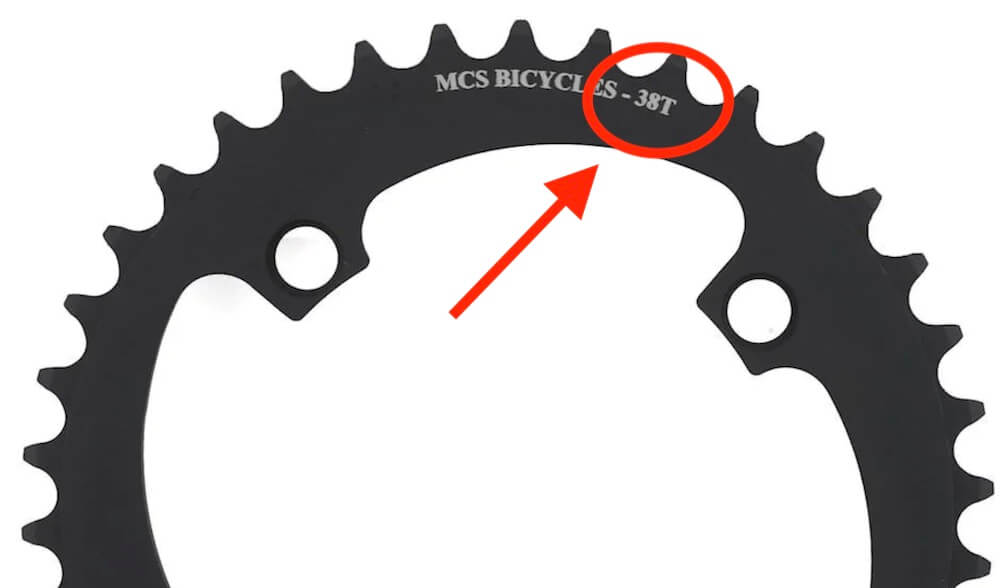
Tooth count changes how the bike feels to pedal.
A smaller chainring usually gives you:
- Easier acceleration
- Lighter gearing
- Faster cadence
- Less top-end speed
A larger chainring usually gives you:
- Harder gearing
- More rollout
- Greater top-speed potential
- A higher strength requirement
But the front chainring is only part of the equation.
Remember, the size of the BMX race cog, wheel size, tire diameter, rider power, and track layout all affect the final gearing.
One tooth can make a noticeable difference, so don’t choose the biggest ring just because it sounds faster.
Also, make sure your chain matches your chainring and rear cog/freewheel. My BMX race chain guide explains what to check before buying.
4. Material
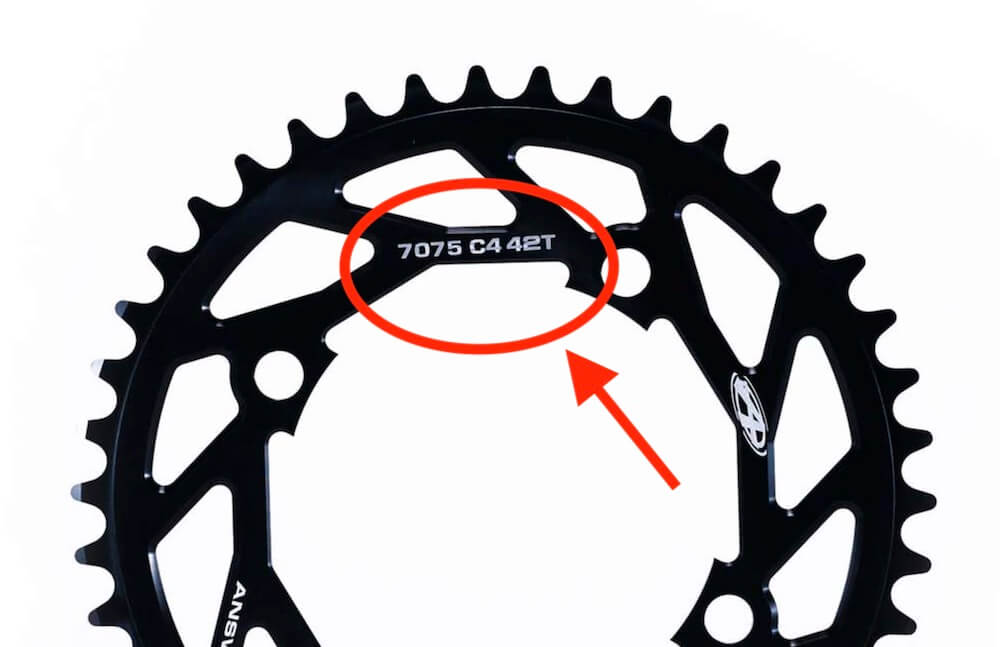
Most performance BMX race chainrings use aluminum.
The two most common grades are:
- 6061 aluminum: Light, affordable, and widely used
- 7075 aluminum: Stronger, stiffer, and usually more expensive
- Steel: Very durable, but heavier and less common on performance-focused race builds
A well-made 6061 ring can work perfectly for many riders.
Stronger racers may prefer the added stiffness and durability of 7075 aluminum, especially during hard gate starts.
5. Thickness & Stiffness
Chainring thickness affects stiffness and weight.
A stiffer chainring helps keep power transfer direct when you’re sprinting hard.
Thinner rings can save weight, but an overly flexible design may feel less precise under a powerful rider.
That doesn’t mean thicker is always better.
You need the right balance.
Lighter and younger racers may benefit from a thinner ring, while larger Pro riders may prefer a thicker and stiffer option.
Don’t chase the lowest weight if it creates noticeable flex.
6. Chain Compatibility
Chain width matters.
Many BMX race chainrings are designed for 3/32” chains, while some also work with 1/8” chains.
These sizes are not the same.
A chainring designed only for a narrow 3/32” chain may not work correctly with a wider 1/8” setup.
Some rings also list compatibility with single-speed, 8-speed, or 9-speed chains.
Always check the tooth profile and chain width specifications before buying.
7. Crank Compatibility
A chainring needs to match more than just the number of bolts.
Check:
- Bolt pattern
- BCD
- Spider design
- Chainline
- Chainring thickness
- Bolt and nut requirements
Some chainrings include threaded mounting holes, while others require separate bolts and nuts.
Spacers may also be needed to correct the chainline or create clearance.
Check the crank, frame, and chainring specifications before placing your order.
A great chainring is useless if it doesn’t fit your bike properly.
Note: Most race chainrings are paired with narrow 3/32-inch chains, but race-specific half-link options also exist. See whether a half-link chain is a good choice for BMX racing.
4-Bolt vs 5-Bolt BMX Race Chainrings
| Feature | 4-Bolt | 5-Bolt |
|---|---|---|
| Common BCD | 104mm | 110mm |
| Typical Riders | Expert to Pro | Mini to Expert |
| Tooth Range | Often medium to large | Often smaller sizes available |
| Crank Availability | Very common | Common on youth race cranks |
| Main Advantage | Strong, simple, widely available | Better access to small tooth counts |
A 4-bolt chainring is common on many modern BMX race cranks, especially setups aimed at Expert, Pro, and larger riders.
These systems are simple, widely available, and usually offer plenty of medium-to-large tooth options.
A 5-bolt chainring is often more useful on youth race setups because smaller tooth counts are easier to find.
That can make gearing a Mini or Junior bike much simpler.
But the correct choice still comes down to your crankset.
If your cranks use a 104mm four-bolt spider, you need a matching 104 BCD ring.
If they use a 110mm five-bolt spider, you need the five-bolt option.
Don’t choose the bolt pattern based on looks or rider category alone.
Match the chainring to the cranks first, then pick the right tooth count for the rider and track.
My Advice Before Choosing A BMX Race Chainring
Keep it simple and check compatibility first:
- Confirm whether your cranks use a 4-bolt or 5-bolt pattern.
- Check the exact BCD.
- Match the chainring to your chain width.
- Make sure it fits your crank spider correctly.
- Calculate the full gear ratio with the rear cog and wheel size.
- Think about the track: tighter tracks may suit lighter gearing, while faster tracks may need more rollout.
- Don’t choose by tooth count alone.
- Keep the chainline straight and clean.
- Budget for chainring bolts if they are not included.
Get those details right first.
Color and weight come after.
Conclusion: Choose The Right BMX Race Chainring
There isn’t one perfect chainring for every BMX racer.
The right pick depends on the crank, bolt pattern, BCD, chain width, gearing, and rider category.
Here are my top picks from this roundup:
- Best overall: Answer Typhoon C4
- Best premium 4-bolt: Box Two
- Best value 4-bolt: Insight 4-Bolt
- Best wide-range 4-bolt: Elevn Flow
- Best overall 5-bolt: Answer Typhoon C5
- Best value 5-bolt: Insight 5-Bolt
- Best for broad compatibility: MCS 5-Bolt
- Best for precise gearing: Rennen Pentacle Decimal
For most riders, I’d start with compatibility.
Then work out the tooth count using the rear cog, wheel size, rider strength, and track layout.
The best BMX race chainring is the one that matches your crank, bolt pattern, BCD, chain, and gearing needs.
Any from the list above will help you progress, just choose according to your needs!
FAQs About BMX Race Chainrings
What is the best BMX race chainring?
The best option depends on your crank, bolt pattern, BCD, chain, and gearing needs. The Answer Typhoon C4 is my top overall 4-bolt pick.
What size chainring is best for BMX racing?
There is no single best size. Rider strength, wheel size, rear cog, and track layout all matter.
What is the difference between 4-bolt and 5-bolt chainrings?
They use different mounting patterns and usually different BCD standards. A 4-bolt ring will not fit a 5-bolt crank spider.
What’s the difference between a BMX chainring and a BMX sprocket?
In BMX racing, a chainring usually bolts to a crank spider. A freestyle BMX sprocket often mounts directly to the crank spindle or uses a single sprocket bolt.
What does BCD mean on a BMX chainring?
BCD means Bolt Circle Diameter. It tells you the diameter of the circle formed by the chainring bolts.
Is 104 BCD the same as 110 BCD?
No. They are different sizes and are not interchangeable.
Can I use a 4-bolt chainring on 5-bolt cranks?
No. The bolt pattern and BCD must match the crank spider.
Are larger BMX chainrings faster?
They can provide more rollout and top-speed potential, but they also make the gearing harder to push.
Do smaller chainrings accelerate faster?
Usually, yes. A smaller ring creates lighter gearing, which can make acceleration easier.
What chainring size do Mini BMX racers use?
Mini riders often use smaller chainrings, but the exact size depends on the rear cog, wheel size, and rider strength.
What chainring size do Pro BMX racers use?
Pro riders commonly use larger chainrings, but the correct size still depends on gearing, track type, and personal preference.
Are 7075 chainrings better than 6061?
7075 aluminum is generally stronger and stiffer. But a well-made 6061 chainring can still work very well for many racers.
Do BMX race chainrings work with 1/8” chains?
Some do, but many are designed for 3/32” chains. Always check the chain compatibility first.
Do BMX race chainrings include bolts?
Not always. Some include hardware, while others require separate chainring bolts and nuts.
How often should a BMX race chainring be replaced?
Replace it when the teeth become worn, hooked, bent, or damaged, or when the chain no longer runs smoothly.
Can changing one tooth make a difference?
Yes. A one-tooth change can noticeably affect acceleration, cadence, and rollout.
Are expensive BMX race chainrings worth the money?
They can be for serious racers who want better materials, stiffness, machining, and lower weight. Correct gearing still matters more than price.
Need more upgrades for your BMX race machine?