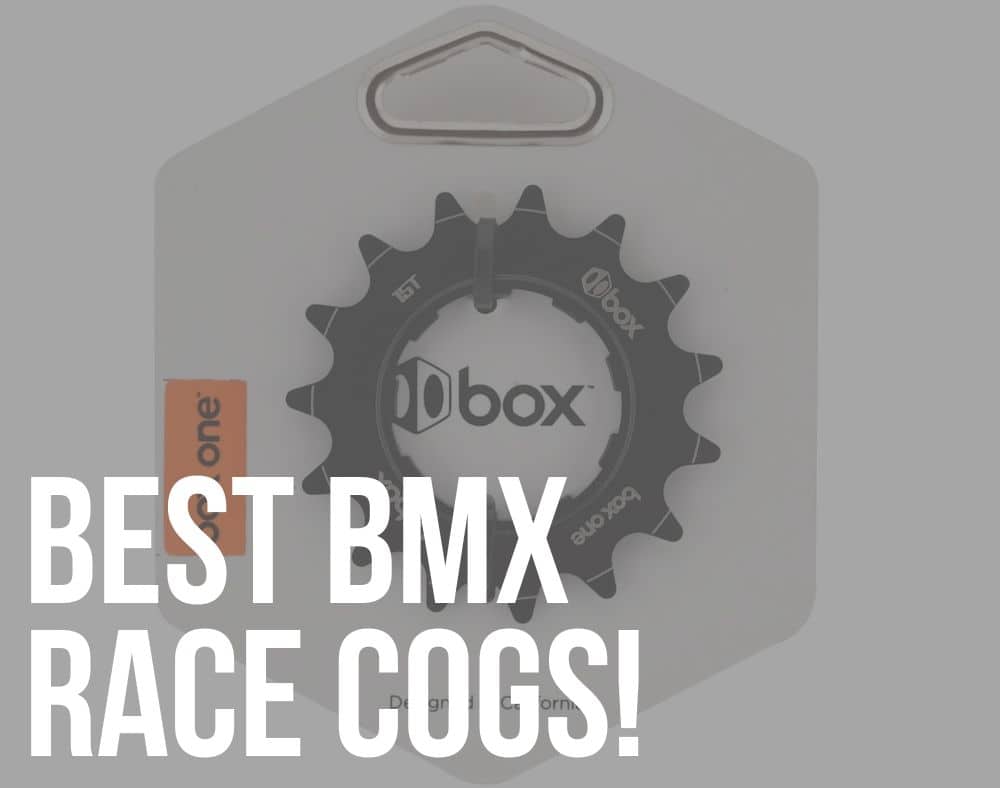

Looking for the best BMX race cogs for a lighter, faster and more reliable drivetrain?
Welcome to my list of the ultimate ones.
A good rear cog may look like a small upgrade, but it can change how your bike accelerates, how hard it is to pedal, and where the rear wheel sits in the dropouts.
The problem is that not every cog fits every race hub.

You also need to think about tooth count, material, chain width and long-term durability.
For this guide, I picked the best 3/32″ BMX race cogs and compared them based on speed, strength, compatibility and value.
Note: 3/32″ is the standard in BMX racing.
I included both aluminum and steel/chromoly options, so you can choose between lower weight and longer wear.
This roundup focuses only on cassette cogs.
It does not include thread-on BMX race freewheels.
Let’s find the right cog for your race bike.
This post covers:
- Best BMX Race Cogs
- Steel Vs Aluminum BMX Race Cogs
- BMX Race Cog Vs Freewheel
- How To Choose The Right BMX Race Cog
- Common BMX Race Cog Mistakes
- Conclusion: Pick The Right BMX Race Cog
- FAQs About BMX Race Cogs
Note: You will also need a compatible BMX race chain because the cog, chain, and chainring must work together as one drivetrain.
Best BMX Race Cogs
| BMX Race Cog | Material | Tooth Options | Hub Compatibility | Best For |
|---|---|---|---|---|
| Box One Chromo | Chromoly steel | 13T–18T | Shimano-compatible HG bodies | Best overall durability |
| Crupi Chromo | Chromoly steel | 12T–18T | Shimano-compatible bodies | Training & chainline adjustment |
| Answer Holeshot | Stainless steel | 14T–18T | Answer Holeshot & Shimano-compatible bodies | Regular training & racing |
| Profile Racing | Heat-treated 4340 steel | 12T–18T | Compatible Profile cassette hubs | Profile hub users |
| Crupi Alu | 6061-T6 aluminum | 12T–18T | Shimano-compatible bodies | Lightweight race builds |
| Elevn Alu | 7075-T6 aluminum | 14T–18T | Shimano HG-compatible bodies | Premium low-weight setups |
| Box One Alu | 7075-T6 aluminum | 13T–18T | Shimano-compatible HG bodies | Race-day weight savings |
1. Box One Chromoly Cog
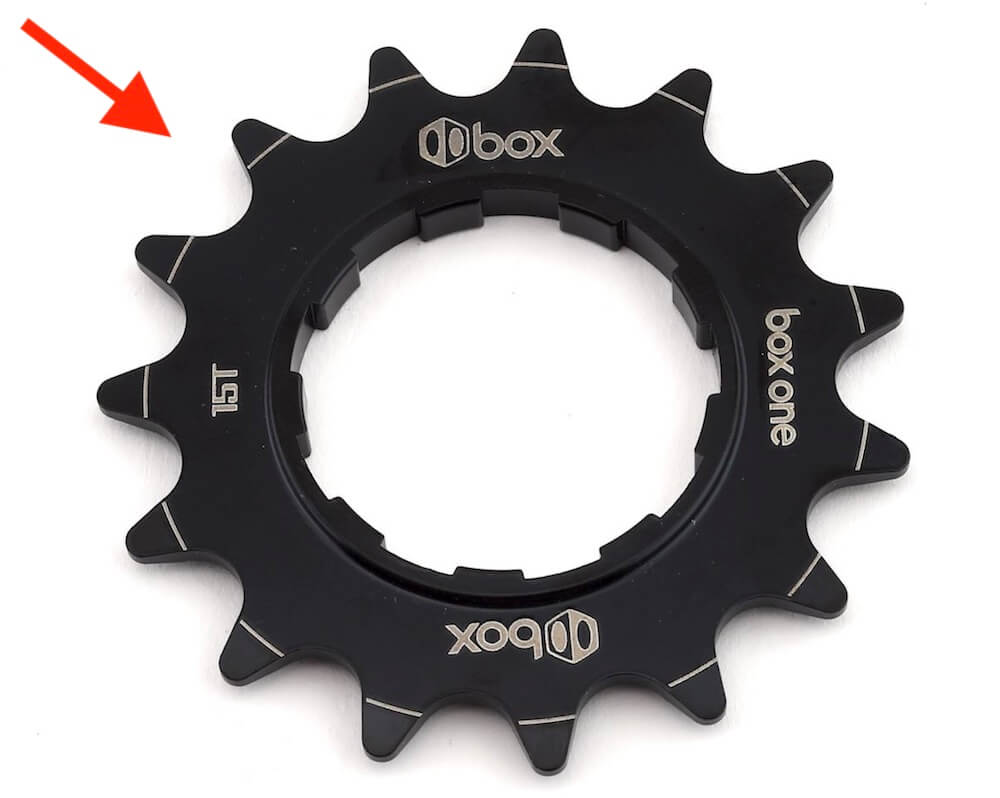
The Box One chromoly cassette cog is a strong pick for racers who care more about durability than shaving off every possible gram.
It is CNC-machined from chromoly steel, so it handles regular training, hard gate starts, and repeated use better than a lighter aluminum cog.
I also like the 5mm-wide inner base.
It creates a broader contact area against the freehub body, which helps give the cog a more solid interface and may reduce the chance of it digging into softer cassette bodies over time.
The cog fits Shimano-compatible HG freehub bodies and works with both 3/32″ and 1/8″ chains.

Also, it is available from 13T to 18T, giving you plenty of room to adjust your gearing.
The main trade-off is weight.
Still, for an everyday BMX race setup where reliability matters most, the Box One chromoly cog is an excellent all-around option I highly recommend.
Box One Chromoly Cog Features
- Teeth: 13T – 8T
- Weight: 0.9 oz (25.5 g) – 13T
- Price: $34.99
2. Crupi Chromoly Cog
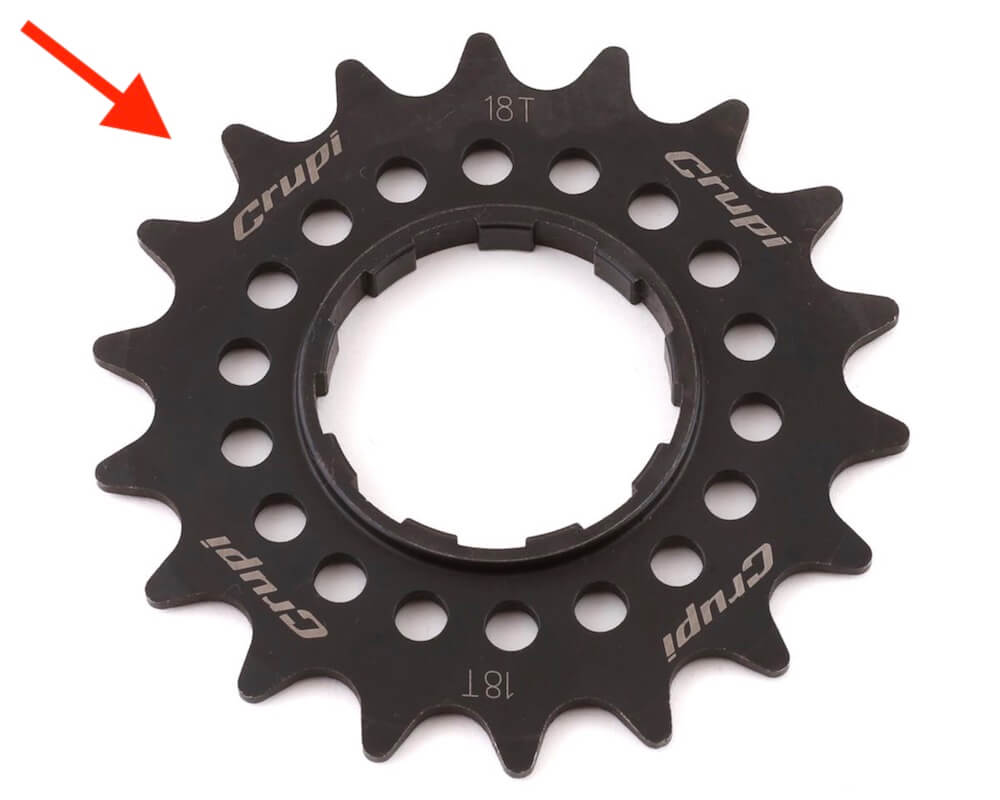
Built for riders who want a durable cog without giving up useful chainline adjustment, the Crupi Chromoly Cassette Cog is a top-notch race option.
It is made from 4130 chromoly and uses machined cutouts to remove some unnecessary weight.
The 16T version weighs 1.34 oz, which is heavier than Crupi’s aluminum model but better suited to regular training and repeated gate starts.
What makes this cog especially practical is its reversible design.
One side provides 1mm of spacing, while the other offers 2.2mm. So awesome!
Flipping the cog gives you another way to fine-tune the chainline without changing the entire spacer setup.
It fits Shimano-compatible cassette bodies and comes in sizes from 12T to 18T for 3/32″ chains.
For racers who want long-term strength plus more control over chain alignment, the Crupi chromoly cog is an easy one to recommend.
Crupi Chromoly Cog Features
- Teeth: 12T – 18T
- Weight: 1.3 oz (36.9 g) – 16T
- Price: $29.99
3. Answer Holeshot Steel Cog
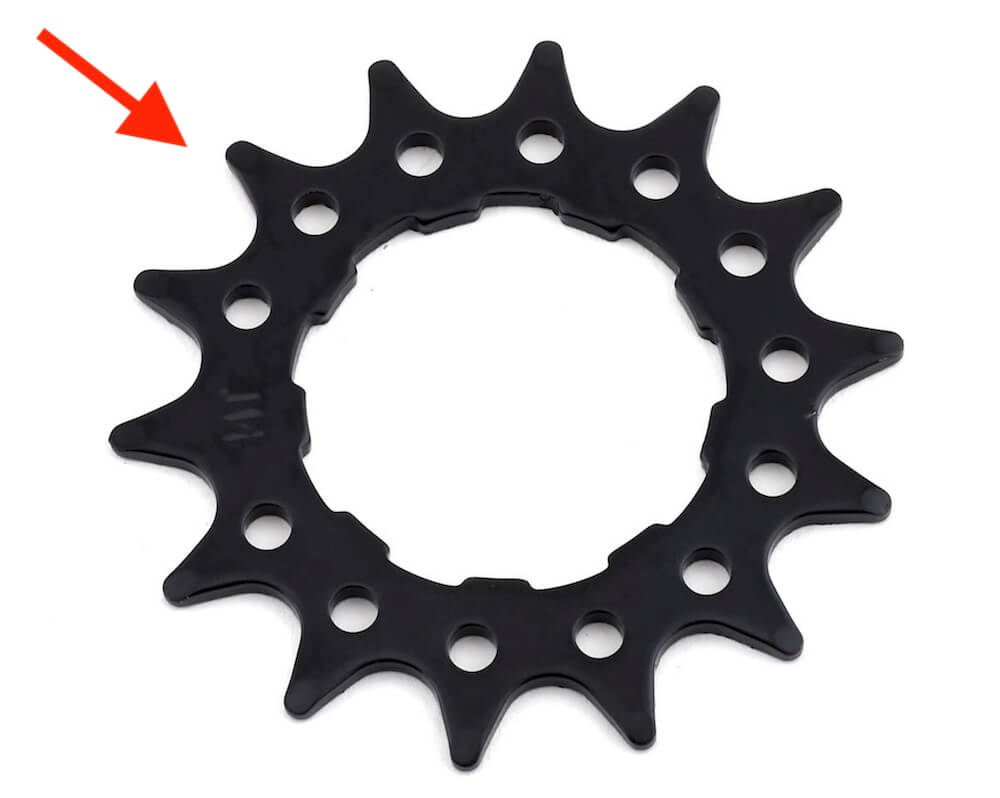
If you already run an Answer Holeshot rear hub, the Answer Holeshot steel cog is the most direct match.
It is CNC-machined from stainless steel, giving it the durability needed for repeated race use.
Answer also machines holes into the cog to remove some weight without switching to a softer aluminum material.
The Shimano-compatible spline pattern means it fits Answer Mini, Expert and Pro Holeshot hubs, along with other compatible cassette bodies.
You can choose from 14T to 18T, giving you enough range to fine-tune your gearing without changing the front chainring.
Sure, a smaller one would be awesome, but you can get other compatible ones with smaller teeth if that’s what you’re after.
Weight starts at just 0.8 oz for the 14T version and rises to 1.8 oz for the 18T.
It is not the lightest option, but the steel construction and broad size range make it a dependable pick for racers who want long-term use.
Answer Holeshot Steel Cog Features
- Teeth: 14T – 18T
- Weight: 1.2 oz (34.0 g) – 16T
- Price: $24.95
4. Profile Racing Steel Cog
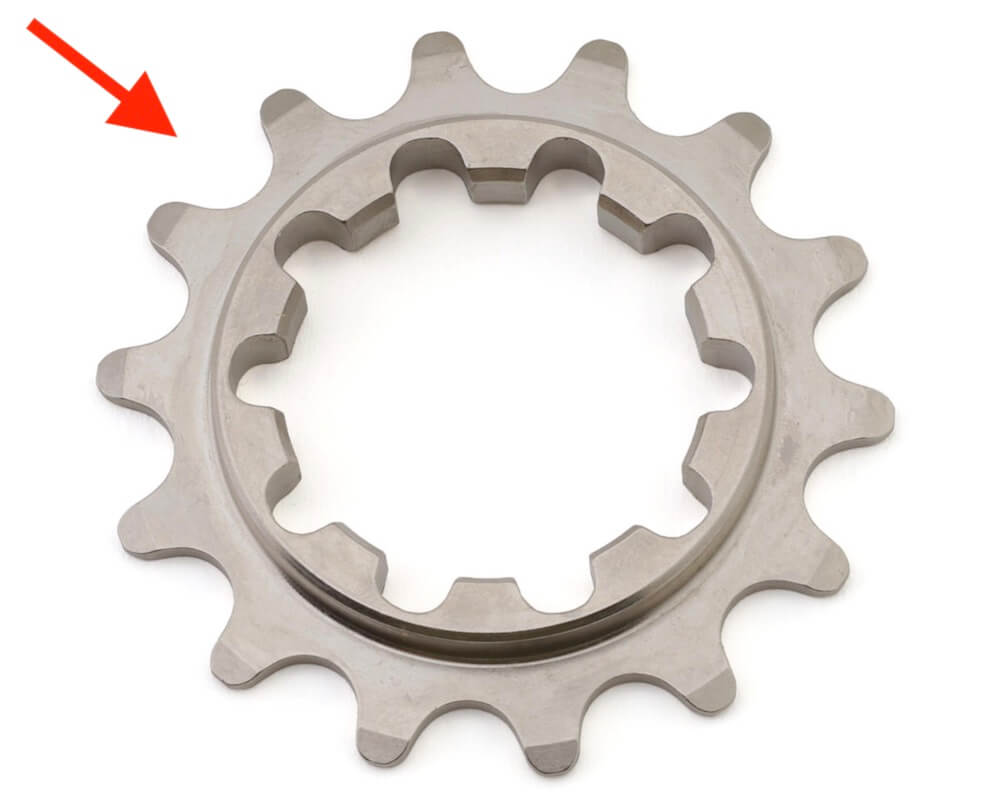
Unlike the Shimano-style cogs above (and below), the Profile Racing steel cassette cog uses Profile’s proprietary cassette interface.
That means it is the right choice only if your rear hub uses a compatible Profile Racing cassette body. Do not order it for a standard HG freehub.
Profile CNC-machines the cog from heat-treated 4340 aircraft-alloy steel in the USA, which gives it the strength needed for super-hard racing.
The nickel-plated finish also helps protect the steel while giving the cog Profile’s classic look.
It comes in 12T to 18T sizes and is made specifically for 3/32″ race drivetrains.
This is not the most universal cog in the roundup, but for riders already using a compatible Profile hub, it is a durable match that simply rocks.
Profile Racing Steel Cog Features
- Teeth: 13T – 17T
- Weight: 1.1 oz (31.2 g) – 13T
- Price: $39.99
5. Crupi Aluminum Cog
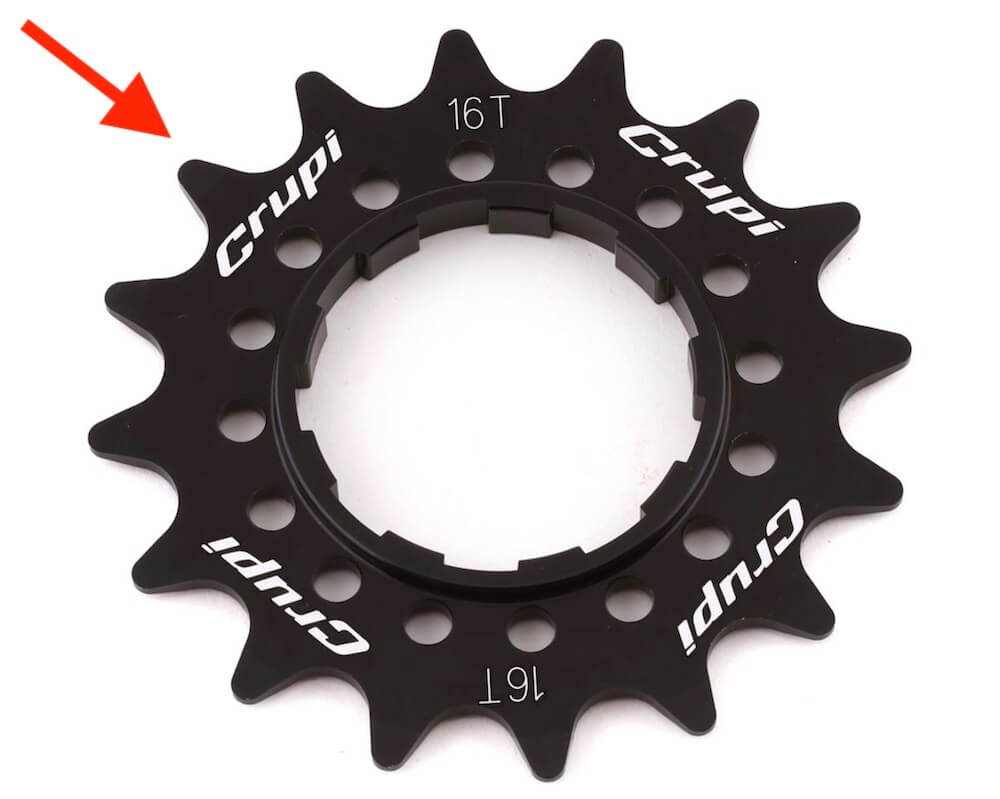
For racers chasing a lighter drivetrain, the Crupi Alu cog is the more weight-focused version of Crupi’s cassette cog.
It is CNC-machined from 6061-T6 aluminum and weighs just 0.5 oz in the 16T size.
That makes it MUCH lighter than the chromoly version, which comes in at 1.3 oz for the same tooth count.
Yup, quite a difference!
Moreover, you still get Crupi’s reversible design, with 1mm of spacing on one side and 2.2mm on the other.
This gives you a simple way to adjust chain alignment without changing the rest of the spacer setup.
The cog fits Shimano-compatible cassette bodies and is available from 12T to 18T.
Its main drawback is durability.
Aluminum will usually wear faster than chromoly, especially with regular training and powerful gate starts.
But for a lightweight race build or race-day setup, this Crupi cog is a VERY strong option.
Crupi Aluminum Cog Features
- Teeth: 12T – 18T
- Weight: 0.5 oz (14.2 g) – 16T
- Price: $29.99
6. Elevn Aluminum Cog
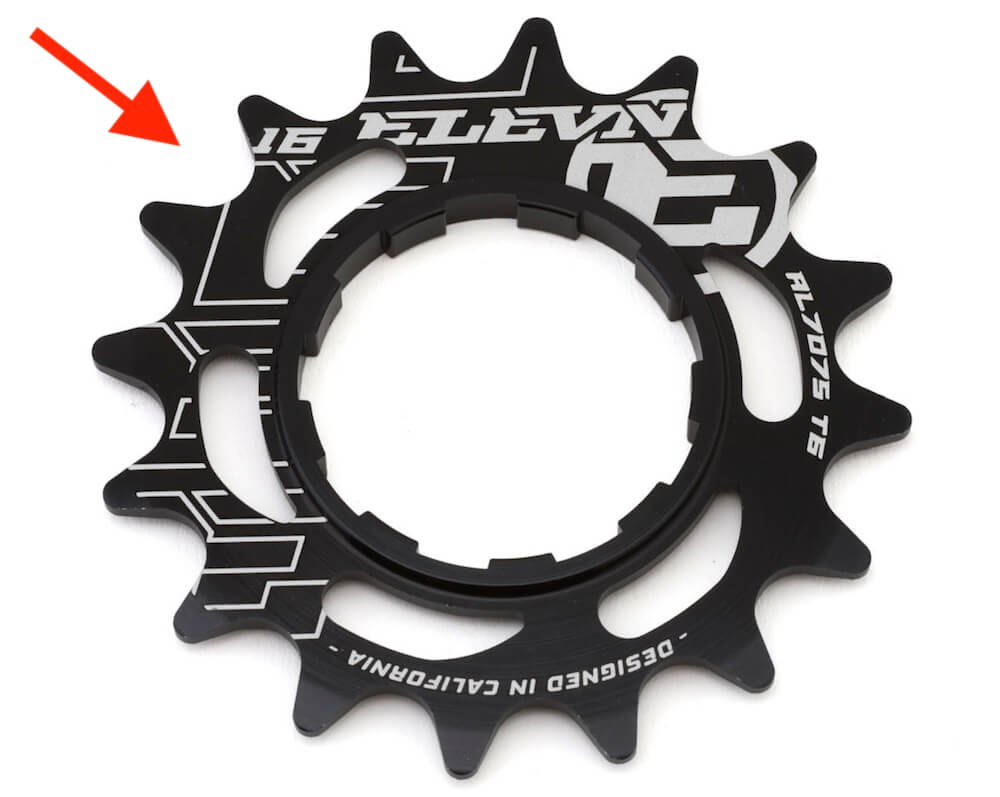
The Elevn Aluminum cassette cog is one of the lightest options in this roundup, but it still includes a useful detail for protecting your hub.
Elevn machines it from 7075-T6 aluminum, which is stronger than the 6061 alloy used for many budget components.
The 16T version weighs just 0.8 oz, while the full 14T-to-18T range stays between 0.4 oz and 0.7 oz.
Its 5mm-wide contact point spreads the load across more of the cassette body. This reduces the chance of the cog digging into softer aluminum freehub splines when things get serious on the track.
It fits Shimano Hyperglide-compatible cassette bodies and is made for 3/32″ chains. You can also choose from black, red, blue and polished finishes.
Elevn Aluminum Cog Features
- Teeth: 14T – 18T
- Weight: 0.4 oz (11.3 g) – 14T
- Price: $31.99
7. Box One Aluminum Cog
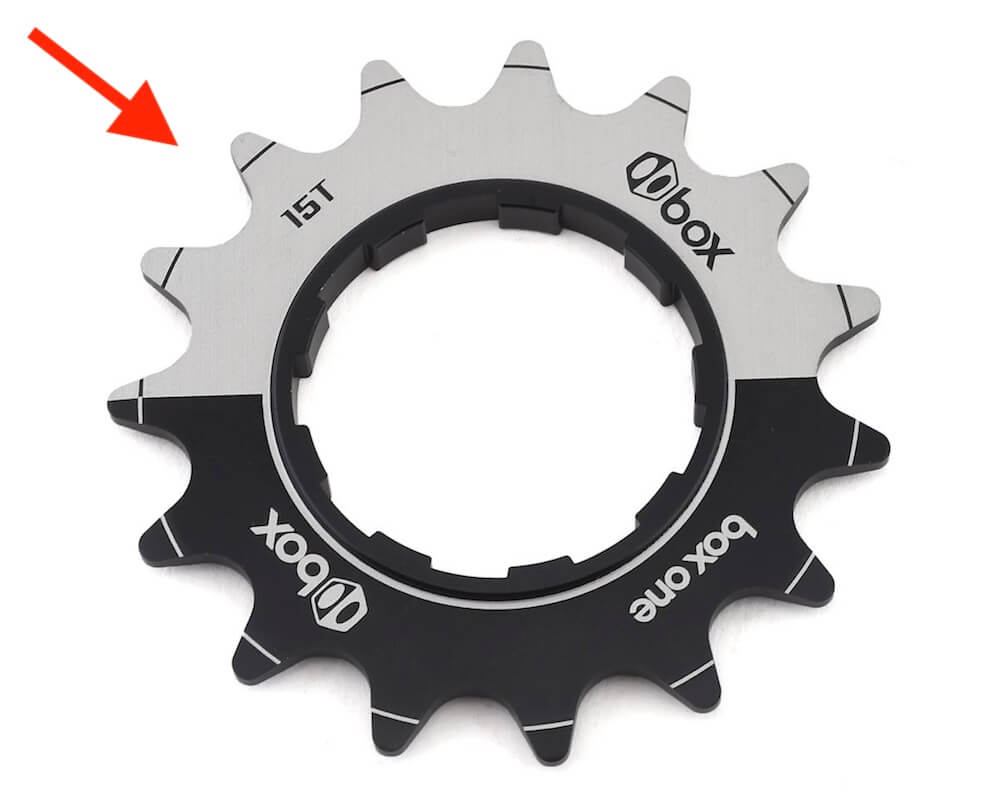
Saving weight without going too exotic is exactly where the Box One Alu cog fits in.
The cog is CNC-machined from 7075-T6 aluminum, which gives it a strong stiffness-to-weight balance for BMX racing.
Depending on tooth count, it weighs just 0.3 oz to 0.7 oz, so it is noticeably lighter than the chromoly Box option.
This one also uses a 5mm-wide inner base to create a broader contact point.
Besides fitting Shimano-compatible HG cassette bodies, it works with both 3/32″ and 1/8″ chains.
You can choose from 13T to 18T, which gives you plenty of gearing options.
But for a lightweight race-day setup, this Box cog is one of the strongest picks in the lineup.
Box One Aluminum Cog Features
- Teeth: 13T – 18T
- Weight: 0.3 oz (8.5 g) – 13T
- Price: $29.99
Steel Vs Aluminum BMX Race Cogs
The main choice comes down to durability versus weight.
Steel BMX Race Cogs
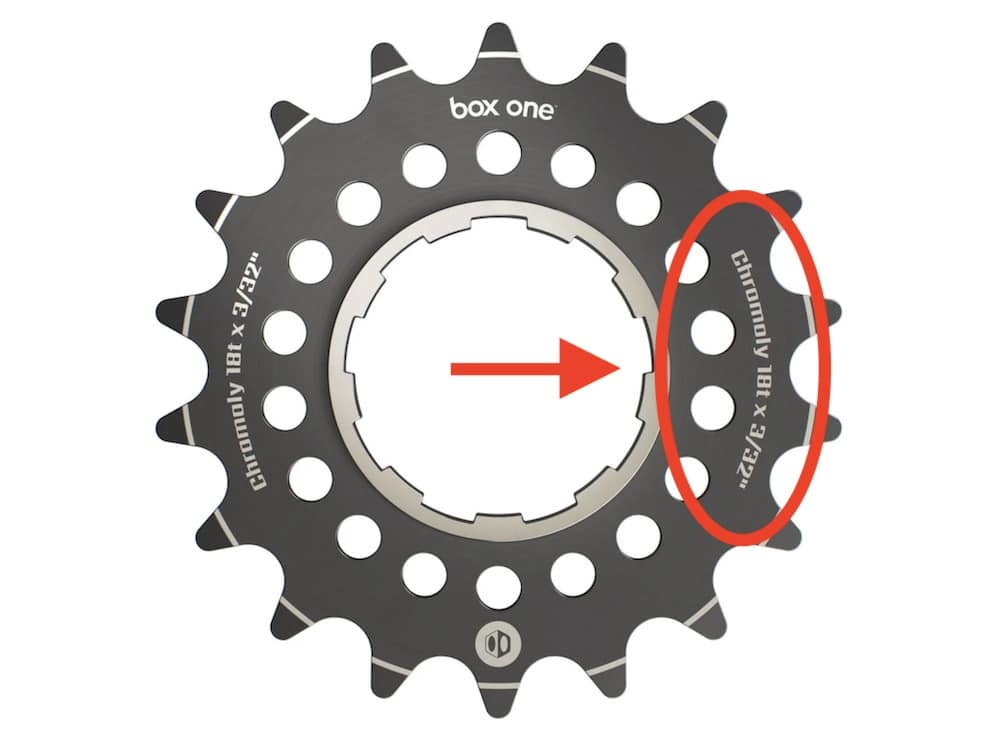
Steel cogs are the better option for most riders.
They are heavier than aluminum, but they usually last longer and handle regular training, hard gate starts and repeated use better.
Steel is the safer pick if you:
- Train several times a week
- Put a lot of power through the drivetrain
- Want fewer replacements
- Prefer durability over minimal weight savings
- Use the same cog for both training and racing
The extra weight is small, so most riders will barely notice it on the track.
Aluminum BMX Race Cogs
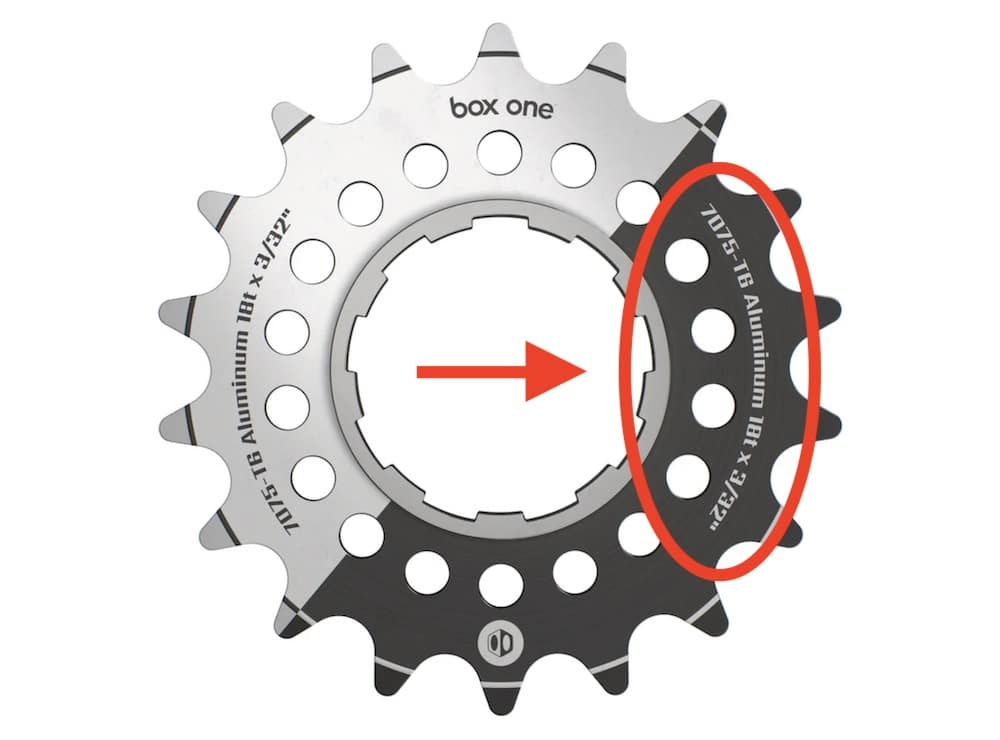
Aluminum cogs are made for riders trying to reduce every possible gram.
They are lighter and work well on race-day builds, especially for younger or lighter riders.
An aluminum cog is worth considering if you:
- Are building the lightest bike possible
- Mostly use it for racing
- Replace drivetrain parts regularly
- Want a wider 5mm base for better hub contact
- Do not mind paying more for less weight
Pro tip: For most racers, I would choose steel.
BMX Race Cog Vs Freewheel
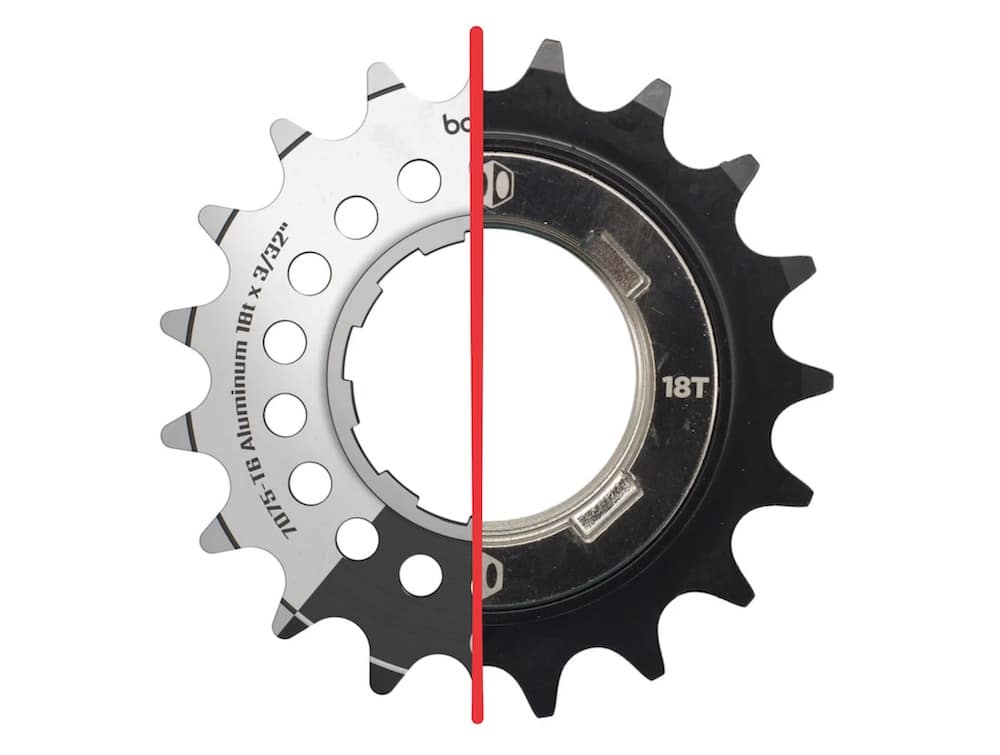
A BMX race cog and a freewheel do the same basic job, but they work with different rear hub systems.
A cassette cog slides onto the hub’s driver or freehub body.
The engagement mechanism sits inside the hub, while the cog is simply the toothed part that the chain runs on.
A freewheel threads directly onto the hub and contains its own internal ratchet mechanism.
That means the two are not interchangeable.
BMX Race Cog
A cassette cog is usually the better choice if you want:
- Easier gearing changes
- More tooth-count options
- Lower replacement cost
- A lighter rear hub setup
- Faster cog swaps between tracks
Because the cog is separate from the hub’s engagement system, you can change gearing without replacing the entire mechanism.
BMX Race Freewheel
A freewheel is a simpler all-in-one setup.
It is common on many older or more affordable BMX race wheels, but changing gearing usually means replacing the whole freewheel.
Freewheels can still work very well, especially when you want a basic and reliable setup.
The key is to buy the correct part for your hub.
A cassette cog will not fit a threaded freewheel hub, and a freewheel will not work on a cassette hub.
How To Choose The Right BMX Race Cog
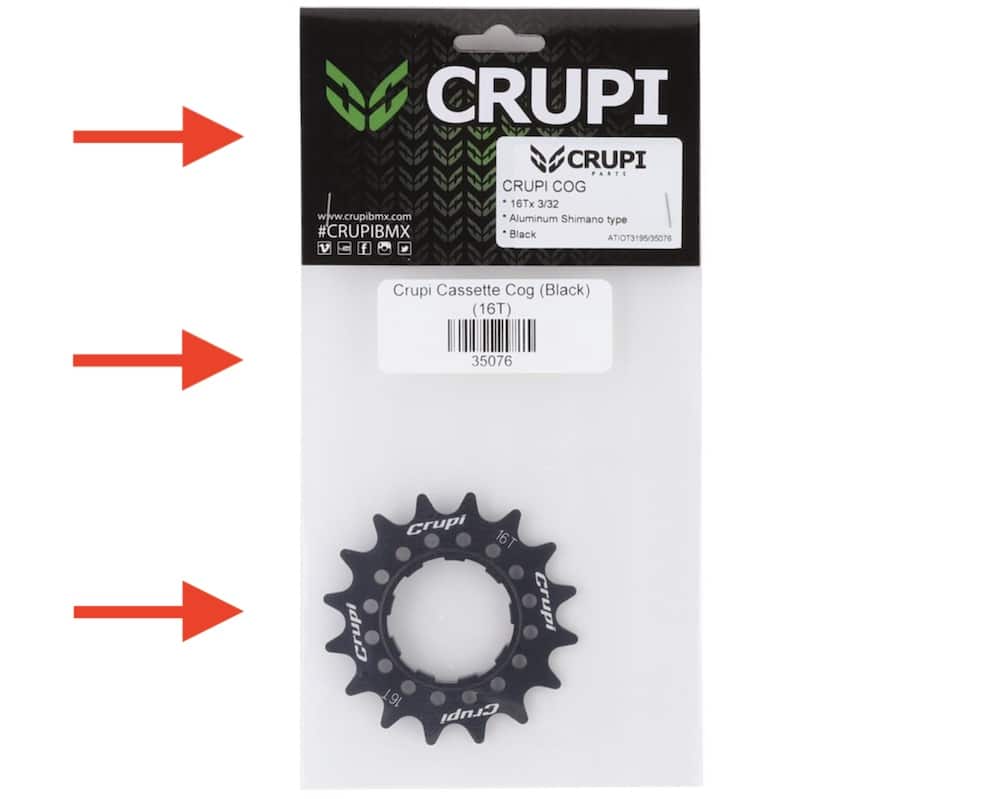
- Check hub compatibility first: Confirm whether your hub uses a Shimano-style freehub body, a Profile-specific system, or another setup. Not every cog fits every BMX race hub.
- Choose the right tooth count: Your rear cog works with the front BMX race chainring to create the gear ratio. A smaller cog gives you a harder gear, while a larger cog makes pedaling easier.
- Match the cog to your chain: This roundup focuses on 3/32″ BMX race drivetrains. Make sure your chain, chainring and rear cog all work together.
- Pick steel or aluminum: Steel is better for durability and regular training. Aluminum saves weight but usually wears faster.
- Think about your riding style: Powerful riders and frequent trainers will usually benefit more from steel. Lighter riders or race-day builds may suit aluminum.
- Watch the chainline: The chain should run as straight as possible from the chainring to the rear cog. A reversible cog or extra spacers can help with alignment.
- Consider rear-wheel position: Changing cog size can alter chain length and move the rear wheel forward or backward in the dropouts.
- Check available sizes: Some cogs come in a wider tooth range than others. Pick one that gives you enough room to fine-tune your gearing later.
- Do not choose by weight alone: A few saved grams are not worth much if the cog wears quickly or does not fit your hub correctly.
Common BMX Race Cog Mistakes
- Using a worn chain with a new cog: An old chain can wear a fresh cog faster and may cause skipping or rough pedaling.
- Ignoring cog wear: Replace the cog when the teeth become sharp, hooked or uneven.
- Installing spacers incorrectly: Poor spacer placement can push the cog too far inward or outward and create a bad chainline.
- Tightening the lockring incorrectly: A loose cog can move under load, while overtightening may damage parts. Follow the hub manufacturer’s instructions.
- Using an aluminum cog for heavy daily training: Aluminum is light, but steel is usually the better choice for repeated use and longer wear.
- Changing cog size without checking the chain: A different tooth count may require a chain-length adjustment before the rear wheel sits correctly.
Conclusion: Pick The Right BMX Race Cog
The best BMX race cog is the one that fits your hub, matches your gearing and suits how often you ride.
For most racers, a steel cog is the safer choice.
It lasts longer, handles regular training better and adds very little extra weight.
Aluminum is better when you are chasing the lightest possible race setup and do not mind replacing parts sooner.
The Box One chromoly, Crupi chromoly and Answer Holeshot are strong picks for durability.
The Elevn Alu, Crupi Alu and Box One Alu are better for lightweight race builds.
And if you use a compatible Profile hub, the Profile Racing steel cog is the obvious match.
Do not choose by color or weight alone.
Check compatibility first, then tooth count, material and chainline.
Get those right, and your drivetrain will run smoother, last longer and work better out of the gate.
FAQs About BMX Race Cogs
What is a BMX race cog?
A BMX race cog is the rear gear that slides onto a cassette hub. It works with the front chainring to create the bike’s gear ratio.
What is the difference between a BMX cog and a freewheel?
A cog fits onto a cassette hub, while a freewheel threads onto the hub and contains its own engagement mechanism. They are not interchangeable.
Are BMX race cogs 3/32″?
Most modern BMX race cogs are made for 3/32″ chains. Still, always check the product details before ordering.
Will any BMX race cog fit my hub?
No. Some use a Shimano-style freehub body, while others are made for specific hubs, such as Profile.
What size BMX race cog should I use?
That depends on your front chainring, wheel size, track and preferred gear ratio.
Is a smaller rear cog faster?
A smaller rear cog creates a harder gear when the front chainring stays the same.
Is a larger rear cog easier to pedal?
Yes. A larger cog creates an easier gear, which can improve acceleration and reduce the effort needed out of the gate.
Are steel BMX race cogs better?
Steel cogs are usually better for regular training and long-term use.
Are aluminum BMX race cogs worth it?
Yes, if reducing weight is a priority. They are best suited to lightweight race builds, but they usually wear faster than steel.
How long does a BMX race cog last?
It depends on the material, chain condition, maintenance and how often you ride. A steel cog will usually last longer than an aluminum one.
When should I replace my BMX race cog?
Replace it when the teeth become sharp, hooked or uneven. Skipping, rough pedaling and extra drivetrain noise can also point to wear.
Should I replace the chain when changing the cog?
It is a good idea if the chain is already stretched or worn.
Can I use a new cog with an old chain?
You can, but only if the chain is still in good condition.
Does changing cog size affect chain length?
Yes. A different tooth count can change rear-wheel position and may require adding or removing chain links. (A narrow half-link chain can provide finer adjustment when a full-link chain does not place the rear wheel exactly where you want it. See whether half-link chains are good for BMX racing.)
Does cog size change acceleration?
Yes. A larger rear cog generally improves acceleration, while a smaller cog creates a harder gear with more speed potential.
Can I use a 1/8″ cog with a 3/32″ chain?
Only when the manufacturer confirms compatibility.
How do I know whether my cog is worn?
Look for hooked, pointed or uneven teeth. You may also notice noise, rough chain movement or slipping under power.
Which BMX race cog is best for training?
A steel cog is usually the best training option. It handles repeated use better and should need replacing less often.
Which BMX race cog is best for race day?
A quality aluminum cog is a good choice when saving weight matters most.
Note: Upgrading more than the cog? A complete BMX race wheelset can give you a lighter rim, better hub engagement and a fresh drivetrain setup in one purchase.