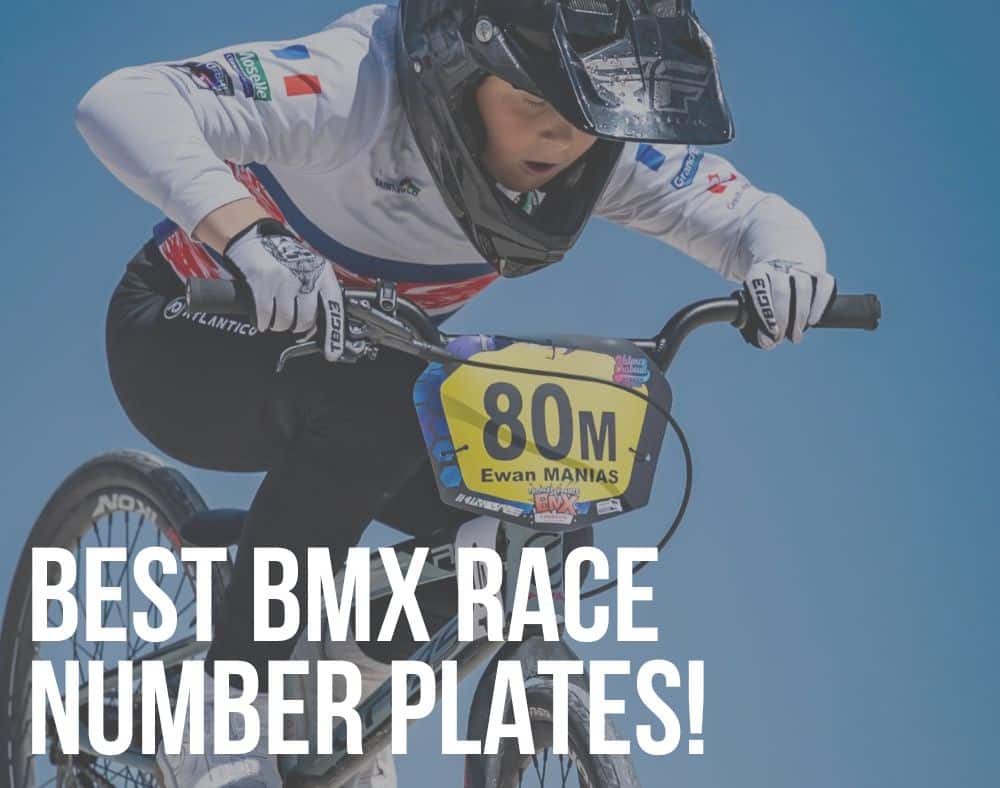

A BMX race number plate looks like a simple part, but there is a bit more to it than just picking the coolest color.
You want a plate that fits your bars properly, keeps your race number easy to read, stays secure, and does not get in the way of cables and whatnot.
Size matters, too.
Mini and Pro plates are built around different cockpit sizes.

Moreover, some brands also shape or vent their plates differently to keep weight down and improve fit.
Then there are race rules, number colors, side plates, and mounting systems to think about.
So for this roundup, I focused on BMX race number plates that combine clean visibility, low weight, solid mounting, and a race-ready design built for wins.
Whether you are setting up a first race bike or just replacing an old plate that has seen one too many gate drops, these are my favorite picks.
This post covers:
- Best BMX Race Number Plates
- What Makes A Good BMX Race Number Plate?
- BMX Race Number Plate Colors Explained
- Do You Need A Side Plate For BMX Racing?
- How To Mount A BMX Number Plate
- Common BMX Number Plate Mistakes
- Conclusion: Pick The Right BMX Race Number Plate
Best BMX Race Number Plates
1. Box Two Number Plate
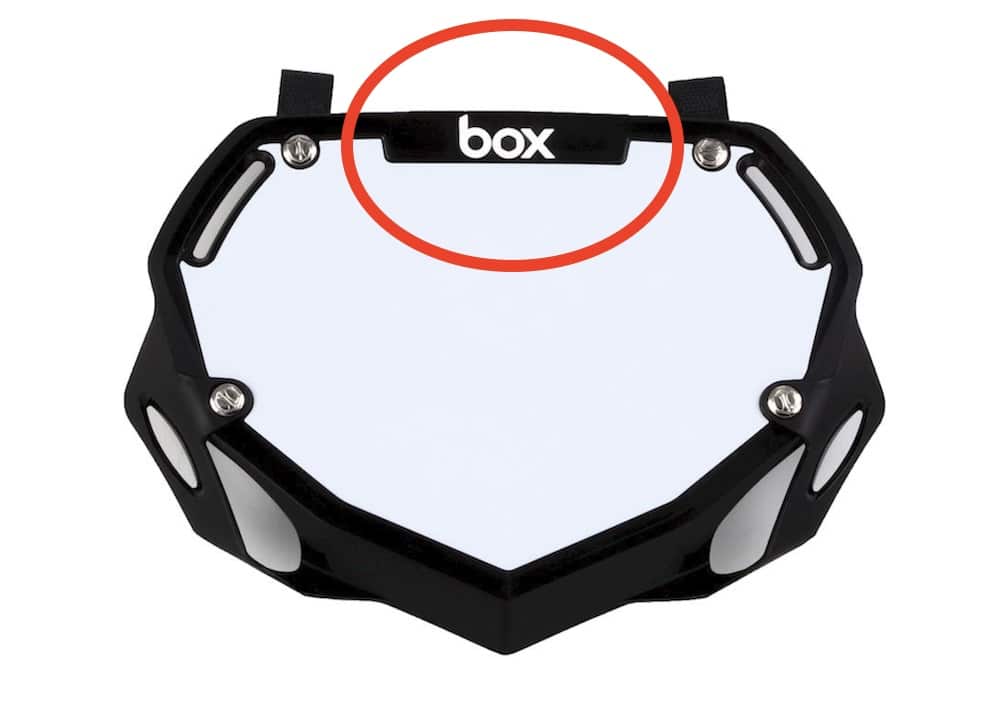
The Box Two number plate is a clean, race-focused option with a bit more thought behind it than a flat piece of plastic.
It uses 3D injection molding, airflow ports to cut weight and drag, and hook-and-loop straps secured with custom Box rivets.
The number pallet is also replaceable, which is a nice touch if you want to freshen things up later.
I also like that Box offers both Mini and Pro sizes, so you can match the plate better to the rider and handlebar setup instead of forcing one size to work for everyone.
And despite the sculpted design, it stays very light.
Box Two Plate Specs:
- Width (Mini): 9″
- Height (Mini): 6.5″
- Width (Pro): 9.5″
- Height (Pro): 8.25″
- Mounting: Hook-n-loop straps with steel rivets
- Price: $24.99
2. Answer 3D Number Plate
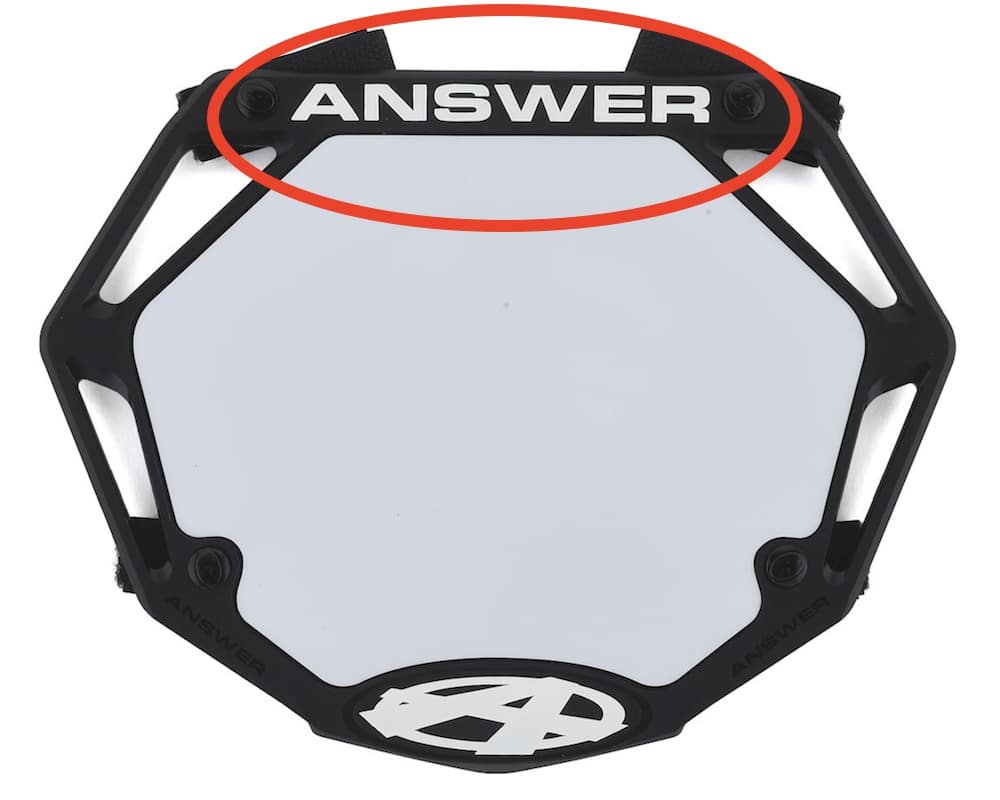
Light, clean, and nicely shaped — that is what I like about the Answer 3D number plate.
The sculpted shape keeps it neat around the cockpit, and the vented face trims excess material without making the plate look flimsy.
Answer also offers separate Mini and Pro sizes, which is important because a huge plate on small bars just looks wrong.

The Mini version is aimed at Cruiser, Mini, and Expert bars, while the Pro version fits larger Pro setups.
Answer 3D Plate Specs:
- Width (Mini): 7-5/8″
- Height (Mini): 5-3/4″
- Width (Pro): 10-1/8″
- Height (Pro): 7-7/8″
- Mounting: Strap closures
- Price: $19.99
3. Tangent Ventril 3D Number Plate
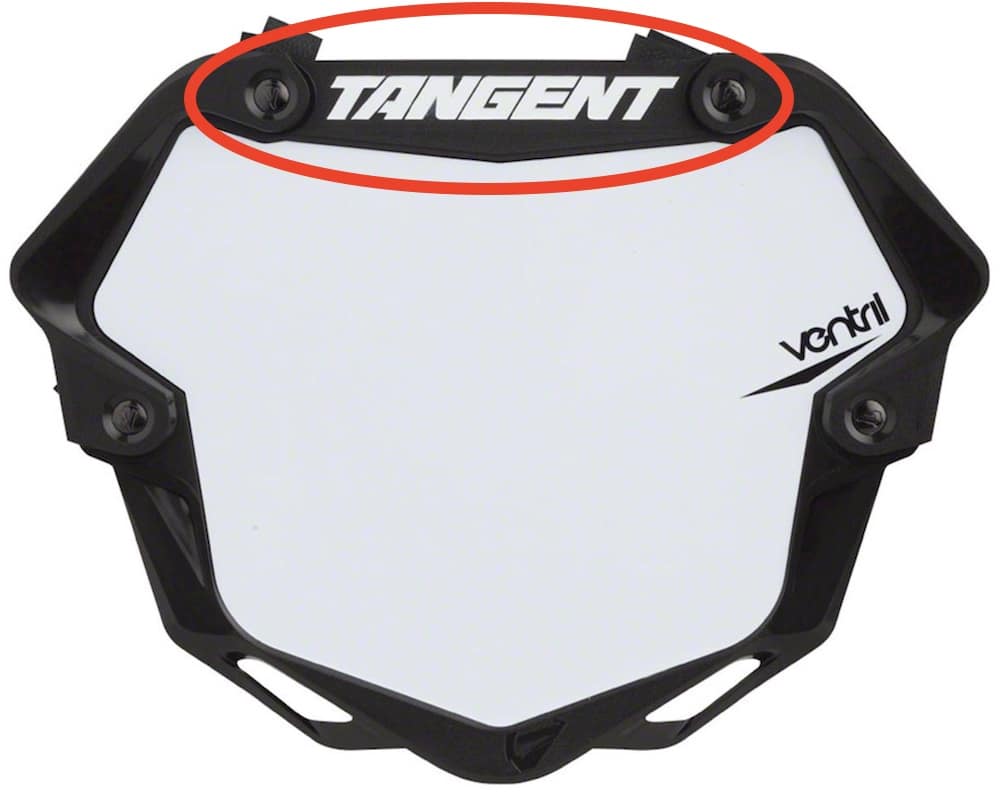
If you want a number plate with a bit more attitude, the Tangent Ventril 3D stands out immediately.
Its angular 3D shape gives it a sharper look, while the high-impact polymer construction keeps it light and durable.
Tangent also designed it to sit slim around the bars, which helps keep the cockpit from looking bulky.
You also get Velcro mounting straps and a backing for easy number installation, so setup is pretty painless.
Tangent Ventril 3D Plate Specs:
- Mini size: 6″
- Pro size: 7″
- Mounting: Velcro straps
- Price: $21.95
4. Insight Pro 3D Vision 2 Number Plate
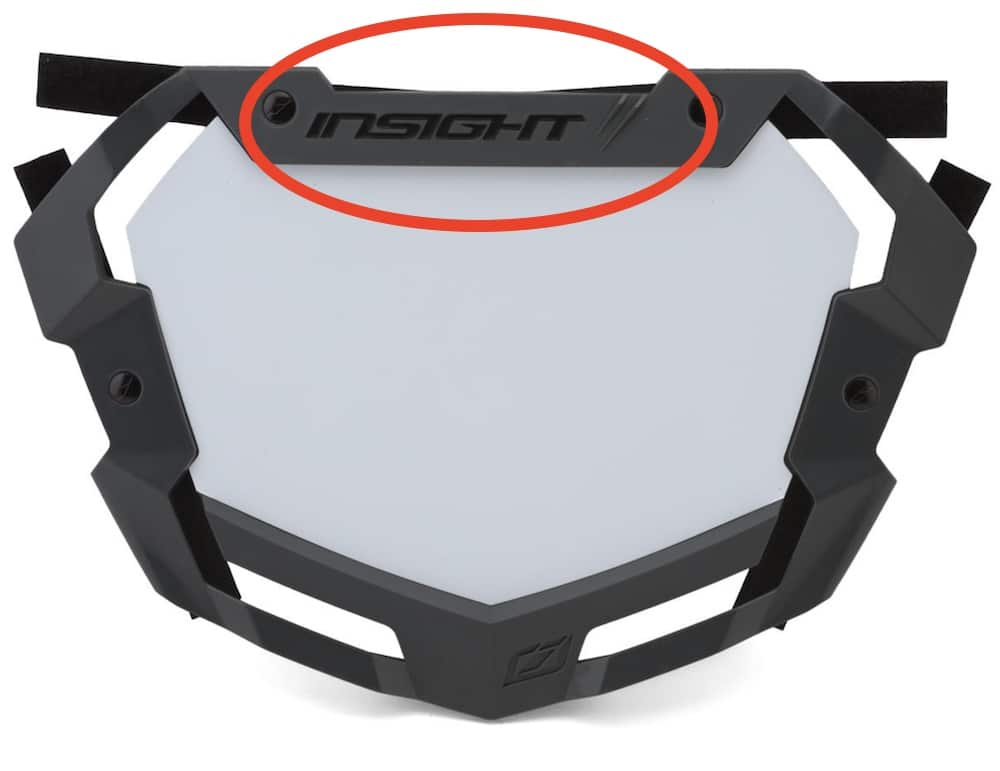
This one has a bit more visual punch.
The Insight Pro 3D Vision 2 mixes a sculpted shape with embossed logos, venting, and a dual gloss/matte finish, so it looks more premium than a basic flat plate.
Insight also adds a UV coating to help slow down color fading, which is a nice detail if your bike spends plenty of time outside.
Four Velcro straps, secured with embossed Insight rivets, handle mounting, so setup stays straightforward.
I like this one for riders who want something that looks a little more finished without going full spaceship.
Insight Pro 3D Vision 2 Plate Specs:
- Width (Mini): 9.05″
- Height (Mini): 6.37″
- Width (Pro): 7.25″
- Height (Pro): 10.5″
- Mounting: Velcro straps
- Price: $20.99
5. INSIGHT V2 Number Plate
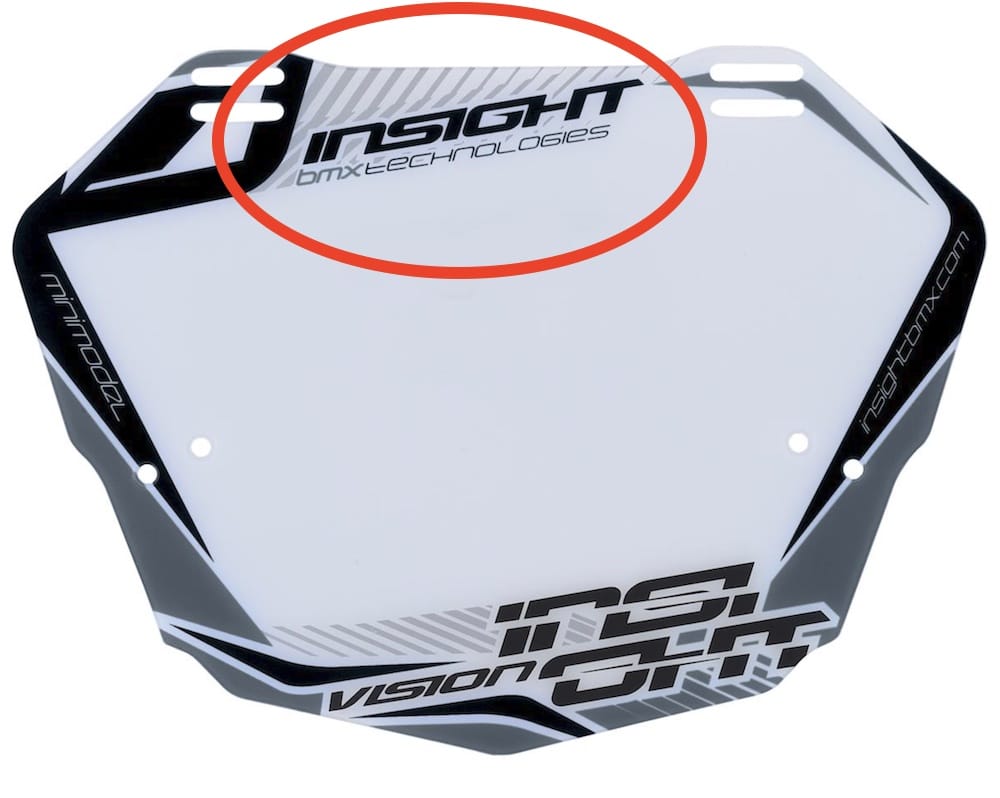
Not every race plate needs a sculpted 3D shell.
The Insight V2 goes the other way with a flexible clear-plastic design that stays light, simple, and easy to fit.
Insight uses 3M high-density clear plastic, screened graphics, and a laminated finish to help protect the face from scratches.
I also like the weight here.
The Mini/Cruiser version is just 1.4 oz, while the Pro comes in at 1.9 oz, so this is a nice pick if you want a clean race setup without adding much bulk.
Four Velcro loops handle mounting, and Insight also includes zip ties as another way to secure it.
INSIGHT V2 Plate Specs:
- Width (Mini): 8.9″
- Height (Mini): 6.2″
- Width (Pro): 10.3″
- Height (Pro): 7.2″
- Mounting: Velcro loops + zip ties
- Price: $15.95
6. MCS BMX Number Plate
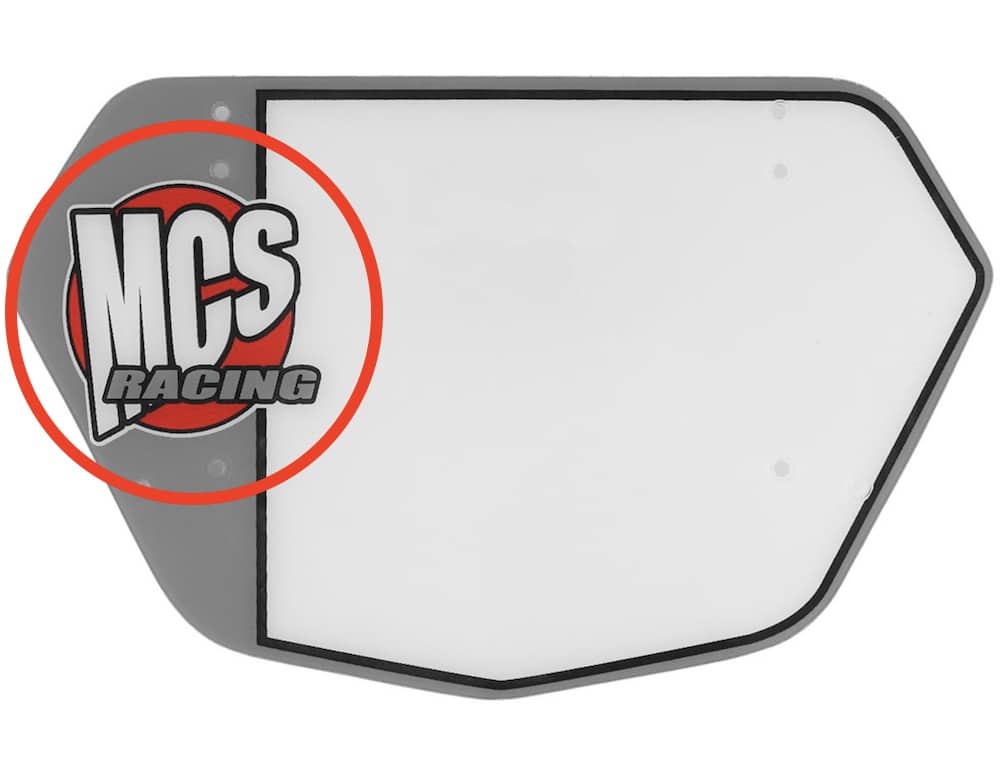
Sometimes you just want a race plate that does the job without charging you for a bunch of extra shaping, vents, or fancy hardware.
That is where the MCS BMX number plate fits nicely.
It uses shatter-proof polycarbonate, comes in separate Mini and Pro sizes, and mounts with four zip ties.
Simple. Cheap. Done.
This is also the easiest to recommend in the roundup if you want a straightforward race plate and would rather spend the rest of your budget somewhere more exciting.
MCS BMX Plate Specs:
- Width (Mini): 8.5″
- Height (Mini): 5.5″
- Width (Pro): 11.25″
- Height (Pro): 6.75″
- Mounting: Zip ties
- Price: $10.99
What Makes A Good BMX Race Number Plate?
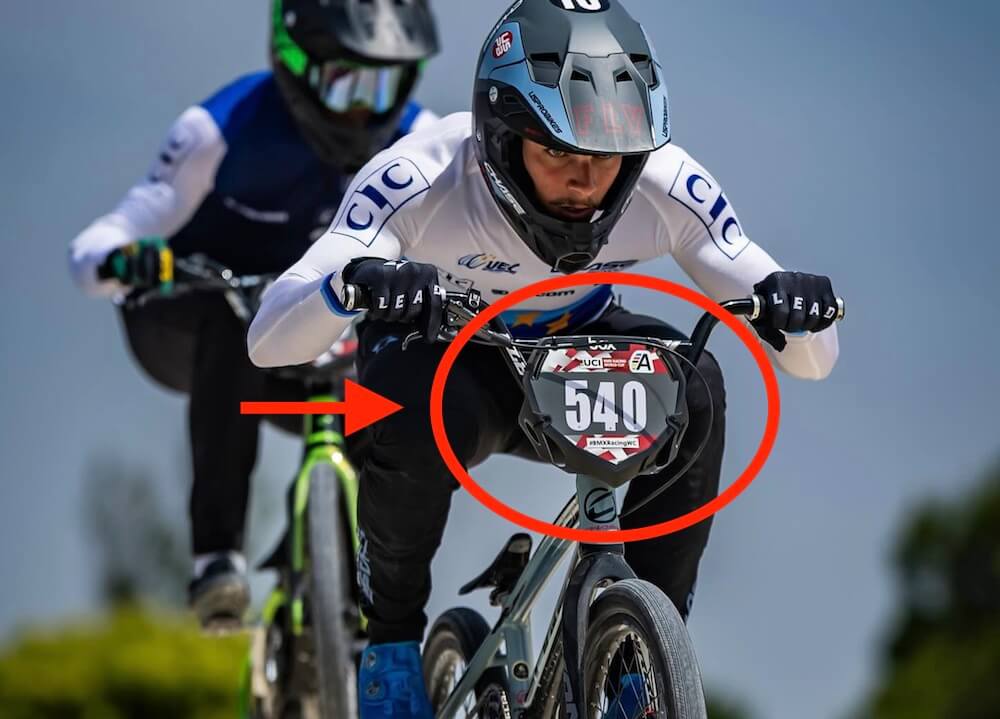
A good BMX race number plate should be easy to read, easy to mount, and sized properly for the rider’s cockpit.
Here is what I would look for:
- Clear number visibility: The whole point is to make your race number easy to read. A clean shape and enough usable space matter more than flashy graphics and spacey design.
- Correct size: Mini and Pro plates are not just cosmetic differences. A smaller plate fits compact bars better, while a larger Pro plate gives more room on bigger cockpits.
- Secure mounting: Velcro straps, zip ties, or similar systems should hold the plate firmly without letting it flap around.
- Low weight: A number plate won’t transform your bike, but there is no reason to hang a brick off the bars either.
- Good durability: Flexible plastic, polycarbonate, or impact-resistant molded materials work well because race bikes do get bumped around.
- Enough clearance: The plate should sit cleanly around your brake cables, bar pad, stem, and controls.
- Weather resistance: UV protection, laminated graphics, and scratch-resistant finishes are nice extras.
- Replaceable parts: Some plates let you replace the number panel or backing instead of buying a completely new plate.
- Colors that match race rules: Always check the current rules for your sanctioning body before choosing plate and number colors.
BMX Race Number Plate Colors Explained
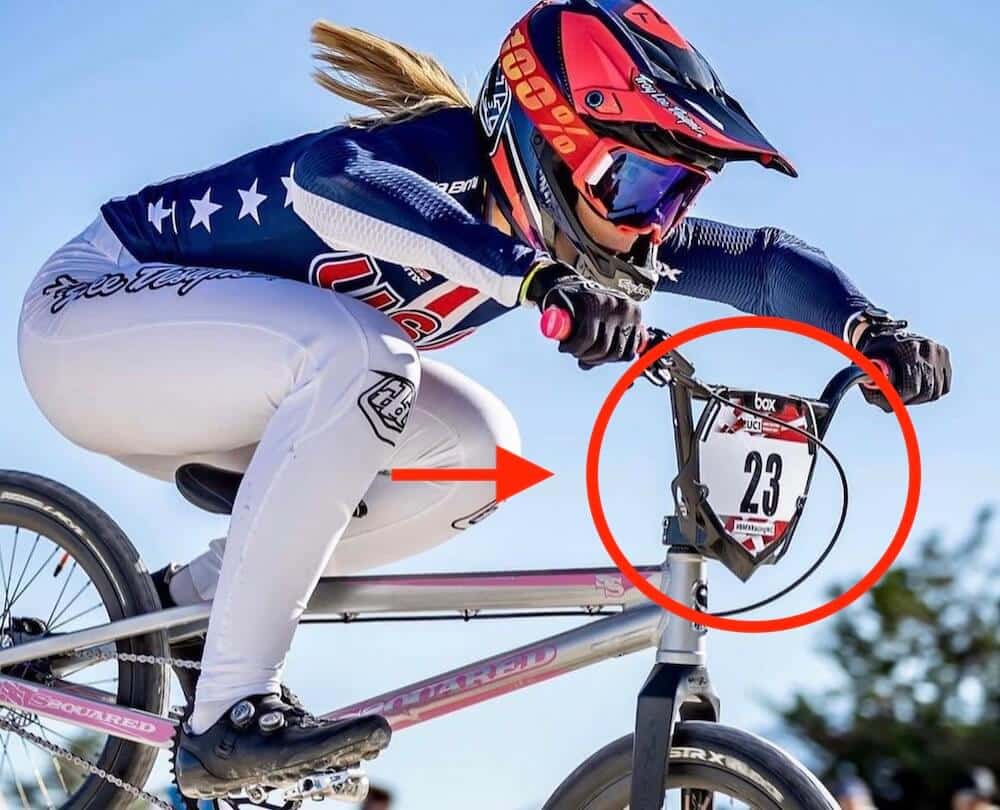
BMX number plate colors are not just about matching your bike.
Under USA BMX rules, the background and number colors can show what type of number a rider has earned, so getting them right matters for both visibility and scoring.
The rulebook also requires handlebar-mounted numbers to be at least 3″ tall, clearly legible, and unobstructed.
Here is the quick breakdown:
- District: black numbers on a white background
- State/Provincial Expert, Girls Expert & Cruiser: white numbers on a blue background
- State/Provincial Intermediate & Novice: white numbers on a green background
- Gold Cup: black #1–3 on a yellow background
- Race of Champions: white or black #1 on a red background
- National Age Group (NAG): white numbers on a grey background
- National: white #1–99 on a black background
- Men Pro, Women Pro & Vet Pro: black numbers on a white background
- Men/Women Junior: white numbers on a black background
- UCI World #1–8: black numbers on a white background with a small “W” next to the number
One detail I would not ignore: USA BMX recommends that custom plates use the correct solid background color across the entire plate, touching all sides, rather than mixing in extra graphics behind the number area.
Sponsor logos are allowed, but the plate still needs to stay easy to read.
So yes, color matters.
Do You Need A Side Plate For BMX Racing?
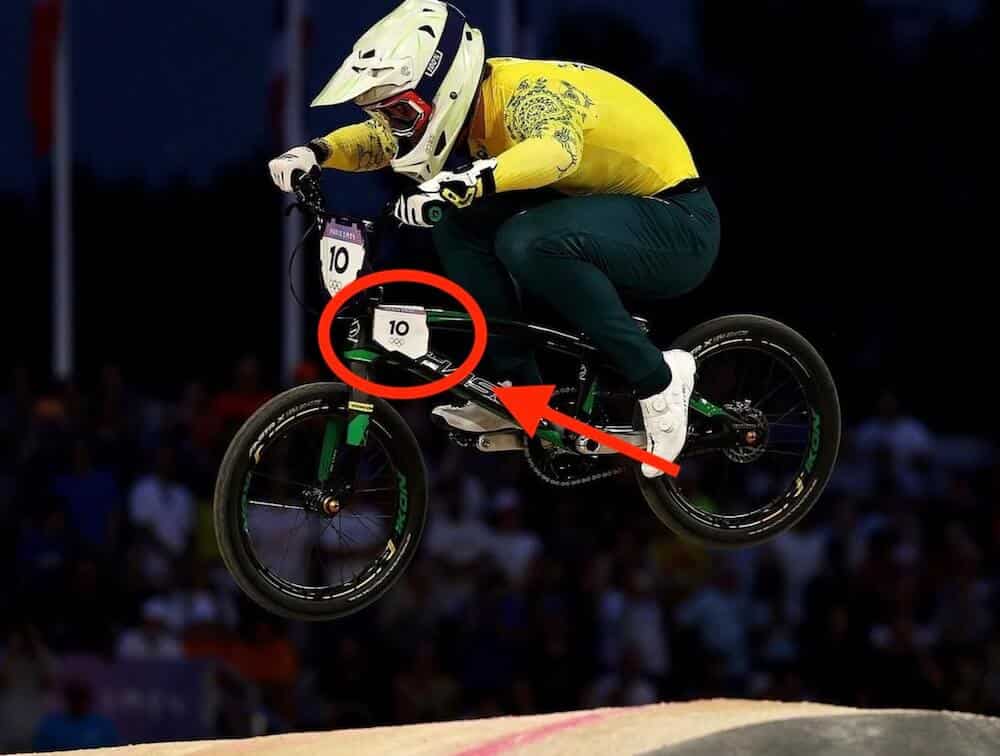
For USA BMX National events, yes.
Riders must run a side plate in addition to the front number plate.
USA BMX introduced that requirement to make it easier for staging, starters, and scorers to identify riders.
Moreover, recent National Series guidance still tells riders to make sure the correct number appears on both the plate and side plate.
For local racing, requirements can vary, so I would always check with your track or sanctioning body before race day.
A side plate usually mounts to the frame and carries the same race number as your front plate.
When choosing one, I would look for:
- Clear number visibility
- Secure mounting
- Enough room for the correct number
- A shape that fits the frame cleanly
- A background color that matches current race rules
If you are racing Nationals, this is not really an optional style upgrade.
It is part of the race setup.
And if you need one, I’d look at these two:
- Box Two Side Number Plate: A clean match if you are already running a Box front plate. It uses a shaped race design and keeps the number area easy to read without looking bulky.
- Answer BMX Side Number Plate: A simple, lightweight option with a clean white/black layout that works well if you want something straightforward and race-ready.
How To Mount A BMX Number Plate
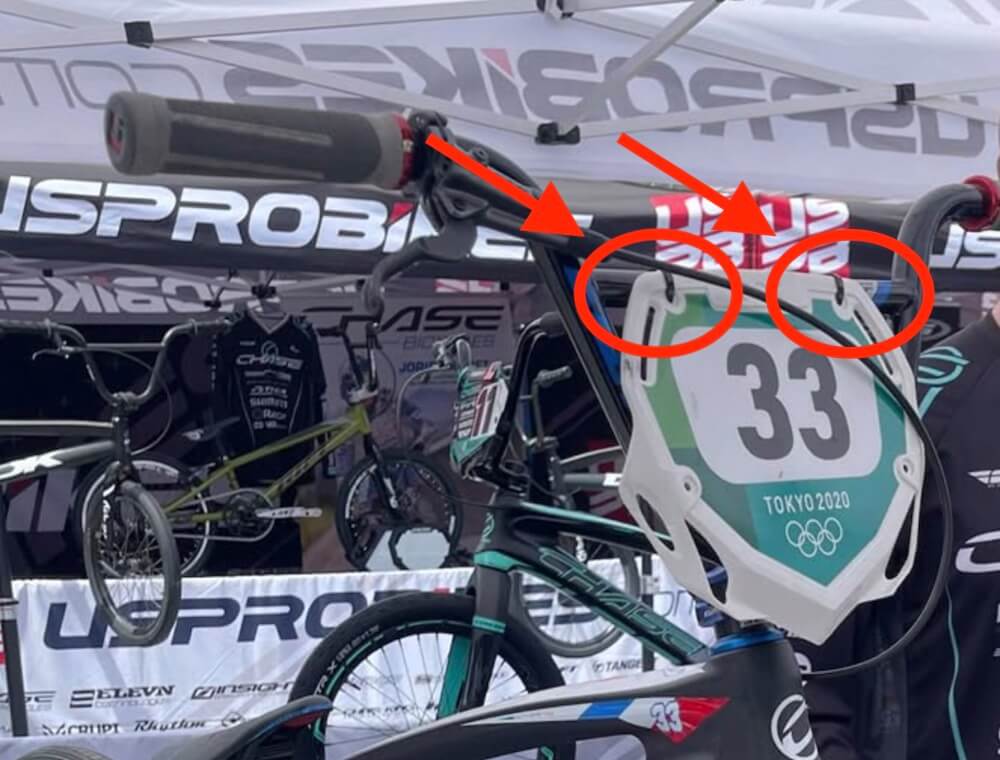
Mounting a BMX number plate is pretty simple, but it’s still worth taking the time to get it right.
Start by holding the plate against the bars and checking where it sits naturally around the stem, brake cable, lever, and any bar pad.
Then:
- Center the plate: Keep it straight on the bars so the number is easy to read from the front.
- Route straps cleanly: Wrap the Velcro straps or zip ties around the bars without pinching brake cables or controls.
- Keep cables free: Make sure the brake cable can still move normally when you turn the bars.
- Do not overtighten: Tight enough to stop the plate moving is all you need. Cranking down too hard can distort a flexible plate.
- Trim excess zip ties: If your plate uses zip ties, cut the extra length off cleanly so nothing sticks out.
- Check bar movement: Turn the bars fully left and right before riding to make sure nothing catches.
- Recheck after your first laps: Plates can settle slightly, so give the straps another quick check once you have ridden the bike.
I also like to keep the plate as close to the bars as possible without crushing cables.
That gives the cockpit a cleaner look and stops the plate from bouncing around.
Common BMX Number Plate Mistakes
- Choosing the wrong plate size: A Pro plate can look huge on smaller bars, while a Mini plate may look cramped on a bigger cockpit.
- Blocking the brake cable: The plate should sit cleanly without pinching or trapping the cable.
- Mounting it crooked: It sounds minor, but a twisted plate looks messy and can make the race number harder to read.
- Using the wrong colors: Plate and number colors can matter under race rules, so check your sanctioning body before ordering decals.
- Making the numbers too small: Your race number needs to stay easy to read at speed.
- Overcrowding the plate: Too many stickers, logos, or graphics can make the actual number harder to see.
- Leaving zip ties untrimmed: Small detail, but sharp plastic ends sticking out around the cockpit are not exactly ideal.
- Overtightening the straps: You only need enough tension to keep the plate secure. Too much can flex the plate.
- Ignoring side-plate requirements: If you are racing an event that requires one, do not show up with only a front plate.
- Not checking the setup before racing: Turn the bars fully, pull the brake, and make sure nothing rubs, catches, or moves.
Conclusion: Pick The Right BMX Race Number Plate
The best BMX race number plate fits your cockpit cleanly, keeps your race number easy to read, and matches the rules you actually race under.
That is really it.
You do not need the wildest shape or the most expensive plate on the gate.
For smaller setups, a Mini plate usually keeps things cleaner and better proportioned.
Bigger Pro bars give you more room for a larger plate and more number space.
I also like the idea of matching the plate to how simple or flashy you want the bike to look.
Some riders will prefer a lightweight flat plate like the Insight V2.
Others will want something more sculpted like the Box Two, Answer 3D, Tangent Ventril, or Insight Pro 3D Vision 2.
And if you just want something cheap that does the job, the MCS is hard to argue with.
Before buying, just double-check:
- Plate size
- Mounting system
- Number visibility
- Race color rules
- Side-plate requirements
Get those right, and the rest mostly comes down to style and budget.
A race plate might be a small part of the bike, but it is sitting right up front for everyone to see.
Might as well make it a good one.
Note: If you are still building or upgrading a race bike, these guides may also help:
- Best BMX Junior Race Bikes: for smaller riders moving into proper race setups
- Best BMX Expert Race Bikes: for riders stepping up from Junior sizing
- Best BMX Pro Race Bikes: for larger riders who need a full-size race setup