
Looking for a BMX junior race bike that actually makes sense for your kid?
Let’s get into it.
This is the stage where racing starts to get really exciting.
Your kid is no longer just rolling around the track and figuring things out.

They’re getting stronger.
They’re sprinting harder.
They’re starting to pump better, hit corners with more confidence, and maybe even care about who gets to the first turn first.
That’s where a proper junior BMX race bike comes in.
Junior bikes usually sit between mini and expert sizes, making them a great next step for young riders who are growing out of their smaller setup.
But please don’t buy one just because the label says “Junior.”
BMX race bike sizing can be sneaky.
Some riders still do better on a mini with the right setup.
Others may fit a junior perfectly but need a shorter stem, smaller bars, or different cranks to make the bike feel dialed.
A good junior race bike SHOULD FEEL quick, light, and easy to throw around.
It should also use race-specific parts that help your kid perform better.
Because when the fit is right, everything feels smoother.
The sprint. The gate. The rollers. The corners. Even the confidence.
And that’s what we want.
Below, I’ll walk you through my favorite BMX junior race bikes for young racers ready to keep progressing without fighting the wrong bike.

This post covers:
- BMX Junior Race Bikes Overview (Comparison Table)
- Best BMX Junior Race Bikes Worth Getting
- How To Choose The Right BMX Junior Race Bike
- Conclusion: Get The Ideal BMX Junior Race Bike?
- FAQs About BMX Junior Race Bikes
BMX Junior Race Bikes Overview (Comparison Table)
| Bike | TT Length | Chainstay | HT Angle | Bar Rise | Crank Length | Weight | Price |
|---|---|---|---|---|---|---|---|
| Chase Edge Junior | 18.75″ | 12.5″ | 73° | 4.25″ | 145mm | 16.8 lbs | $649.99 |
| Position One Junior | 19″ | 13″ | 73° | 4.25″ | 155mm | 16.9 lbs | $489.99 |
| Huffy BMX Pro Lightning | 18.75″ | 13.25″ | 73° | 4.5″ | 152mm | 18.9 lbs | $399.99 |
| DK Swift Junior | 18.25″ | 13″ | 73° | 5.2″ | 155mm | 17.3 lbs | $549.99 |
Best BMX Junior Race Bikes Worth Getting
1. Chase Edge Junior BMX Race Bike
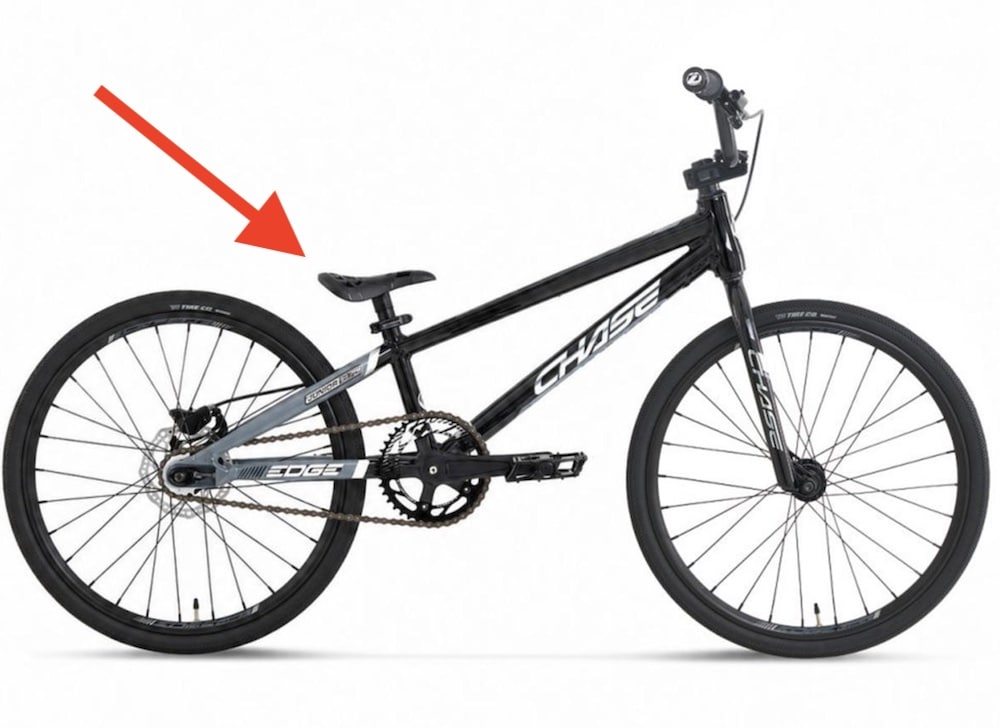
The Chase Edge Junior BMX bike feels like the pick for parents who already know their kid is serious about racing.
It’s not just a “try BMX and see what happens” kind of bike.
With an 18.75” top tube and recommended sizing around 4’ to 4’5”, this Junior model sits nicely in that next-step zone after a mini.
I really like that Chase didn’t water this bike down just because it’s for younger riders.
You get a triple-butted hydroformed 6061 T6 alloy frame, which is exactly the type of frame construction I want to see on a proper race bike: light where it can be, stiff where it needs to be.
The enclosed rear dropouts and integrated chain tensioners are also a BIG win because a clean, locked-in rear end matters when kids start pushing harder out of the gate.
Another standout is the Shimano MT200 hydraulic disc brake setup with a 140mm rotor, which gives this bike a more premium feel than many junior completes.
And yes, a hydraulic disc brake might sound a little extra for a young rider, but I like it because the braking feels smooth, controlled, and predictable.
Moreover, the 150mm alloy cranks fit this size range flawlessly, though I’d still watch your kid’s pedal stroke to make sure they aren’t rocking side to side under power.
Chase also uses Tioga PowerBlock 20 x 1-1/8” tires, which keep the bike feeling fast, light, and very race-focused on hard-packed tracks.
PowerBlocks are no joke.
The triple-engagement rear cassette hub is another detail I’m stoked to see because a quicker-feeling hub can make the bike more direct when a rider snaps out of the gate.
If your kid is ready to move beyond the beginner stage and you want a junior BMX race bike that’s fast, sharp, and properly built for track progression, the Chase Edge Junior is easily one of the strongest picks here.
Note: The Chase Edge Junior is also available with a carbon fork setup. That’s a nice option if you want to shave some weight from the front end and get a more race-focused build without upgrading the fork later.
1.1. Chase Edge Junior Race Bike Specs:
- Frame: Triple butted hydroformed 6061 T6 alloy frame
- Top tube length: 18.75″
- Chainstay length: 12.5″
- Head tube angle: 73°
- Forks: Chase Edge Mini fork
- Bars: Chase Edge bar (4.25″ rise, 24″ width)
- Stem: Chase Edge stem (40mm)
- Cranks: Chase Edge cranks, 3-piece alloy (145mm)
- Chainring: Insight 5 Bolt chainring (BCD 110mm, 37T)
- Chain: KMC Z1 narrow chain
- Pedals: Mini platform pedals
- Seat: Mini seat & seat post combo
- Brakes: Hydraulic disc brake BR-MT200 (140mm rotor)
- Front wheel: Chase Edge Mini front hub (sealed), Chase Edge 118 rim (double wall)
- Rear wheel: Sealed cassette hub, Chase Edge 118 rim (double wall)
- Tires: 2 x Vee Rubber Speedster tires (1-1/8″)
- Weight: 17.5 lbs (7.6 kg)
- Recommended sizing: 4′ – 4’5″
- Price: $649.99
2. Position One Junior BMX Race Bike
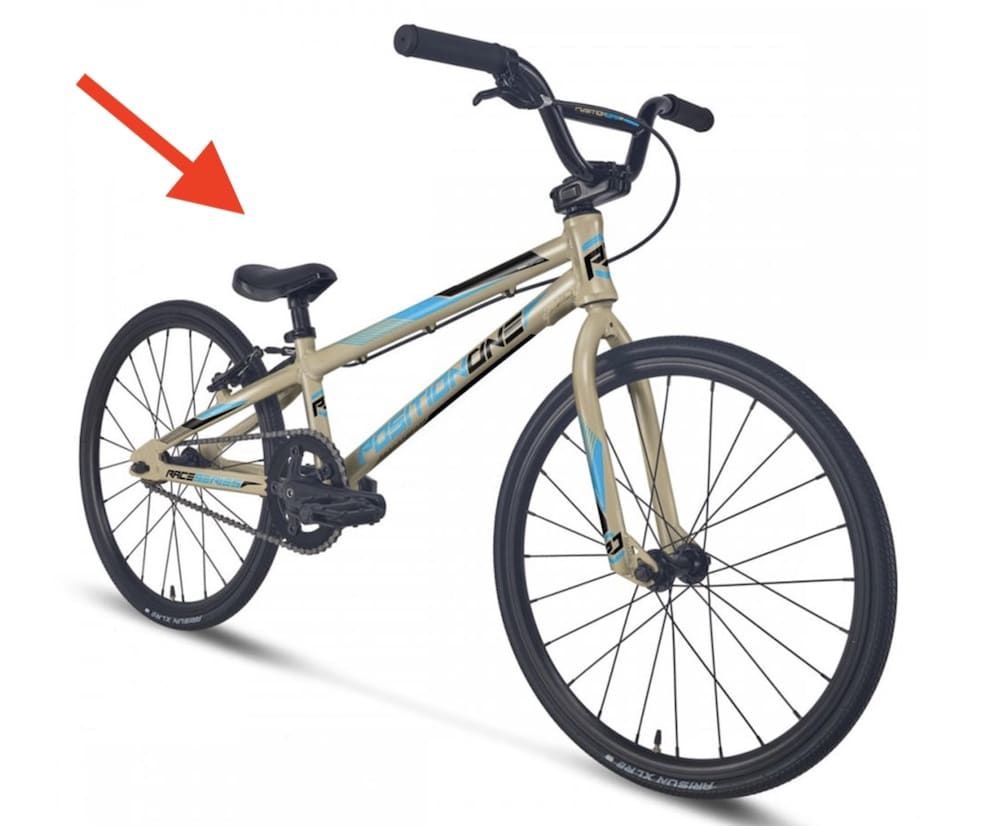
The Position One Junior BMX bike is the one I’d look at if you want a proper junior race bike without jumping straight into the pricier stuff.
It has that “let’s get serious, but keep it sensible” vibe, which is perfect for newer racers.
The 6061 T6 alloy frame uses a 19” top tube, so it gives growing riders a little more room than the Chase Edge Junior.
I like that Position One borrows race-proven geometry from Chase BMX because it gives the bike a more legitimate track feel rather than just another entry-level complete.
The full chromoly race fork and chromoly bars are also a nice bonus at this level, especially for kids who are starting to ride more laps and build confidence.
With 155mm alloy cranks, this bike edges a little longer than the Chase, so I’d pay attention to how smoothly your kid pedals when sprinting hard.
The 40/16 gearing gives it a quick junior race feel, but it shouldn’t be ignored if your rider is still building strength out of the gate.
Another goodie is the Arisun XLR8 20 x 1-1/8” tires, ensuring fast rolling on the track.
At 16 lbs 15 oz, it’s not the lightest bike here, but it’s still very reasonable for a junior race complete with sealed hubs and double-wall rims.
The V-brake setup keeps things simple, easy to maintain, and parent-friendly, which I honestly don’t mind on an entry-level junior bike.
If your kid is moving into junior sizing and you want a solid, race-ready starter bike with good parts for the money, the Position One Junior is a smart pick.
2.1. Position One Junior Race Bike Specs:
- Frame: 6061 T6 alloy frame
- Top tube length: 19″
- Chainstay length: 13″
- Head tube angle: 73°
- Forks: Full chromoly fork
- Bars: 4.25″ rise bar
- Stem: 6061 T6 alloy top load stem (40mm)
- Cranks: 3-piece alloy cranks (155mm)
- Chainring: 5 Bolt 110mm chainring (40T)
- Pedals: Platform pedals
- Seat: Mini seat/seat post combo
- Brakes: Alloy V-brake (95mm)
- Front wheel: Double Contact front hub (sealed), double wall rim
- Rear wheel: Double Contact rear hub (sealed), double wall rim
- Tires: 2 x Arisun XLR8 tires (1-1/8″)
- Weight: 16.9 lbs (7.6 kg)
- Recommended sizing: 4’0″ – 4’5.1″
- Price: $489.99
3. Huffy Pro Lightning Junior BMX Race Bike
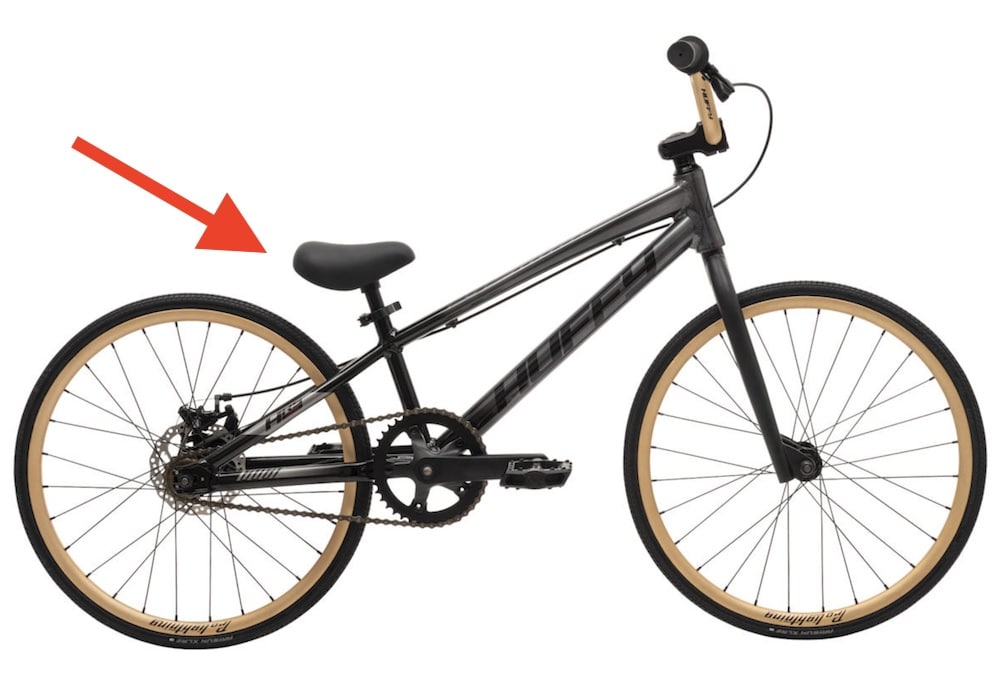
The Huffy Pro Lightning Junior is a great pick for a younger rider who wants a proper race bike without jumping straight into the higher-end price range.
Its 18.75″ top tube is right where I’d want it for a Junior-sized setup, and the rest of the bike is scaled properly too.
You get 152mm cranks, 4.5″ rise bars, 1-1/8″ tires, and 28H wheels, so the whole build suits smaller racers instead of feeling oversized.
I also like the 6061 aluminum frame, which helps keep the weight down to 18.9 lbs.
The 73° head tube angle and 13.25″ chainstay give it a quick, race-focused feel, while the 40/16 gearing keeps the drivetrain simple and easy to manage.
Braking is handled by a mechanical rear disc brake with a 140mm rotor, which is a nice touch at this price point.
It’s not the most advanced Junior race bike here, but that’s also not really the point.
For a beginner who needs the right size, low weight, and a real BMX race setup without overspending, the Pro Lightning Junior is a very easy bike to recommend.
3.1. Huffy Pro Lightning Junior Race Bike Specs:
- Frame: 6061 aluminum frame
- Top tube length: 18.75″
- Chainstay length: 13.25″
- Head tube angle: 73°
- Forks: Tapered fork with 32mm offset
- Bars: High-tensile steel bar (4.5″ rise, 21.25″ width)
- Stem: Alloy front load stem (50mm)
- Cranks: Square taper 3-Piece cranks (152mm)
- Chainring: 5-bolt alloy chainring (40T)
- Pedals: PC platform pedals
- Seat: Seat/seat post combo
- Brakes: Disc brake (140mm rotor)
- Front wheel: Unsealed front hub, single wall rim
- Rear wheel: Unsealed front hub, single wall rim
- Tires: 2 x Arisun XLR8 tires (1-3/8″)
- Weight: 18.9 lbs (8.6 kg)
- Recommended sizing: 4’0″ – 4’6″
- Price: $399.99
4. DK Swift Junior BMX Race Bike
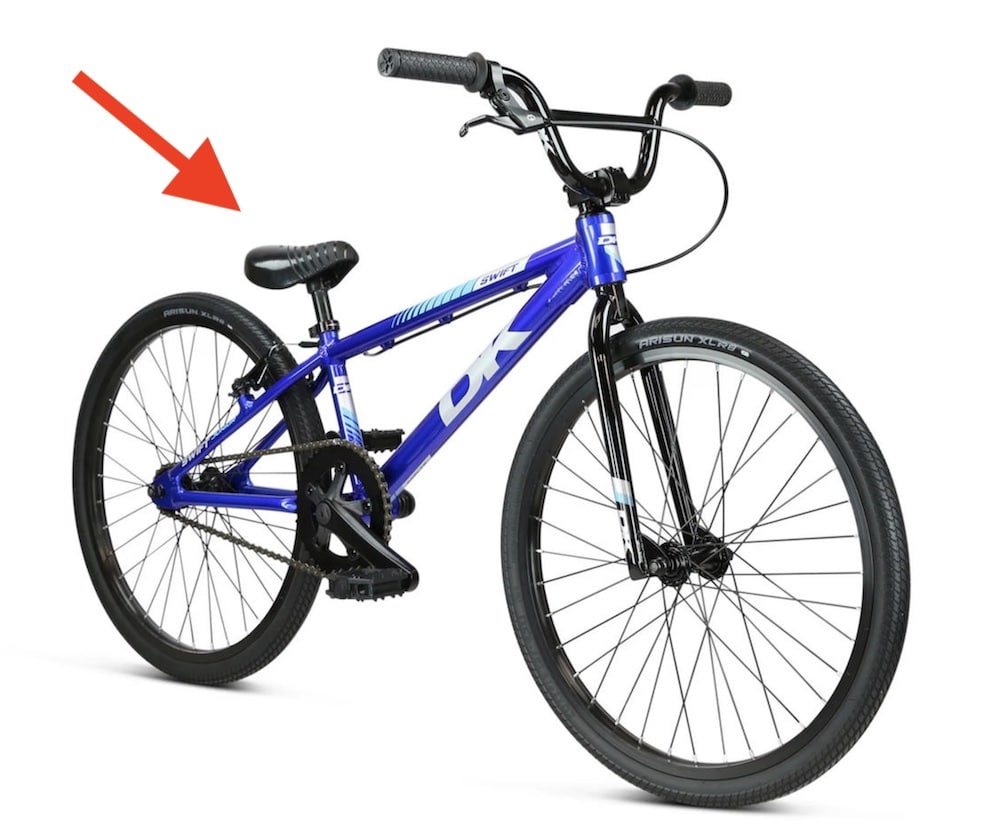
The DK Swift Junior BMX bike is interesting because I wouldn’t pick it for its fanciest parts list.
I’d pick it because of the fit.
With an 18.25” top tube, this bike can make a lot of sense if the Chase Edge or Position One feel a little too long or too stretched out.
And honestly, that matters more than getting the “better” spec sheet.
A kid who fits the bike properly will usually ride smoother, sprint better, and feel more confident than a kid fighting a bike that’s technically higher-end.
The 6061 aluminum frame keeps things reasonably light, while the 155mm forged alloy cranks match the junior size well.
Now, yes, the unsealed hubs and single-wall rims are the obvious weak spots here.
And because the Position One is cheaper while offering sealed hubs and double-wall rims, I can’t call the DK the best value pick.
But I still recommend it because sizing can outweigh specs, especially for younger riders.
Plus, wheels are something you can always upgrade later if your kid sticks with racing and starts pushing harder.
If the DK Swift Junior fits your kid better than the other two bikes, it might actually be the smartest choice, even if the parts package isn’t as dialed out of the box.
3.1. DK Swift Junior Race Bike Specs:
- Frame: 6061 aluminum frame
- Top tube length: 18.25″
- Chainstay length: 13″
- Head tube angle: 73°
- Forks: High-tensile steel fork
- Bars: High-tensile steel bar (5.2″ rise)
- Stem: Alloy front load stem (30mm)
- Cranks: Forged alloy 3-Piece cranks (155mm)
- Chainring: 5-bolt alloy chainring (42T)
- Pedals: Junior PC platform pedals
- Seat: DK Mini seat/seat post combo
- Brakes: Alloy Junior linear V-brake
- Front wheel: Unsealed front hub, single wall rim
- Rear wheel: Unsealed front hub, single wall rim
- Tires: 2 x Arisun XLR8 tires (1-3/8″)
- Weight: 17.3 lbs (7.8 kg)
- Recommended sizing: 4’5″ – 4’11”
- Price: $549.99
How To Choose The Right BMX Junior Race Bike
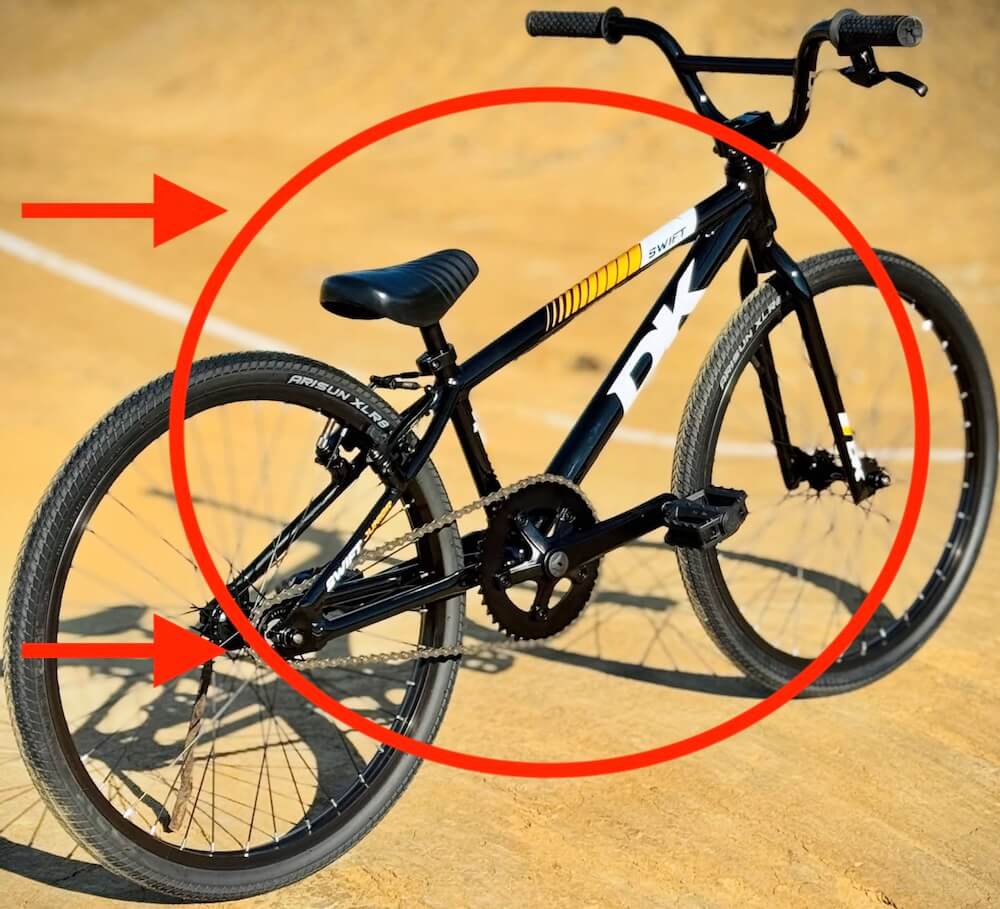
Choosing a BMX junior race bike is a little tricky.
Not because there aren’t enough good bikes.
But because this is the stage where kids can fall between sizes.
One rider might be perfect on a junior bike.
Another kid of the same age might still ride better on a mini.
And another one might already be getting close to expert sizing.
That’s why I wouldn’t pick a junior race bike only by age, color, or brand.
Fit first.
Always.
1. Get The Size Right First (Top Tube Length)
Junior race bikes are usually the next step after BMX mini race bikes.
But that doesn’t mean every kid should jump to a junior at the same time.
Some riders may still feel better on a mini, especially if they’re shorter, lighter, or getting the gist of it.
Others might fit a junior perfectly but require minor cockpit changes, such as a shorter BMX race stem or narrower bars.
And some taller or stronger kids may be ready for an expert bike sooner than expected.
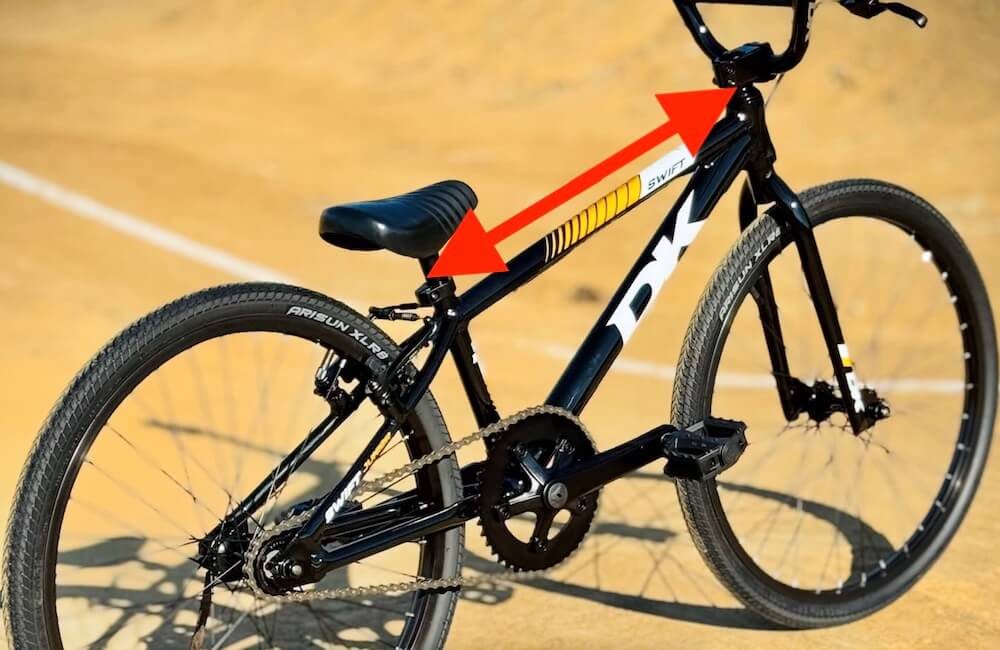
This is why top tube length is one of the first numbers I’d check.
A longer top tube gives the rider more room, but too much room can make the bike feel awkward and slow to react.
A shorter top tube can feel easier to control, but if it’s too short, your kid may look cramped and uncomfortable.
The goal is simple.
Your kid should be able to stand, sprint, pump, and turn without looking like they’re fighting the bike.
Sizing charts help, but they’re not perfect.
If possible, let your kid test a few bikes at the local track before buying.
A few laps can tell you more than staring at geometry numbers all night.
2. Check The Crank Length
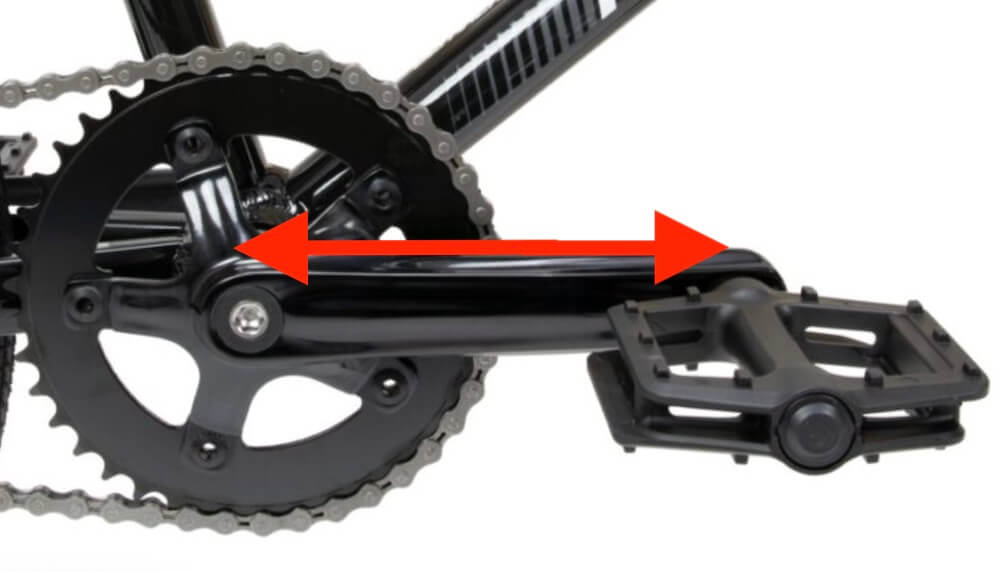
Crank length is a big one.
And it’s one of the easiest things to overlook.
Junior race bikes usually come with longer cranks than mini bikes because the riders are getting stronger and taller.
But longer doesn’t always mean better.
If the cranks are too long, your kid may start pedaling awkwardly, rocking side to side, or bouncing with their hips when sprinting hard.
That’s wasted energy.
Instead of driving the bike forward, they’re moving their body and bike around too much.
Not ideal when the gate drops.
On the other hand, cranks that are too short can make the rider feel like they’re spinning too much without getting enough drive.
So watch how your kid pedals.
Especially when standing up.
If the bike looks smooth and controlled under power, you’re probably in a good place.
If it looks messy, crank length might be one of the first things to check.
3. Don’t Ignore The Gearing Ratio
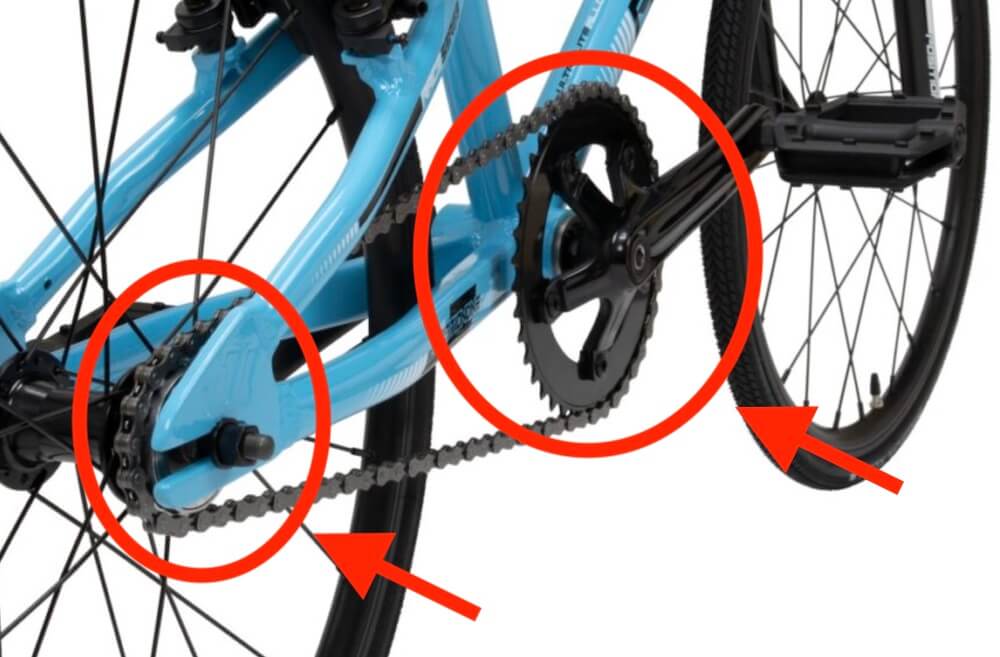
Junior riders are usually stronger than mini riders.
But that doesn’t mean they need crazy-hard gearing.
This is where many parents can accidentally make racing harder for their kid.
If the gearing is too heavy, the bike will feel slow out of the gate.
The rider might be strong, motivated, and trying hard — but the setup is just asking too much from their legs.
That can kill confidence fast.
A good junior BMX race bike should accelerate quickly without making the rider spin out immediately.
Easy enough to launch.
Hard enough to keep the speed.
That’s the sweet spot.
Also, gearing depends on the rider, the track, and how they pedal.
A smoother, higher-cadence rider may like something different from a stronger rider who pushes harder gears.
So don’t be afraid to ask a coach or experienced race parent if the bike looks too hard or too easy to pedal.
Sometimes a small gearing change can make the bike feel WAY better.
4. Keep The Bike (As) Light (As Possible)
Weight still matters a lot on junior race bikes.
Yes, junior riders are bigger and stronger than mini riders.
But they’re still young.
They’re still learning how to sprint, pump, manual, jump, and control the bike at speed.
A lighter bike makes all of that easier.
It can help with gate starts, quick accelerations, getting over rollers, and moving the bike through turns.
But I wouldn’t chase the lightest bike at all costs.
A race bike still needs to be strong and reliable.
Especially if your kid practices often.
Think of it this way:
- Light is great -> Light and solid is better
If two bikes fit equally well, I’d usually lean toward the lighter one.
But if the slightly heavier bike fits better, I’d pick fit over weight every time.
5. Look At BMX Race-Ready Tires & Wheels
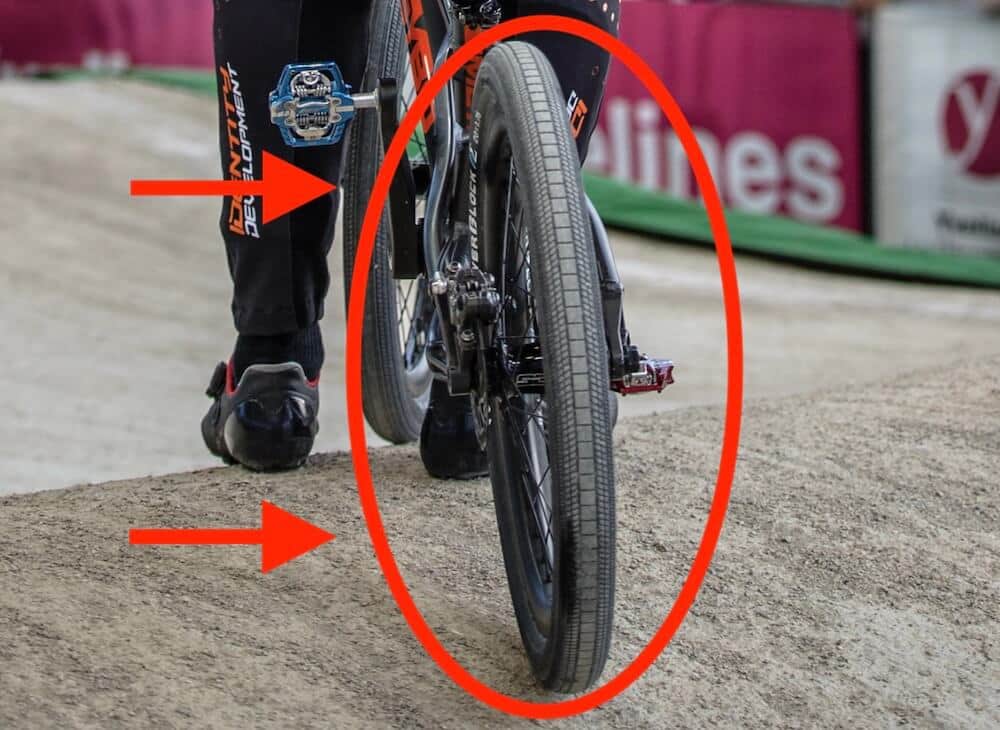
Most junior race bikes still use skinny BMX race tires.
Often 20 x 1-1/8” or something close.
That’s because skinny race tires roll fast, keep the bike light, and work great on hard-packed BMX tracks.
But tires are only half the story.
Wheels matter, too.
A good wheelset can make a junior race bike feel quicker, smoother, and more responsive.
This matters even more if your kid is practicing a lot, jumping more, or starting to ride harder through corners.
Double-wall rims are a nice bonus because they’re stronger than single-wall rims.
Sealed hubs are also great because they roll more smoothly and need less maintenance.
That doesn’t mean a bike with single-wall rims or unsealed hubs is useless.
Not at all.
But if your kid gets hooked on racing, wheels are one of the first upgrades I’d keep in mind. That’s why I also created a full-blown buying guide on the best BMX race wheelsets.
6. Brakes Should Be Simple & Reliable
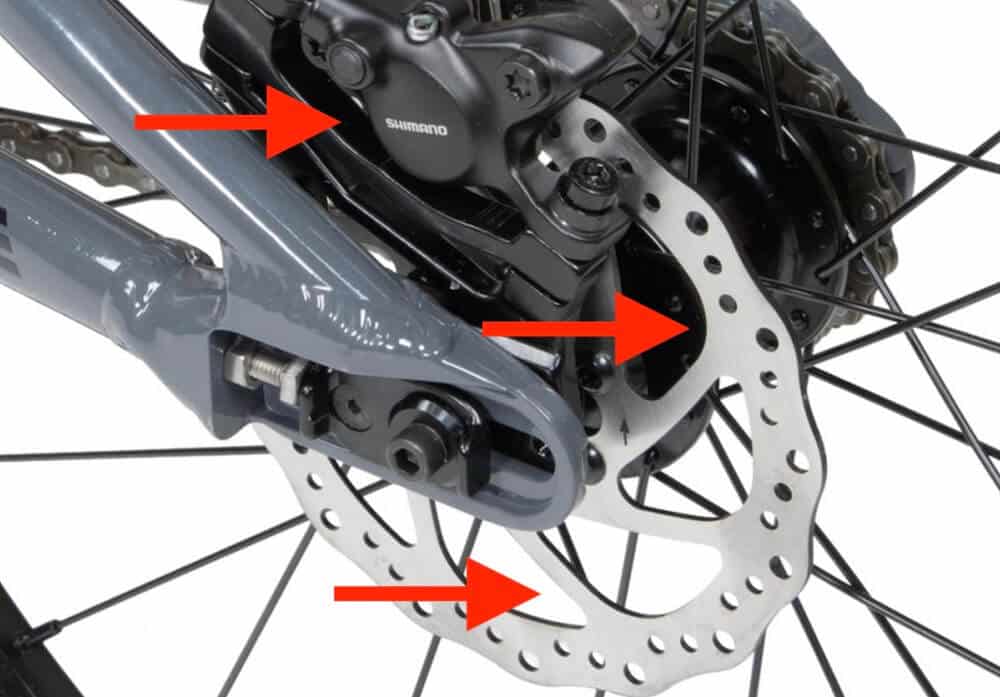
A good brake setup matters.
Your kid won’t be braking much during a full-speed lap, but they still need control.
Before the gate.
Around staging.
After the finish line.
During practice.
And when learning how to manage speed on the track.
Some junior race bikes use simple V-brakes.
Others come with disc brakes.
Both can work well.
V-brakes are light, easy to maintain, and simple for parents to deal with.
Disc brakes feel smoother, stronger, and more controlled, especially on higher-end bikes.
7. Bonus: Ask Around At Your Local Track (Parents & Coaches)
Local race parents are gold.
They’ve already dealt with sizing headaches, crank swaps, gearing changes, used-bike deals, and all the little things product pages don’t tell you.
Coaches can also spot setup issues fast.
They might notice that your kid is rocking side to side because the cranks are too long.
Or that the gearing looks too hard.
Or that the bike is simply too big, even if the size chart says it should work.
Another reason to ask around?
Kids outgrow junior race bikes fast.
So there’s often a good used bike somewhere in the local scene.
And many used junior race bikes are still in great shape because kids often outgrow them before they destroy them.
If you can test ride before buying, even better.
Sizing charts are helpful.
But real laps on a real track?
That’s where you’ll know.
Conclusion: Get The Ideal BMX Junior Race Bike
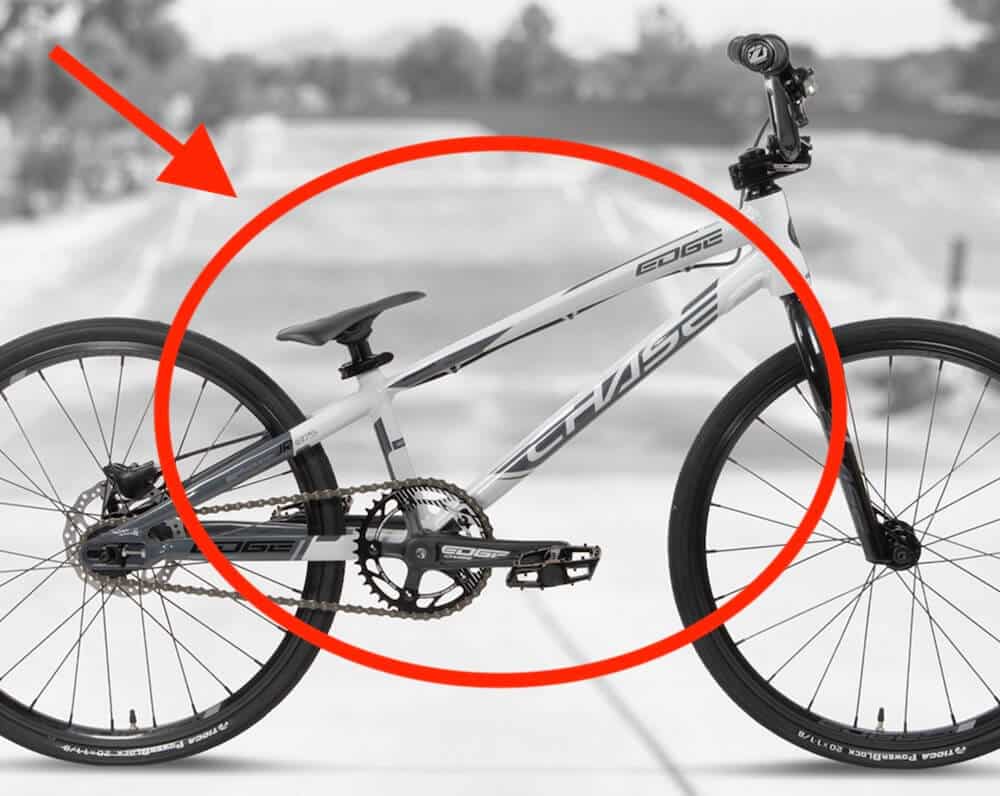
If I had to pick one, my top recommendation would still be the Chase Edge Junior BMX bike.
It has the most advanced parts package here and is the most race-ready straight out of the box.
The lightweight alloy frame, updated race geometry, double-wall rims, sealed hubs, Shimano hydraulic rear brake, and properly scaled Junior setup give it a very strong overall package for young riders who are serious about progressing.
The Huffy Pro Lightning Junior is the bike I’d look at if value matters most.
It gives you an 18.75″ top tube, 6061 aluminum frame, 28H wheels, 152mm cranks, and mechanical disc brake at a much lower price.
It isn’t as refined as the Chase, but for a beginner racer, it covers the important basics really well without pushing the budget too far.
The Position One Junior sits nicely in the middle. You still get a proper race-focused setup, sealed hubs, double-wall rims, and a 19″ top tube, but at a more approachable price than the Chase.
Then there’s the DK Swift Junior.
Its simpler parts package won’t impress you as much on paper, but the 18.25″ top tube could make it the better fit for some smaller riders. And honestly, fit can matter more than having the fanciest parts.
That’s really the main thing I’d focus on here.
Don’t just pick the bike with the best spec sheet.
The best BMX Junior race bike is the one your kid can sprint comfortably, control confidently, and grow with as their racing improves.
FAQs About BMX Junior Race Bikes
What is a BMX junior race bike?
A BMX junior race bike is a lightweight BMX bike designed for young riders ready to race on the track.
It’s built for gate starts, sprinting, rollers, corners, and carrying speed.
What age is a junior BMX race bike for?
Most junior BMX race bikes are for kids around 6 to 9 years old.
But don’t pick by age alone.
Some kids grow faster, some are stronger, and some may still feel better on a mini bike for a little longer.
Height, inseam, strength, and confidence matter more than age.
What size rider fits a junior BMX race bike?
Junior race bikes usually fit riders around 4’0” to 4’9”, depending on the brand and bike geometry.
Some junior bikes run shorter.
Others have a longer top tube and fit taller riders better.
Always check the recommended sizing guide, but also look at top tube length, crank length, bar size, and how the rider actually feels on the bike.
What is the difference between mini and junior BMX race bikes?
A junior BMX race bike is usually larger than a mini.
You’ll often get a longer top tube, taller bars, longer cranks, and slightly heavier gearing.
Junior bikes are made for riders who are getting bigger, stronger, and more confident, while mini bikes are for smaller kids who still need a shorter and lighter setup.
Are BMX junior race bikes good for beginners?
Yes, if the rider fits the bike properly.
A junior race bike can be a great first race bike for a kid who is already in the right height range.
But if the bike is too big, too long, or too hard to pedal, it can slow progress and hurt confidence.
Fit first.
Always.
Can kids race on a freestyle BMX bike?
They can, but it’s not ideal.
Freestyle BMX bikes are built for tricks, jumps, grinds, and skatepark riding.
They’re usually heavier and less efficient on the track.
A BMX race bike is lighter, faster, and much better for gates, sprints, rollers, and corners.
Note: Check out the key differences between the BMX race and freestyle bikes.
How much should a BMX junior race bike weigh?
Most BMX junior race bikes are somewhere around 16 to 18 pounds.
Lighter is usually better because young riders are still building strength.
A lighter bike is easier to sprint, pump, jump, and control.
What crank length is best for junior BMX race bikes?
Many junior BMX race bikes come with cranks around 150mm to 155mm.
But the best crank length depends on the rider’s height, inseam, strength, and pedaling style.
If the cranks are too long, your kid may rock side to side or bounce when sprinting.
If they’re too short, they may feel cramped or spin too much.
What gearing is best for a BMX junior race bike?
A good junior BMX race bike should have gearing that feels quick out of the gate but still lets the rider carry speed.
- Too-hard gearing can make a strong kid look slow.
- Too-easy gearing can make them spin out too quickly.
For many junior riders, the goal is simple: easy enough to accelerate, hard enough to keep momentum.
Should I buy a new or used BMX junior race bike?
Both can make sense.
A new bike gives you fresh parts, clean bearings, and no hidden wear.
But a used junior race bike can be a smart buy because kids often outgrow these bikes before they destroy them.
If buying used, check the frame, wheels, cranks, brakes, hubs, bearings, and overall fit before grabbing it.