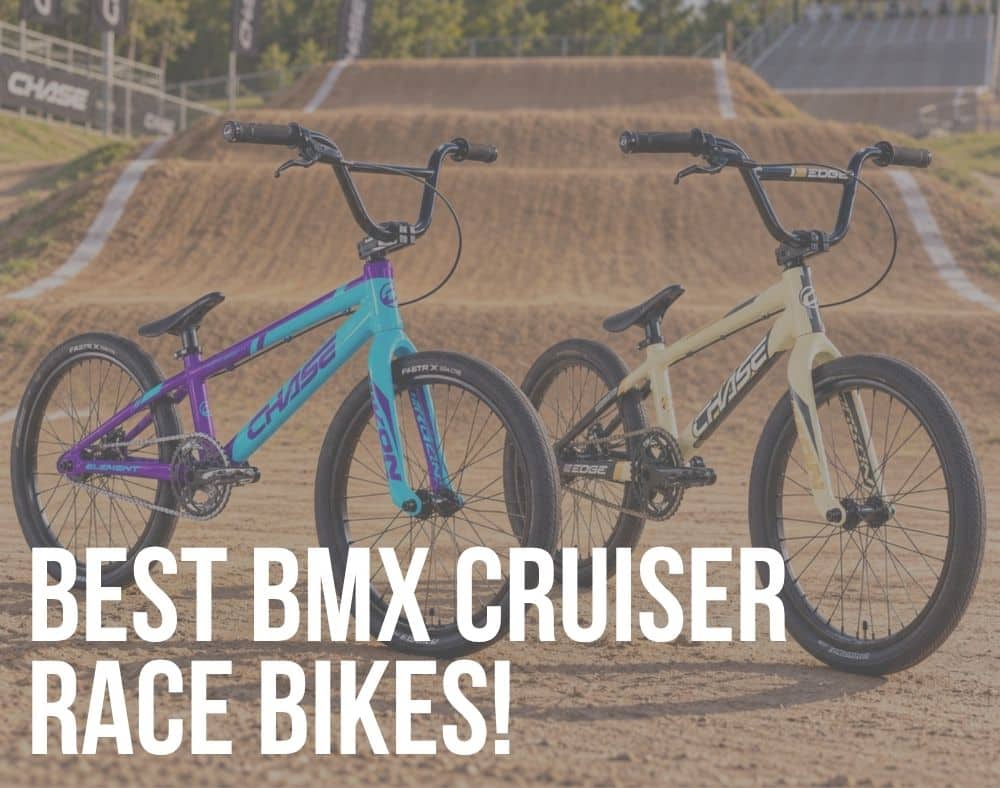

If you want a 24″ BMX race cruiser, the Chase lineup gives you a pretty clear choice right now: go premium with the Element Pro, or save some money with the Edge Pro.
Simple enough.
But once you look closer, it gets more interesting.
The Element Pro Cruiser comes in both 21.5″ and 22″ top tube sizes, giving taller riders more room to work with.

It also gets the higher-end treatment with a 7005-T6 alloy frame, carbon fork, 31.8mm cockpit, premium BMX race crankset, race tires, and hydraulic braking.
Moreover, the Edge Pro Cruiser takes a more value-focused route.
You still get a triple-butted hydroformed 6061-T6 frame, a hydraulic Shimano disc brake, double-wall rims, sealed hubs, 2-piece cranks, and proper 24″ race geometry.
Better yet, Chase lets you choose between a full chromoly fork and an Ikon carbon fork.
So this isn’t really a roundup of random bikes thrown together.
It is more about finding the right Chase cruiser for your budget, size, and racing goals.
In short:
- If you want the highest-end complete, the Element Pro is the obvious place to look.
- If you want strong value without dropping straight into premium-bike money, the Edge Pro gets very interesting.
And that is exactly what I’ll break down here.
This post covers:
- Best BMX Cruiser Race Bikes
- BMX Cruiser Race Bikes Compared
- 21.5″ Vs 22″ BMX Cruiser: Which Size Should You Get?
- Chromoly Vs Carbon Fork On A BMX Race Cruiser
- What Makes A Good BMX Cruiser Race Bike?
- Who Should Ride A BMX Race Cruiser?
- Conclusion: Which BMX Cruiser Race Bike Should You Get?
- FAQs About BMX Cruiser Race Bikes
Best BMX Cruiser Race Bikes
1. Chase Element Pro Cruiser
Best for: Riders who want the higher-end 21.5″ Chase cruiser without jumping straight to the longer Pro+ size. (Chase lists it for riders around 5’5″ to 5’11”.)
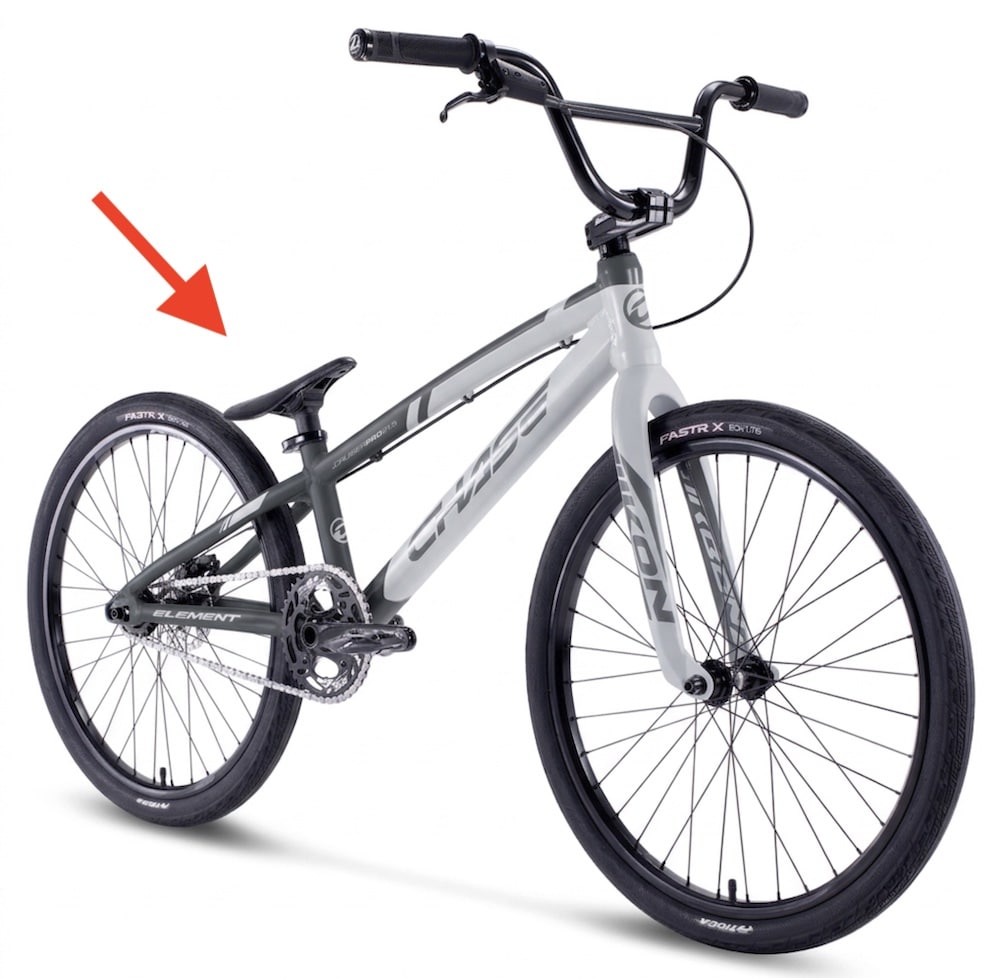
The Chase Element Pro Cruiser is the premium option in this roundup, and the spec sheet makes that pretty obvious.
It starts with a 7005-T6 aluminum frame with a tapered integrated head tube, closed rear dropouts, and Chase’s built-in chain tensioner system.
Fun fact: The Element uses the same geometry as Chase’s championship-winning ACT and RSP race frames.
Now that’s a much more serious race foundation right away.
Up front, you get an Ikon Pro tapered carbon fork with a 20mm dropout, plus a 31.8mm Chase Element cockpit with a 50mm stem and 5.75″ chromoly bars.

That already puts it firmly in the higher-end category.
The drivetrain is equally solid: 175mm Insight PL4 Pro 2-piece cranks, a 41T Insight chainring, 18T rear cog, KMC chain, and a BB86 press-fit bottom bracket.
The wheels do not get shortchanged either.
Chase fits double-wall Element alloy rims, sealed-bearing hubs, and a rear cassette hub with a 3-pawl system.
And the tire choice is race-focused too, with Tioga Fastr X 24″ x 1.75″ up front and 24″ x 1.60″ in the rear.
Braking comes from a Shimano hydraulic disc setup with a 120mm rotor.
Nice.
Then there is the fit.
The Element Pro Cruiser uses a 15.25″ minimum chainstay length, 73° head tube angle, 69.5° seat tube angle, and 38.33″ wheelbase.
Weight comes in at 21.7 lbs (9.8 kg) with pedals, which is impressively light for a complete 24″ race cruiser.
What I like most here is that you are not buying a frame and then mentally adding five upgrades before the first race.
This thing is ready to race out of the box!
It costs more, yes.
But the stock build is much closer to what many serious racers would eventually upgrade toward anyway.
GET YOUR CHASE ELEMENT PRO CRUISER 21.5″ NOW!2. Chase Element Pro+ Cruiser
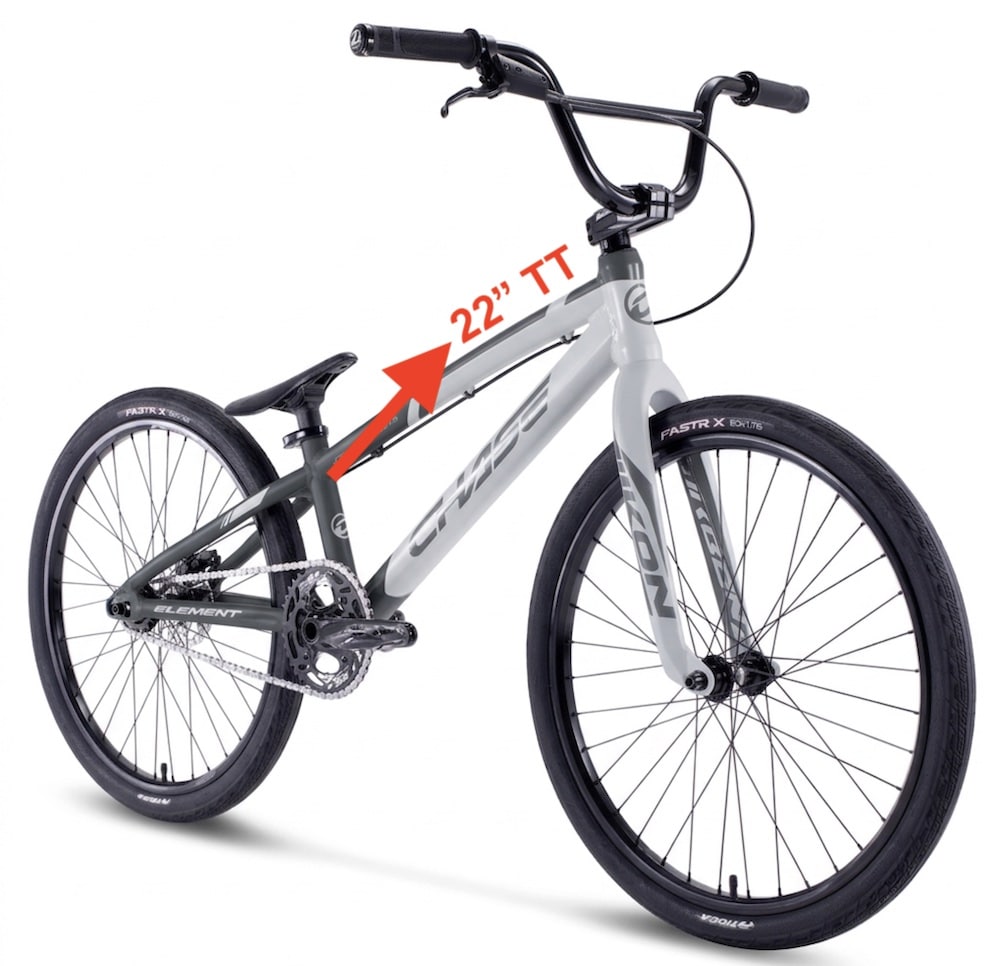
Best for: Taller riders who want the same premium Element Pro build with a little more room.
The Chase Element Pro+ Cruiser is basically the longer version of the standard Element Pro Cruiser.
The key point is that Chase doesn’t downgrade the build.
You still get the same higher-end package with the 7005-T6 aluminum frame, tapered Ikon Pro carbon fork, 31.8mm cockpit, Insight PL4 Pro cranks, Tioga Fastr X tires, double-wall rims, sealed hubs, and Shimano hydraulic disc brake.
The real difference is fit.
The Pro+ stretches the top tube from 21.5″ to 22″ and increases the wheelbase from 38.33″ to 38.88″, while keeping the same 15.25″ minimum chainstay, 73° head tube angle, and 69.5° seat tube angle.
Chase lists the Pro+ for riders around 5’10” to 6’4″, so this is the obvious choice if the standard Pro Cruiser feels a little too compact.
That is really the whole point.
GET YOUR CHASE ELEMENT PRO CRUISER 22″ NOW!3. Chase Edge Pro Cruiser
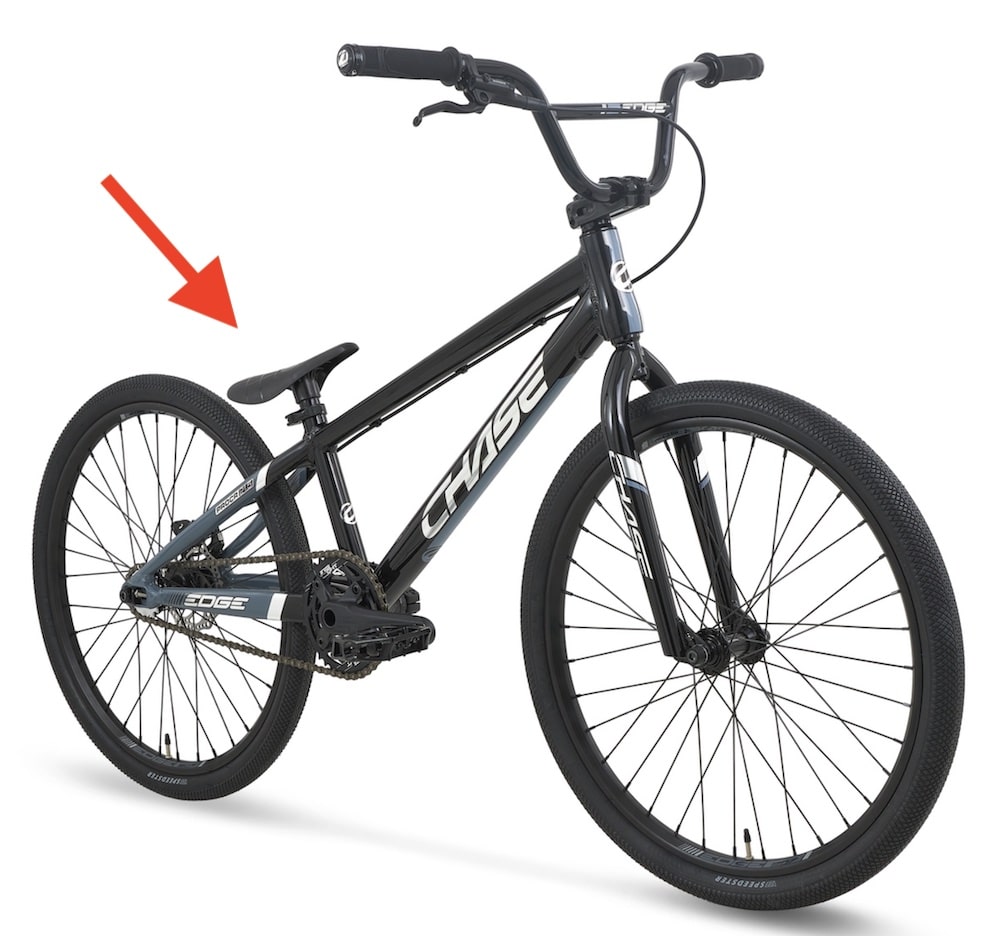
Best for: Racers who want a proper 24″ race cruiser at a lower price than the Element Pro, with the option to choose a chromoly or a carbon fork. (Ideal for rider-height range of 5’6.1″ to 6’0.8″.)
The Chase Edge Pro Cruiser is the value pick here, but it is still VERY MUCH a race bike.
It uses a triple-butted, hydroformed 6061-T6 aluminum frame with a 21.5″ top tube, enclosed rear dropouts, an integrated head tube, and Chase’s built-in chain tensioners.
The frame geometry is race-focused too, with a 14.5″ minimum chainstay, 74° head angle, 71° seat angle, 10.6″ BB height, and 37.97″ wheelbase.
The really interesting part is the fork choice.
You can get it with a full chromoly Chase fork, or go for the Ikon Pro carbon fork version with a 1-1/8″ alloy steerer.
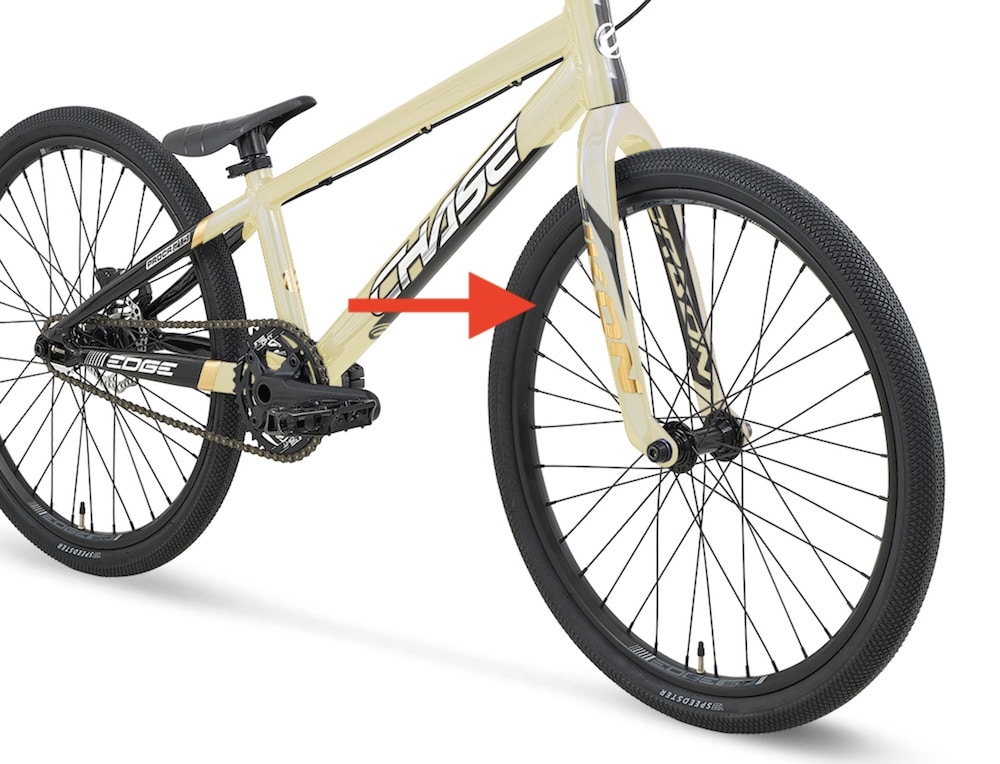
Same bike idea, different level of front-end spec.
The rest of the build is solid too.
You get 175mm Chase 2-piece alloy cranks with a 24mm spindle, a 39T Insight chainring, 18T rear cog, KMC chain, sealed-bearing hubs, double-wall Chase rims, and Vee Rubber Speedster tires in 24″ x 1.75″ front and 24″ x 1.60″ rear.
Braking comes from a Shimano MT200 hydraulic disc setup with a 140mm rotor, which is a strong feature at this level.
Weight is listed at 22 lbs (10 kg) without pedals, so it’s slightly heavier but still reasonable.
What I like most about the Edge Pro Cruiser is that it does not feel cut down just because it sits below the Element.
That is why I see the Edge as the smarter buy for a lot of racers.
The Element is better equipped.
The Edge is easier on the wallet.
GET YOUR CHASE EDGE PRO CRUISER NOW! GET YOUR CHASE EDGE PRO CRUISER NOW! (Carbon Fork)BMX Cruiser Race Bikes Compared
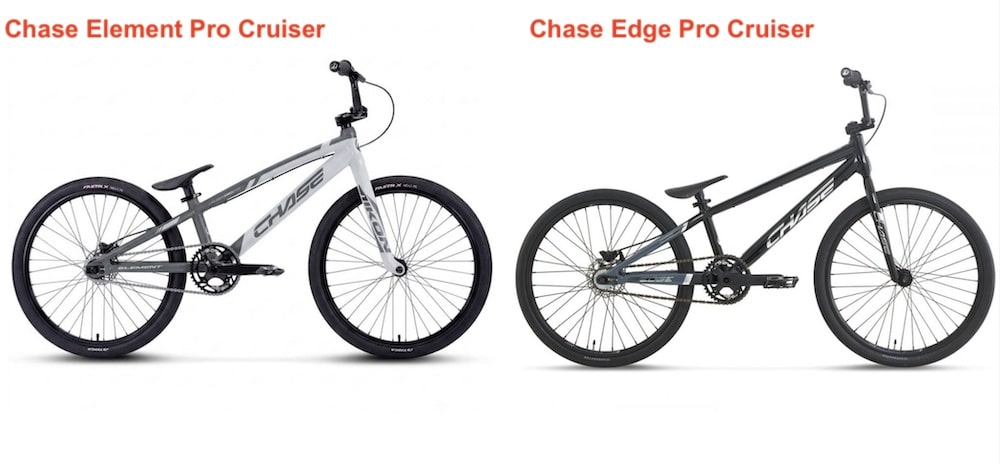
RimsChase Element double-wall alloyChase Edge double-wall alloy
| Spec / Part | Chase Element Pro Cruiser | Chase Edge Pro Cruiser |
|---|---|---|
| Top tube | 21.5″ or 22″ | 21.5″ |
| Frame | 7005-T6 alloy | 6061-T6 alloy |
| Head tube | Tapered 1-1/8″–1.5″ | Straight 1-1/8″ |
| Fork | Ikon Pro tapered carbon | Chase chromoly or Ikon Pro carbon |
| Handlebar | Chase Element 31.8mm, 5.75″ rise | Chase Edge chromoly, 5.75″ rise |
| Bar width | 28.5″ | 28.5″ |
| Stem | Chase Element 31.8mm, 50mm | Chase Edge 22.2mm, 50mm |
| Cranks | Insight PL4 Pro 2-piece, 175mm | Chase Edge 2-piece alloy, 175mm |
| Bottom bracket | Press-fit BB86 | External BSA 24mm |
| Chainring | Insight 41T | Insight 39T |
| Rear cog | 18T | 18T |
| Front hub | Sealed bearing, 36H | Sealed bearing, 36H |
| Rear hub | Sealed cassette, 3-pawl | Sealed cassette, 3-pawl |
| Front tire | Tioga Fastr X 24″ x 1.75″ | Vee Rubber Speedster 24″ x 1.75″ |
| Rear tire | Tioga Fastr X 24″ x 1.60″ | Vee Rubber Speedster 24″ x 1.60″ |
| Brake | Shimano hydraulic disc | Shimano hydraulic disc |
| Rotor | 120mm | 140mm |
| Chain tensioner | Integrated | Integrated |
| Min. chainstay | 15.25″ | 14.5″ |
| Head tube angle | 73° | 74° |
| Seat tube angle | 69.5° | 71° |
| BB height | 12″ | 10.6″ |
| Wheelbase | 38.33″ or 38.88″ | 37.97″ |
| Rider height | 5’5″–5’11” or 5’10″–6’4″ | 5’6.1″–6’0.8″ |
| Price | $1,399.99 | $679.99 or $899.99 |
21.5″ Vs 22″ BMX Cruiser: Which Size Should You Get?
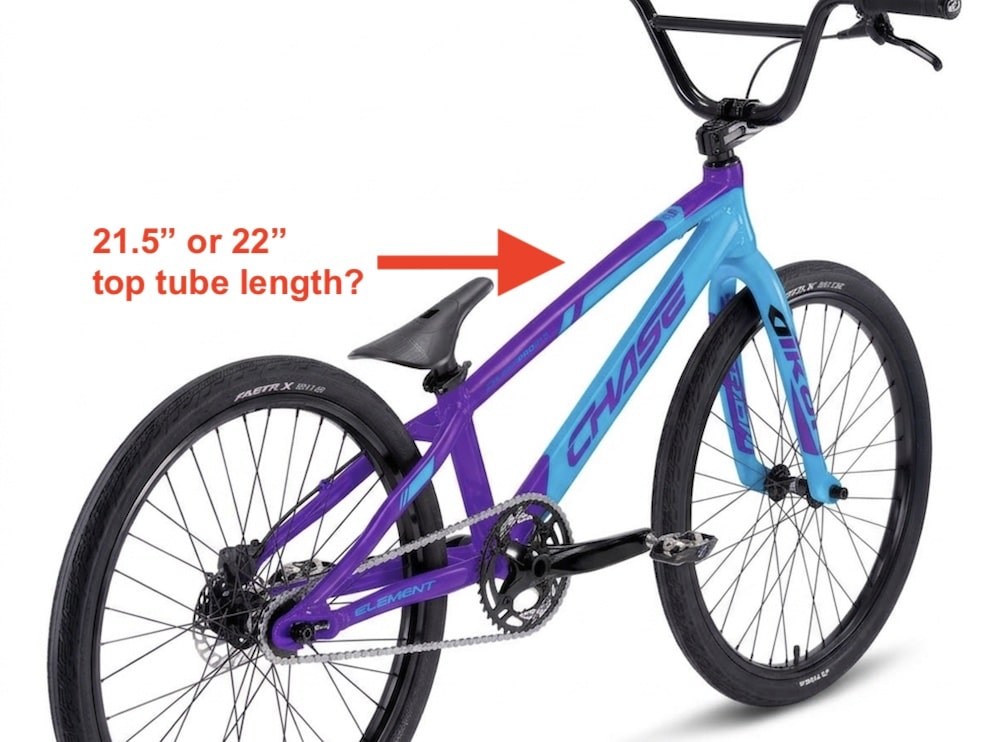
This choice mainly comes down to fit and how much room you want on the bike.
The Element Pro Cruiser uses a 21.5″ top tube and a 38.33″ wheelbase. Chase lists it for riders around 5’5″ to 5’11”.
The Element Pro+ Cruiser stretches things out to a 22″ top tube and 38.88″ wheelbase, with Chase recommending it for riders around 5’10” to 6’4″.
The rest of the important frame geometry stays the same, including the 15.25″ minimum chainstay, 73° head tube angle, and 69.5° seat tube angle.
So the difference is NOT dramatic.
But half an inch of top tube plus the longer wheelbase can definitely matter if you are taller or simply hate feeling cramped.
I’d break it down like this:
- Choose 21.5″ if you fall comfortably inside Chase’s 5’5″–5’11” range and prefer a slightly more compact cruiser.
- Choose 22″ if you are taller, want more room through the front of the bike, or fall closer to Chase’s 5’10″–6’4″ recommendation.
- Between sizes? Look at the top tube length you already ride and like. That can be more useful than height alone.
Chase’s recommended height ranges overlap quite a bit, so a rider around 5’10” or 5’11” could realistically fit either.
That is where personal preference kicks in.
- If you like a tighter setup, stay with the 21.5″ Pro Cruiser.
- If you want more breathing room, go 22″ Pro+.
One more thing: The Edge Pro Cruiser only comes with a 21.5″ top tube, so if you know you want a 22″ Chase cruiser, look at the Element Pro+.
Chromoly Vs Carbon Fork On A BMX Race Cruiser
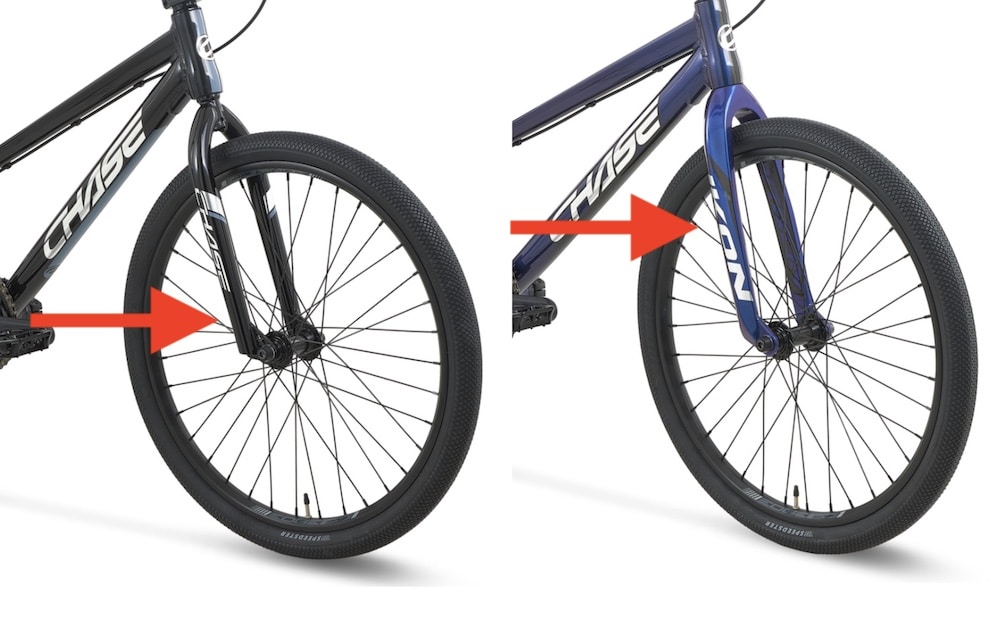
This is one of the more interesting choices on the Chase Edge Pro Cruiser.
Yes, you can buy it with either a full chromoly fork or an Ikon Pro carbon fork.
The basic decision is pretty simple.
A chromoly race fork keeps the bike cheaper while still giving you a proper, race-ready front end.
For newer racers, progressing riders, or anyone who is not chasing every possible gram, that is a perfectly sensible setup.
The carbon fork is the more premium choice.
It cuts weight from the front of the bike and gives the Edge Pro Cruiser a more serious setup straight from the start.
If you already know you want carbon, buying that version from day one is usually cleaner than planning a fork upgrade later.
However, the Element Pro is also worth considering.
The Chase Element Pro Cruiser already comes with an Ikon Pro tapered carbon fork as standard, which is one reason it sits above the Edge in the lineup.
So I’d break it down like this:
- Choose chromoly if you want to keep the price lower and still get a capable race cruiser.
- Choose carbon if you care more about lower front-end weight and want the higher-end setup immediately.
- Choose the Element Pro if you want carbon plus the rest of the more premium package too.
Sure, for many riders, chromoly is enough.
But if racing is getting more serious and you already know you want a lighter front end, I’d lean toward the carbon version.
What Makes A Good BMX Cruiser Race Bike?
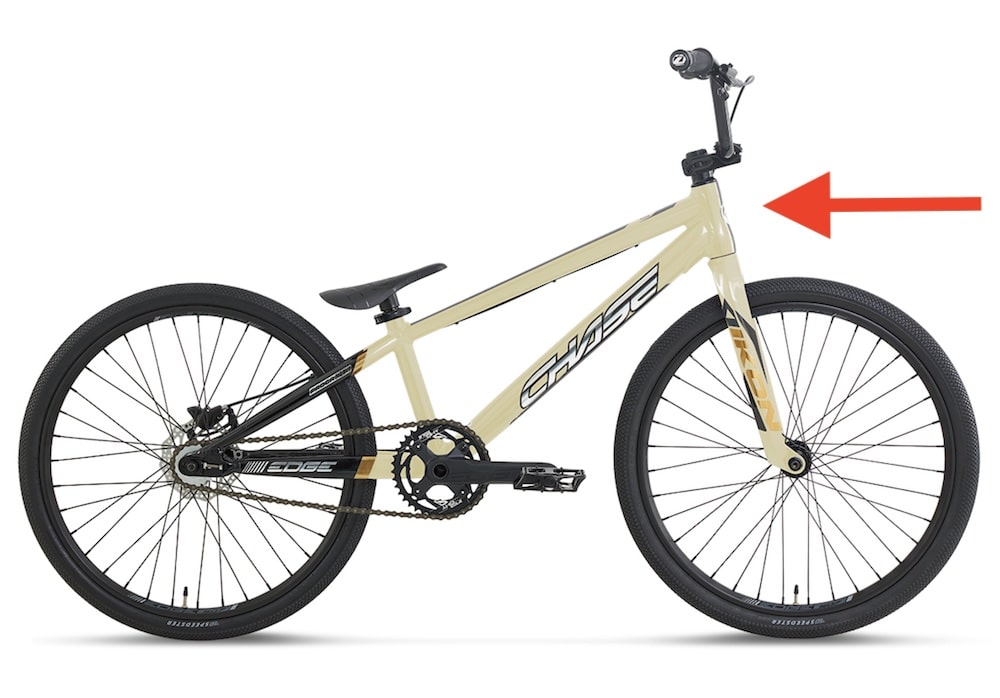
- Proper race geometry: A BMX cruiser should be designed around speed, stability, and efficient handling on the track. Top tube length, chainstay, head angle, and wheelbase all matter.
- The right top tube size: Do not choose a cruiser just because it has 24″ wheels. The frame still needs to fit you properly, especially if you are between 21.5″ and 22″ options.
- Light but strong frame: Aluminum is common on higher-level race cruisers because it helps keep weight down without turning the bike into something fragile.
- Good fork: Chromoly works well and keeps the price lower. Carbon is if you want to reduce front-end weight.
- Sealed hubs (& bearings throughout): A must for me. They handle regular racing better and need less maintenance than basic loose-ball hubs.
- Double-wall rims: Another important one. A race bike shouldn’t come with flimsy single-wall rims if you know you want to push it hard.
- Solid crankset: A proper 2-piece setup is a much better starting point than cheap basic cranks.
- Race-focused tires: Narrower, faster-rolling tires suit BMX racing far better.
- Hydraulic disc brake: Not absolutely essential, but definitely a strong feature on modern race cruisers. Better control, cleaner braking, and more confidence when speeds go up.
- Useful cockpit sizing: Bar rise, width, and stem length should match the overall size of the bike.
- Reasonable weight: You do not need the absolute lightest cruiser on the planet, but unnecessary weight does not help when you are trying to accelerate out of the gate.
- Room to grow: A good complete should be race-ready as-is, but still leave you with sensible upgrade options later.
Who Should Ride A BMX Race Cruiser?
- Taller riders: The 24″ wheels and longer cruiser frames can feel more comfortable if a 20″ race bike feels too compact.
- Older riders: Plenty of adult racers prefer the extra stability and slightly roomier feel of a cruiser.
- Riders who want more stability: A 24″ cruiser generally feels calmer and more planted, especially at speed.
- Riders who already race 20″ and want a second class: Some racers like competing in both categories and using the cruiser as a second race bike.
- Riders who prefer a less twitchy setup: If a 20″ race bike feels a little too quick or nervous, a cruiser will be more settled.
- Riders who enjoy fast, flowing tracks: Cruisers suit riders who like carrying speed, pumping through sections, and staying smooth.
- Riders who want a race bike with more room: A longer cockpit and bigger wheels can make longer practice sessions feel more comfortable.
- Riders who simply prefer 24″ wheels: Sometimes it comes down to feel. If you ride better and feel more confident on a cruiser, that matters more than what someone else prefers.
Conclusion: Which BMX Cruiser Race Bike Should You Get?
If you want the best-equipped Chase cruiser straight out of the box, go with the Element Pro Cruiser.
It gives you a more premium frame, carbon fork, 31.8mm cockpit, Insight cranks, Tioga tires, hydraulic braking, and two size options.
The regular 21.5″ Pro will suit plenty of riders, while the 22″ Pro+ is there if you need more room.
The Edge Pro Cruiser is the smarter choice if value matters more.
You still get a proper race-focused aluminum frame, hydraulic disc brake, sealed hubs, double-wall rims, 2-piece cranks, and real 24″ cruiser geometry.
Plus, you can choose between chromoly and carbon fork versions, which gives you more control over the final price.
So I’d break it down like this:
- Choose the Element Pro Cruiser if you want the higher-end build and fewer reasons to upgrade later.
- Choose the Element Pro+ Cruiser if you want that same premium setup with a longer 22″ top tube.
- Choose the Edge Pro Cruiser if you want strong race performance without paying Element money.
- Choose the Edge carbon version if you like the Edge’s value but still want the lighter front end.
For most racers, the Edge Pro already gives you plenty.
For riders who know they want the more premium setup from day one, the Element is the better buy.
Either way, fit should come first.
Get the size right, then worry about the rest.
FAQs About BMX Cruiser Race Bikes
What is a BMX cruiser race bike?
A BMX cruiser race bike uses 24″ wheels and race-focused geometry, gearing, tires, and components.
It is built for BMX racing, not just casual cruising.
What is the difference between a 20″ BMX race bike and a 24″ cruiser?
The biggest difference is wheel size. A 20″ race bike usually feels quicker and more agile, while a 24″ cruiser tends to feel more stable and settled at speed.
Are BMX race cruisers good for adults?
Yes. In fact, cruiser-class bikes are especially popular with adult riders who want more room, bigger wheels, and a calmer-feeling setup.
Are BMX cruisers easier to ride?
They can feel easier for some riders because of the added stability. That does not automatically make them better, though. A 20″ race bike will usually feel quicker and more responsive.
What size BMX cruiser should I get?
Start with top tube length and the manufacturer’s rider-height recommendation. Do not choose purely because the bike has 24″ wheels. Fit still matters a lot.
Is a 21.5″ or 22″ BMX cruiser better?
Neither is automatically better. A 21.5″ cruiser suits riders who prefer a slightly more compact fit, while a 22″ top tube is a better option for taller riders or anyone who wants extra room.
Is a carbon fork worth it on a BMX race cruiser?
It can be. A carbon fork is usually the more premium choice if you want lower front-end weight, while chromoly keeps the price down and still works perfectly well for racing.
Do BMX race cruisers need hydraulic disc brakes?
No, but hydraulic braking is a very nice feature. It gives you strong, controlled braking and is common on higher-level modern race cruisers.
Can you race both 20″ and cruiser classes?
Yes, many racers compete in both. You would use a 20″ BMX for the standard class and a 24″ race cruiser for the cruiser class.
Are BMX race cruisers good for beginners?
Yes, especially if the rider feels more comfortable on bigger wheels.
Is the Chase Element Pro better than the Edge Pro Cruiser?
The Element Pro is the higher-end bike. It gets the more premium frame, carbon fork, cockpit, cranks, and tires. The Edge Pro is the better value option.
Is the Chase Edge Pro Cruiser good for serious racing?
Yes. It still comes with a race-focused aluminum frame, hydraulic disc brake, sealed hubs, double-wall rims, and 2-piece cranks, so it is much more than just an entry-level cruiser.