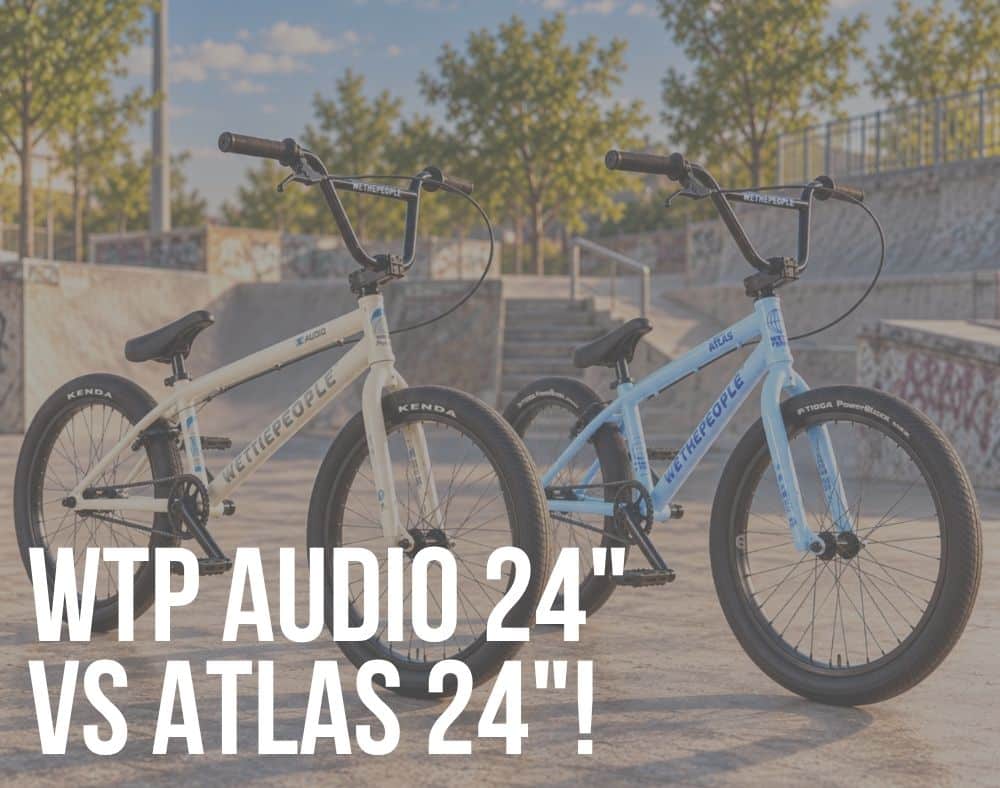

The WTP Audio 24″ and Atlas 24″ may share the same wheel size, but they are built with very different riders in mind.
That is exactly why I wanted to do this comparison.
The Audio 24″ is the more BMX-like option in terms of freestyle riding.
WeThePeople designed it for taller riders, returning BMX riders, and anyone who wants extra room without losing that familiar BMX feel.

It gets a full chromoly frame, a 22″ top tube, 25/9 gearing, a U-brake, and wider 2.1″ tires.
The Atlas 24″ goes in a different direction.
WTP leans into its race ancestry here, with a more stable geometry, a 33/14 drivetrain, lower 7.1″ bars, a longer 53mm stem, 1.75″ Tioga Power Block tires, and a V-brake.
This one is great for pump tracks, trails, and just cruising.
And then there is the Atlas Disc, which keeps the same basic Atlas setup but adds a Magura MT4 hydraulic disc brake and a 140mm rotor.
So no, this is not just a battle between two 24″ BMX bikes.
It is really about what kind of riding you want to do.
In short:
- More traditional BMX feel and freestyle versatility? Audio 24″.
- More speed, flow, pump tracks, and race inspiration? Atlas 24″.
Let’s break down the differences properly.
This post covers:
- WeThePeople Audio 24″ Vs Atlas 24″ Comparison
- WTP Audio 24″ Vs Atlas 24″: Key Differences At A Glance
- WeThePeople Audio 24″ Overview
- WeThePeople Atlas 24″ Overview
- WTP Atlas Disc Version: Is It Worth Choosing Over The Regular Atlas?
- Geometry: Which One Feels More Like A BMX?
- Which Is Better For Street & Freestyle Riding?
- Which Is Better For Trails & Pump Tracks?
- Which Is Better For Cruising?
- WTP Audio 24″ Pros & Cons
- WTP Atlas 24″ Pros & Cons
- Conclusion: WTP Audio 24″ Or Atlas 24″ – Which Should You Get?
- FAQs About The WeThePeople Audio 24″ Vs Atlas 24″
WeThePeople Audio 24″ Vs Atlas 24″ Comparison
1. WTP Audio 24″ Vs Atlas 24″: Key Differences At A Glance
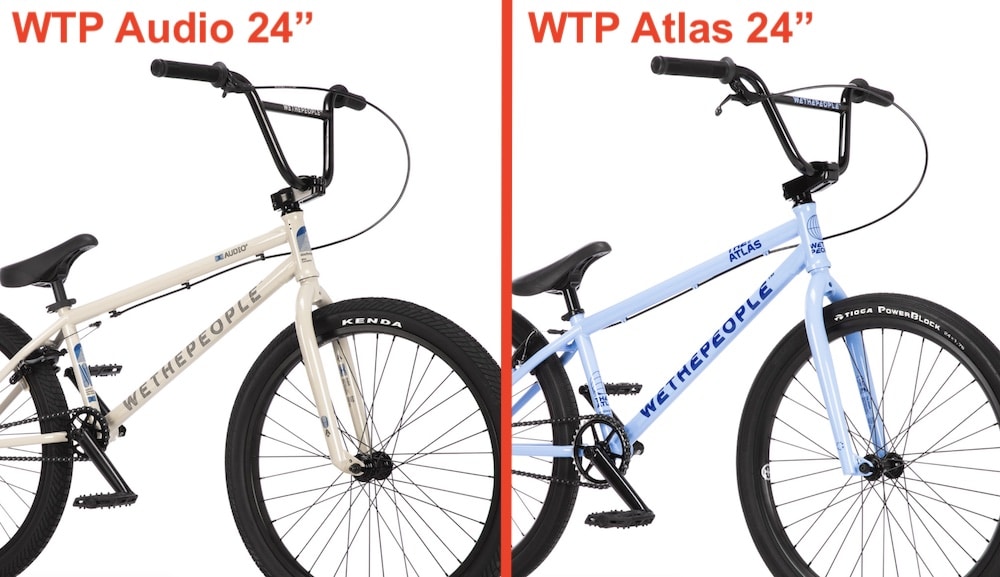
At first glance, both bikes are 24″ WTP cruisers.
That is about where the similarity ends.
| Feature | WTP Audio 24″ | WTP Atlas 24″ |
|---|---|---|
| Top tube | 22″ | 21.75″ |
| Chainstay | 14.7″ | 15″ |
| Head tube angle | 74.5° | 74° |
| Seat tube angle | 71° | 72.25° |
| BB height | 12.4″ | 12.25″ |
| Standover | 9.15″ | 9.5″ |
| Bar rise | 7.9″ | 7.1″ |
| Bar width | 29.4″ | 28″ |
| Stem reach | 50mm | 53mm |
| Gearing | 25/9 | 33/14 |
| Cranks | SaltPlus Pro48, 175mm | SaltPlus Pro48, 175mm |
| Brakes | Éclat Talon U-brake | SALT Atlas V-brake or Magura disc brake |
| Tires | Kenda Kwick 24″ x 2.1″ | Tioga Power Block 24″ x 1.75″ |
| Rims | WTP Logic 24 double-wall | SaltPlus DB32 aero double-wall |
| Weight | 25.7 lbs | 25.1 lbs |
| Best for | BMX feel, street, skatepark | Pump tracks, trails, speed, cruising |
Note: It surprises me that WTP used a longer top tube on the Audio 24″ than on the Atlas 24″.
Maybe I’m missing something, but I kinda feel that it’d be even better if it were the other way around.
2. WeThePeople Audio 24″ Overview
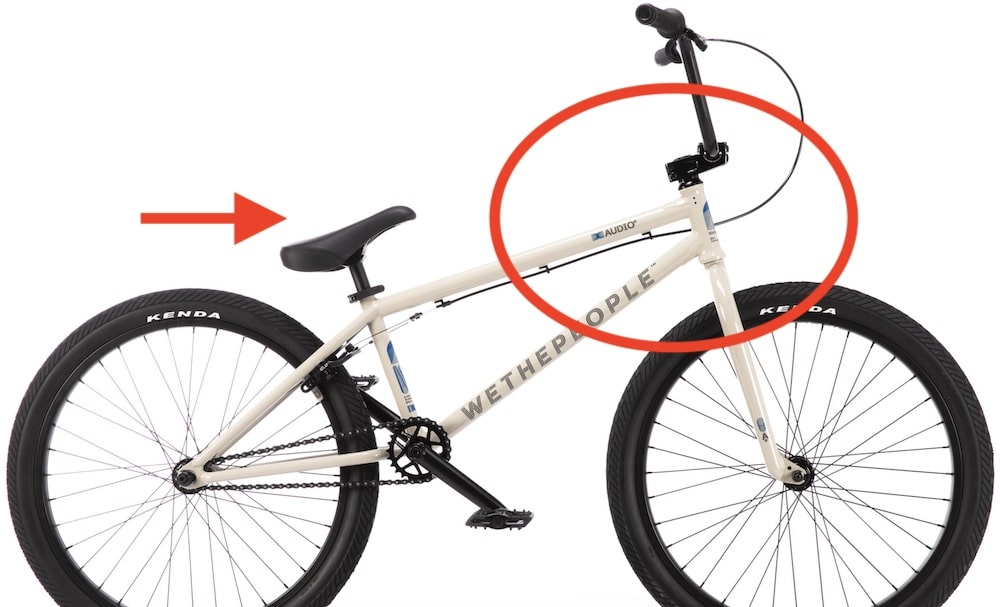

The WeThePeople Audio 24″ is the bike to look at if you want more room but still want the bike to feel more responsive.
The frame is full 4130 chromoly, the fork uses butted chromoly tubing, and the bars are full chromoly, too.
The frame geometry also keeps things very freestyle-like.
You get a 22″ top tube, 14.7″ chainstay length, 74.5° head tube angle, 71° seat tube angle, and 12.4″ BB height.
Up front, the 7.9″ bars and 50mm top-load stem give it a more traditional freestyle-style cockpit than the Atlas.
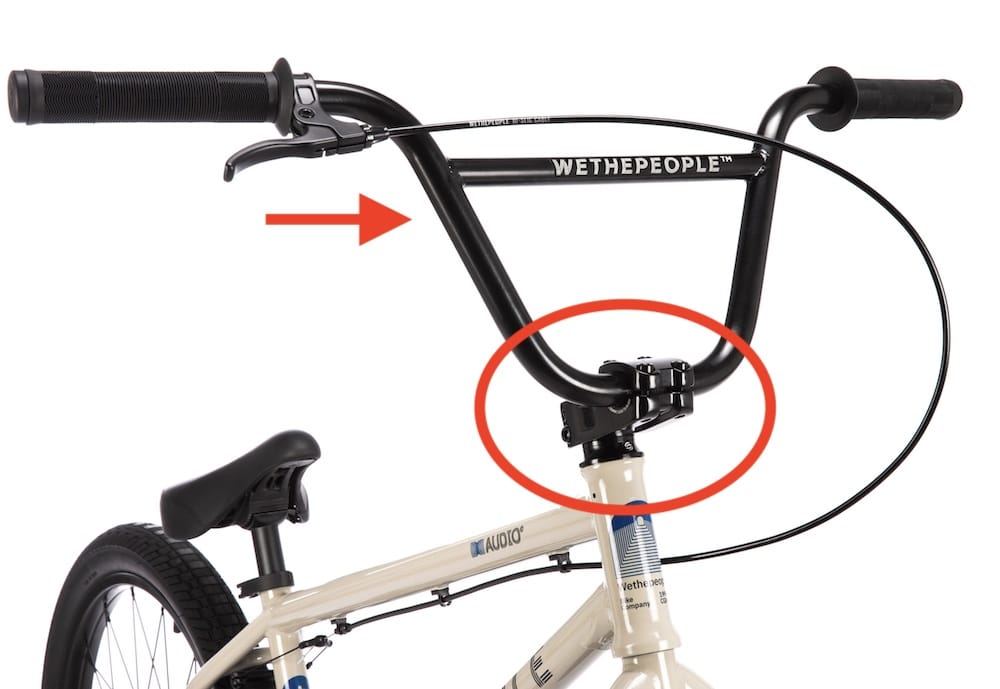
Then there is the drivetrain.
The Audio uses 25/9 gearing, 175mm SaltPlus Pro48 chromoly cranks, and a sealed 9T cassette hub.
That keeps it much closer to the modern BMX norm than the Atlas’s larger race-inspired gearing.
I also like the wider 24″ x 2.1″ Kenda Kwick tires here.
Moreover, the brakes stay traditional too.
You get an Éclat Talon alloy U-brake, plus removable brake pivots, guides, and gyro-tab holes on the frame.
So if you want a 24″ bike that still feels connected to freestyle BMX rather than moving toward a race cruiser setup, the Audio makes a lot of sense.
At 25.7 lbs (11.7 kg), it is not trying to be a featherweight bike. But it’s not heavy either!
The Audio 24″ is about giving you more space, bigger wheels, and extra comfort while keeping the character of a BMX intact.
GET YOUR WETHEPEOPLE AUDIO 24″ BMX BIKE NOW!3. WeThePeople Atlas 24″ Overview
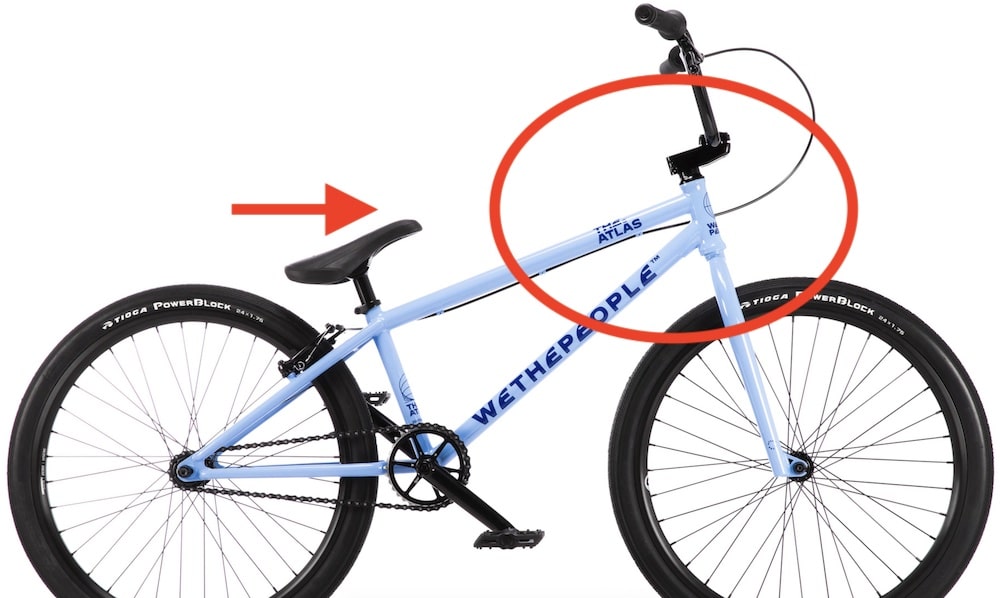
The WTP Atlas 24″ is the faster, more stable option in this comparison.
The Atlas pulls heavily from the brand’s racing background, with race-inspired geometry, a 33T sprocket, 14T cassette cog, V-brake/disc brake, and Patrol stem.
The idea is simple: bigger wheels, quick acceleration, and a setup that feels at home on pump tracks, trails, and speed.
The frame is full 4130 chromoly, with tapered chainstays and seatstays, while the fork uses butted chromoly tubing. You also get full chromoly bars.
Geometry is where the character really starts to separate from the Audio.
The Atlas uses a 21.75″ top tube, 15″ chainstay, 74° head tube angle, 72.25° seat tube angle, and 12.25″ BB height. Up front, WTP fits 7.1″ bars with a 53mm Patrol top-load stem.
That is a noticeably different recipe from the Audio.
Lower front end. Longer rear. Slightly shorter top tube.
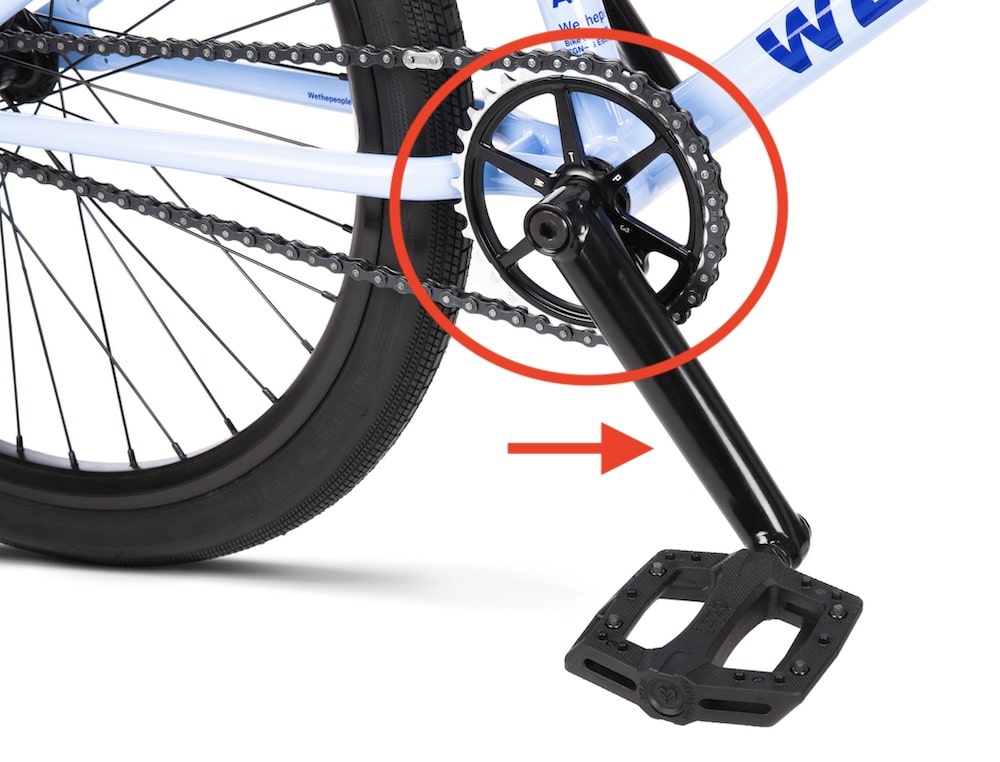
Additionally, you get 175mm SaltPlus Pro48 cranks, a 33T WTP Patrol sprocket, and a 14T sealed cassette cog.
Then there are the tires.
The Atlas runs Tioga Power Block 24″ x 1.75″ tires front and rear, mounted to SaltPlus DB32 double-wall rims.
Those narrower tires suit the bike’s speed-focused direction much better than a chunkier freestyle tire would.
Braking comes from a SALT Atlas alloy V-brake, which fits the race-inspired theme nicely.
But if you want hydraulic braking instead, that is where the Atlas Disc version comes in — and I’ll get to that next.
At 25.1 lbs (11.4 kg), the Atlas is also slightly lighter than the Audio 24″.
So, who is the Atlas really for?
If your idea of a fun 24″ BMX involves pump tracks, trails, sprinting, fast cruising, and flowing lines, the Atlas is the one that immediately stands out.
GET YOUR WETHEPEOPLE ATLAS 24″ BMX BIKE NOW!4. WTP Atlas Disc Version: Is It Worth Choosing Over The Regular Atlas?
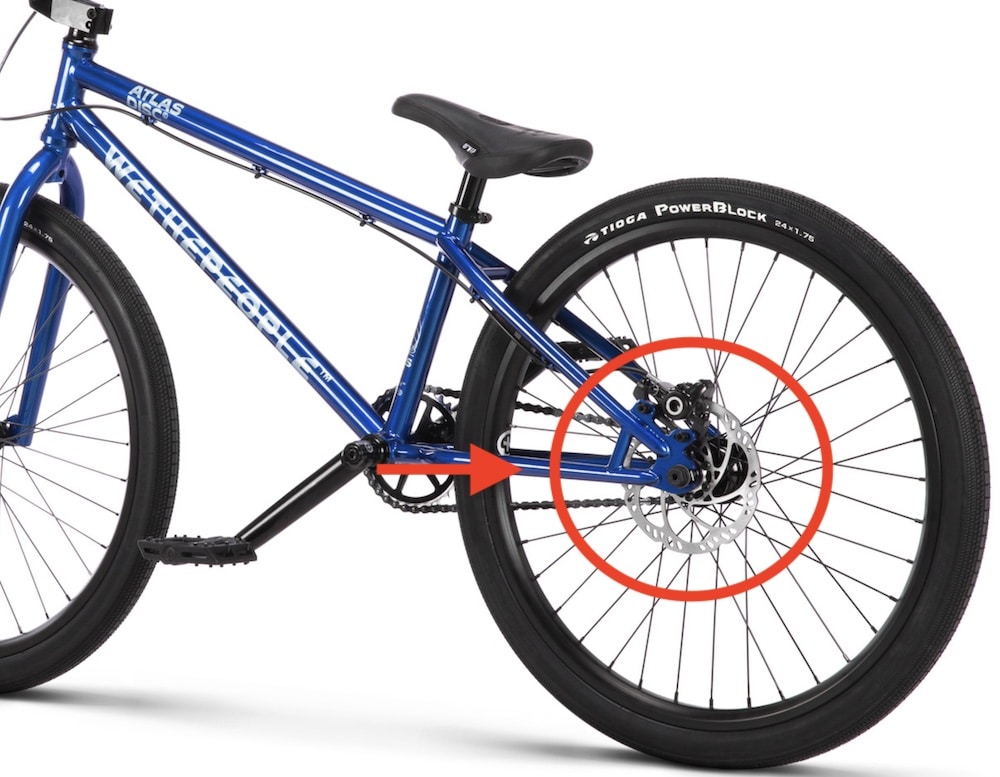
The Atlas Disc is not a totally different bike.
It keeps the same basic Atlas formula.
Of course, the big change is the brake setup.
Instead of the regular Atlas V-brake, the Disc version uses a Magura MT4 hydraulic disc brake with a 140mm rotor.
WeThePeople also swaps in a disc-compatible SaltPlus Pro rear hub.
That changes the buying decision quite a bit.
The regular Atlas already fits the bike’s race-inspired, fast-rolling character well.
And if you eventually want to ride it brakeless, this is the option I’d go with.
But if you want more braking control and a more modern setup, I’d look at the Disc version first.
There is a small weight penalty.
The regular Atlas weighs 25.1 lbs, while the Atlas Disc comes in at 25.5 lbs.
That is only 0.4 lb more, so I would not let weight be the deciding factor here.
For me, it comes down to this:
- Choose the regular Atlas if you want the simpler setup and are happy with a V-brake.
- If you later want to ride brakeless, choose the regular Atlas.
- Choose the Atlas Disc if braking performance matters more and you like the idea of hydraulic stopping power on a 24″ BMX.
- For pump tracks, trails, and faster riding, I can definitely see the Disc version being the more appealing choice.
So, is it worth it?
Yes, if you actually value the hydraulic brake.
GET YOUR WETHEPEOPLE ATLAS DISC 24″ BMX BIKE NOW!5. Geometry: Which One Feels More Like A BMX?
The Audio 24″ is the one that stays closer to a traditional BMX feel.
You can see it in the setup.
The Audio has a slightly longer top tube, but uses a shorter chainstay, steeper head tube angle, taller bars, and a shorter reach stem.
Together, that points to a more familiar freestyle-style riding position and a bike that should feel easier to move around underneath you.
Although I feel a shorter top tube length would make the Audio 24″ even more fun!
The Atlas goes in a different direction.
Its longer chainstay, mellower head angle, lower bars, and longer reach stem fit the race- and speed-inspired character much better.
It feels more stretched out and more settled when you go fast.
That is the key difference.
- Audio = more BMX-like and playful.
- Atlas = more race-inspired and speed-focused.
And honestly, that is probably the simplest way to choose between them if both sizes fit you.
6. Which Is Better For Street & Freestyle Riding?
For street, skatepark and general freestyle, I’d pick the WTP Audio 24″.
It is simply the more natural fit.
The 14.7″ chainstay, a steeper head tube angle, taller 7.9″ bars, a shorter stem, wider 2.1″ tires, and classic 25/9 BMX gearing – this all sounds freestyle to me.
Audio makes basic tricks, manuals, bunnyhops, spins and doing quick jibbs and whatnot much easier.
The Atlas is still a BMX, but it leans more toward speed and flow.
So if you’re not into that and are all into street, park, and freestyle, forget about the Atlas and opt for the Audio.
A 24″ bike will always feel bigger, but the Audio does a better job of keeping the overall setup closer to what most freestyle riders are used to.
GET YOUR WETHEPEOPLE AUDIO 24″ BMX BIKE NOW!Still, if you’re wondering whether to pick a 24″ or go smaller, I recommend checking out the WTP Audio 22″.
7. Which Is Better For Trails & Pump Tracks?
For trails and pump tracks, the WTP Atlas 24″ is the better fit.
This is where its race-inspired setup starts to make more sense.
That frame geometry and parts combination points to a bike that feels planted at speed and more natural when pumping through rollers, berms, and flowing trail lines.
Don’t get me wrong, the Audio can absolutely handle trails, too.
But if your main goal is:
- pump tracks
- dirt trails
- fast flow
- carrying speed
- race-inspired riding
then I’d lean Atlas.
And if braking matters a lot on steeper or faster lines, the Atlas Disc becomes even more interesting.
GET YOUR WETHEPEOPLE ATLAS 24″ BMX BIKE NOW!8. Which Is Better For Cruising?
For cruising, I’d actually give the edge to the WTP Audio 24″.
The 22″ top tube gives you a little more room than the Atlas, which can make the bike feel less cramped on longer, more relaxed rides.
Then there are the 2.1″ tires.
They are noticeably fatter than the Atlas’s 1.75″ tires, so the Audio should give you a bit more cushion and a more comfortable feel over rough pavement, cracks, and everyday street riding.
Another small detail I like is the quick-release seat clamp.
That makes it much easier to raise the seat for cruising, then drop it back down when you want to ride more BMX-style.
Simple, but useful.
The Atlas still has plenty going for it if you prefer a faster ride.
Its narrower tires, lower front end, and 33/14 gearing fit that speed-focused character well.
But for me, cruising is not just about rolling fast.
It is also about comfort and having a bike you can sit on, pedal around, and enjoy for a while.
So, if I were buying one mainly to cruise around on, I’d pick the Audio 24″.
GET YOUR WETHEPEOPLE AUDIO 24″ BMX BIKE NOW!9. WTP Audio 24″ Pros & Cons
Pros
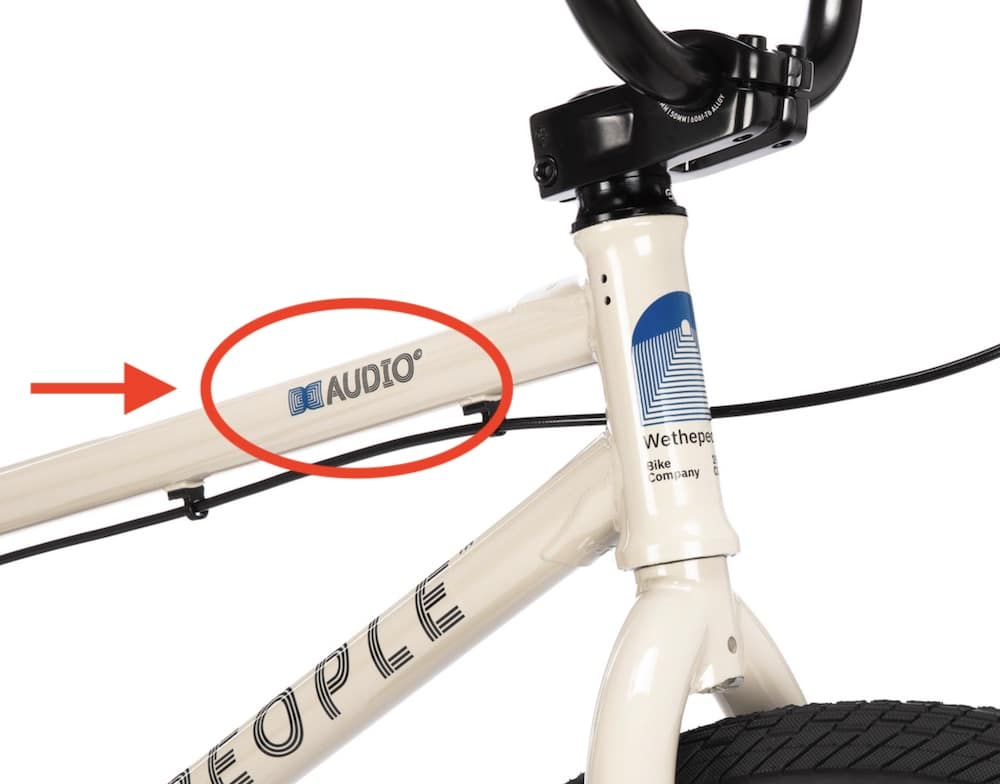
- More BMX-like feel: The shorter 14.7″ chainstay, steeper 74.5° head angle, taller 7.9″ bars, and 50mm stem all keep the Audio closer to a traditional freestyle BMX setup.
- 22″ top tube gives you more room: Great for taller riders and anyone who does not want a 24″ bike to feel cramped. Still, I would like to see a 21.75″ top tube Audio one day.
- Full 4130 chromoly frame and bars: A strong foundation for street, trails, cruising, and general all-around riding.
- 25/9 gearing feels familiar: If you already ride freestyle BMX, the drivetrain will feel much more normal than the Atlas’s larger race-inspired gearing.
- Wider 2.1″ tires: The Kenda Kwick tires add more cushion and suit street, trails, and cruising really well.
- Better choice for tricks: Manuals, bunnyhops, casual street riding, and skatepark sessions all fit the Audio’s setup better than the Atlas.
- Quick-release seat clamp: A small but very useful feature if you want to raise the seat for cruising and drop it again for BMX riding.
- Good all-around versatility: It can handle street, trails, cruising, and casual freestyle without feeling too specialized.
Cons
- Slightly heavier: At 25.7 lbs, the Audio weighs a little more than the regular Atlas.
- U-brake instead of V-brake or disc: The setup keeps things traditional, but riders who want stronger modern braking may prefer the Atlas Disc.
- Wider tires roll slower: The 2.1″ tires add comfort and grip, but they are not as speed-focused as the Atlas’s narrower 1.75″ tires.
10. WTP Atlas 24″ Pros & Cons
Pros
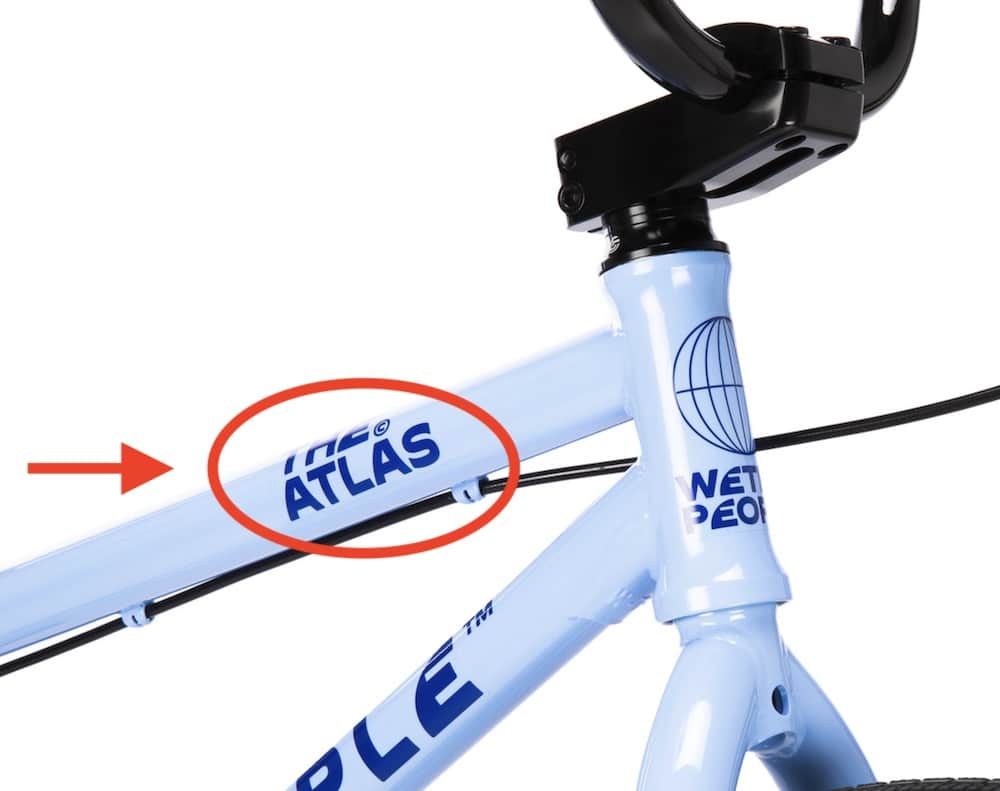
- Race-inspired setup: The longer 15″ chainstay, lower 7.1″ bars, 53mm stem, and 33/14 gearing all push the Atlas toward speed, flow, and more race-style riding.
- Great for pump tracks: The geometry and narrower tires suit rollers, berms, and keeping momentum.
- Strong trail bike: WeThePeople clearly positions the Atlas around trails, too, and the longer rear end plus fast-rolling tire setup fit that use well.
- Full chromoly frame and bars: Even with the race influence, you still get a proper BMX foundation.
- Tioga Power Block tires: The 1.75″ tires suit the Atlas well if your priority is rolling speed rather than a fatter freestyle feel.
- Lighter than the Audio: At 25.1 lbs, the regular Atlas is a little lighter than the Audio 24″.
- V-brake suits the race-inspired build: The standard Atlas keeps things simple and functional without overcomplicating the bike.
- Disc version available: If you want the same Atlas platform with stronger braking, the hydraulic Magura-equipped version gives you that option.
Cons
- Less freestyle-friendly than the Audio: The longer rear end, lower front end, longer stem, and narrower tires make it less natural for tricks and freestyle.
- Shorter top tube: At 21.75″, the Atlas gives you slightly less room than the Audio’s 22″ top tube.
- Narrower tires trade comfort for speed: The 1.75″ Power Blocks roll fast, but they do not give you the same cushioning as the Audio’s 2.1″ tires.
- Lower bars may not suit everyone: Riders coming from a more traditional freestyle BMX setup may find the 7.1″ bars noticeably lower.
- More specialized character: The Atlas shines when your riding matches its strengths, but it isn’t as all-around as the Audio.
Before you make the final decision, don’t forget to check the Sunday Model C 24″ BMX bike.
WTP Audio 24″ Or Atlas 24″ – Which Should You Get?
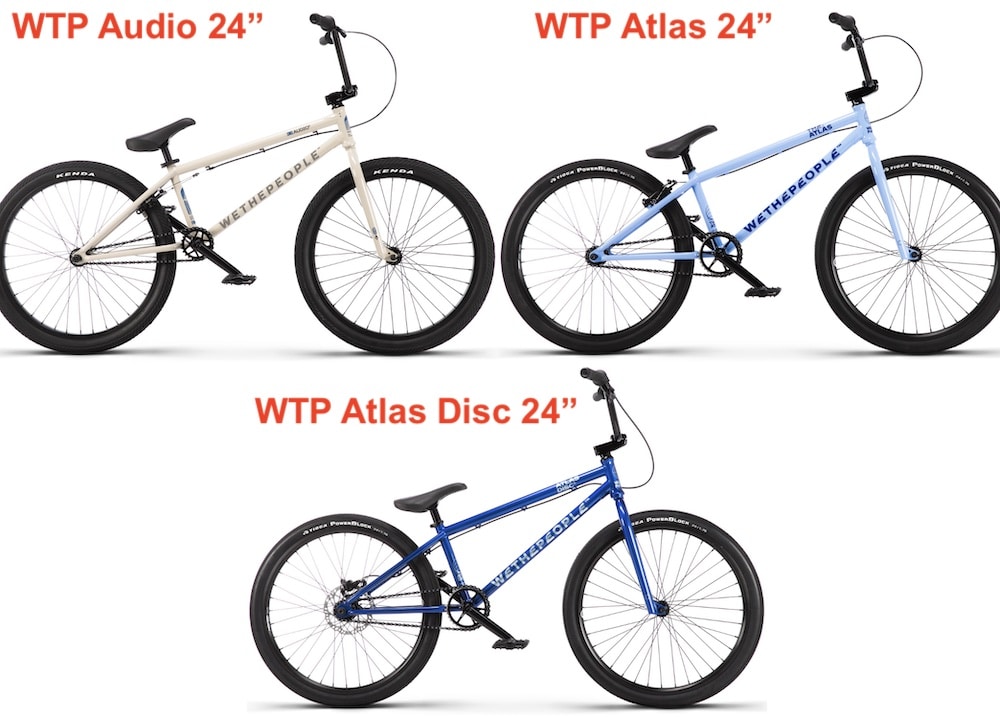
This one really comes down to how you want the bike to feel.
If you want a 24″ BMX that stays closer to a traditional freestyle setup, I’d go with the WTP Audio 24″.
It’s a better fit for street riding, manuals, casual tricks, mixed sessions, and more relaxed cruising.
The WTP Atlas 24″ is the one I’d choose if your riding is more about speed, pump tracks, trails, and flow.
And if you want stronger braking, the Atlas Disc adds a Magura hydraulic setup without changing the bike’s core character.
So I’d break it down like this:
- Choose the Audio 24″ if you want the more BMX-like, playful, and versatile option.
- Choose the Atlas 24″ if you care more about speed, pump tracks, trails, and race-inspired riding.
- Choose the Atlas Disc if you want the Atlas setup with hydraulic braking.
If I had to pick just one as the better all-around 24″ BMX, I’d go with the Audio 24″.
The Atlas is excellent at what it does.
But the Audio covers more ground without losing that familiar BMX feel.
GET YOUR WETHEPEOPLE AUDIO 24″ BMX BIKE NOW! GET YOUR WETHEPEOPLE ATLAS 24″ BMX BIKE NOW! GET YOUR WETHEPEOPLE ATLAS DISC 24″ BMX BIKE NOW!FAQs About The WeThePeople Audio 24″ Vs Atlas 24″
What is the main difference between the WTP Audio 24″ and Atlas 24″?
The biggest difference is riding style. The Audio 24″ is more BMX-like and freestyle-friendly, while the Atlas 24″ is more race-inspired and focused on speed, trails, pump tracks, and flow.
Which is better for street riding?
The WTP Audio 24″.
Which is better for pump tracks?
The WTP Atlas 24″.
Which is better for trails?
The Atlas 24″ gets my vote for fast, flowing trails.
Which is better for cruising?
I’d choose the Audio 24″.
Which bike feels more like a regular BMX?
The Audio 24″.
Is the WTP Atlas 24″ still a BMX bike?
Yes. It still uses a full chromoly BMX frame, chromoly bars, BMX cranks, and 24″ BMX wheels, but the setup is much more flow than the Audio.
What is the difference between the Atlas and Atlas Disc?
The core geometry and overall setup stay the same. The Atlas Disc swaps the regular V-brake for a Magura MT4 hydraulic disc brake with a 140mm rotor and uses a disc-compatible rear hub.
Is the Atlas Disc worth it?
Yes, if stronger hydraulic braking matters to you.
Which bike is lighter?
The regular Atlas 24″ is slightly lighter. WTP lists it at 25.1 lbs, compared with 25.7 lbs for the Audio 24″.
Which bike is better for tricks?
The Audio 24″. Its more freestyle-friendly geometry, wider tires, and more traditional BMX setup make it the better option for manuals, hops, street riding, and casual tricks.
Which bike is faster?
The Atlas 24″ is the more speed-focused option.
Which one should I buy?
Choose the Audio 24″ if you want a more playful, versatile, BMX-like bike. Or choose the Atlas 24″ if you care more about speed, pump tracks, trails, and race-inspired riding.
GET YOUR WETHEPEOPLE AUDIO 24″ BMX BIKE NOW! GET YOUR WETHEPEOPLE ATLAS 24″ BMX BIKE NOW! GET YOUR WETHEPEOPLE ATLAS DISC 24″ BMX BIKE NOW!