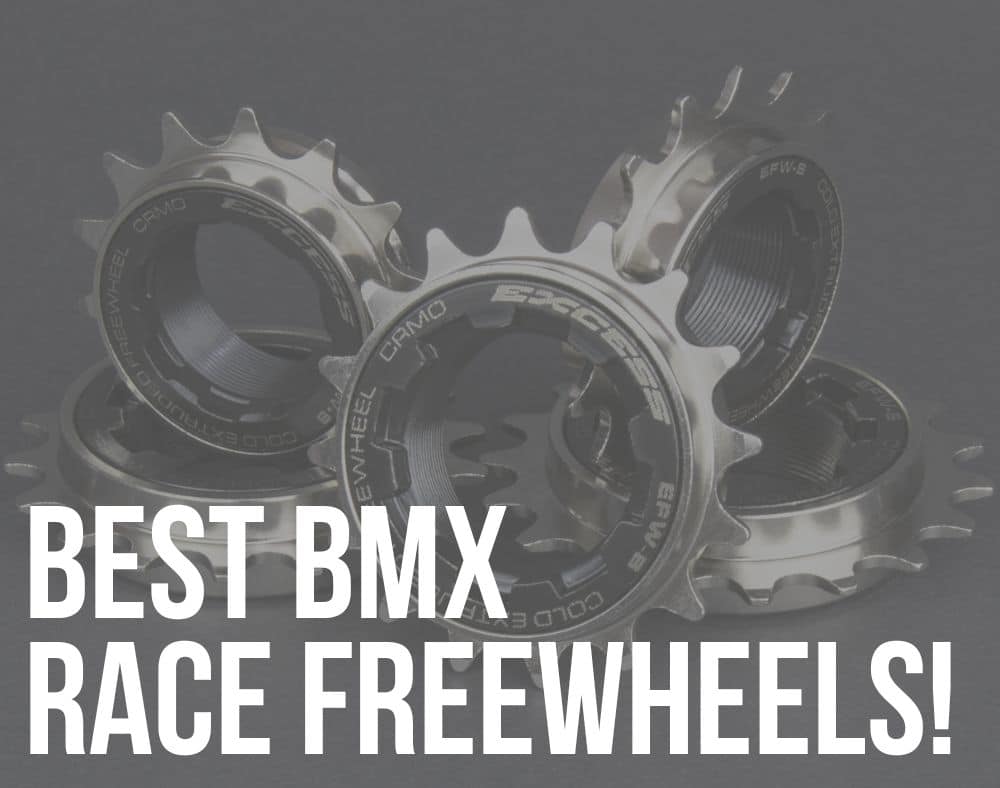

Looking for the best BMX race freewheels for faster engagement, smoother pedaling, and reliable track performance?
You are in the right place.
A good freewheel can make a bigger difference than many riders expect.
The quicker it engages, the less crank movement you need before the rear wheel starts driving. That matters during gate starts, short sprints and quick pedal strokes between jumps.

But not every freewheel fits every BMX race hub.
You also need to check the thread type, tooth count, chain width, engagement points, and serviceability before buying.
Note: I included freewheels that fit 3/32″ chains. (These also fit 1/8″ chains.)
For this guide, I picked BMX race freewheels that stand out for speed, durability and value.
I included options for beginners, regular racers and riders who want the fastest possible engagement.
This roundup focuses only on thread-on BMX race freewheels.
If your rear hub uses a cassette cog, check my list of the best BMX race cogs instead.
Let’s find the right freewheel for your race bike.
This post covers:
- BMX Race Freewheel Comparison Table
- Best BMX Race Freewheels
- BMX Race Freewheel Vs Cassette Cog
- How To Choose The Right BMX Race Freewheel
- Common BMX Race Freewheel Mistakes
- Conclusion: Get The Ideal BMX Race Freewheel
- FAQs About BMX Race Freewheels
Note: You will also need a compatible BMX race chain because the chain, freewheel, and front chainring must work together.
BMX Race Freewheel Comparison Table
| BMX Race Freewheel | Tooth Options | Pawls | Engagement Points | Best For | Price |
|---|---|---|---|---|---|
| Theory Rattlesnake | 16T, 17T | 9 | 108 | Fast engagement & premium race builds | $63.00 |
| Excess Pro Level | 16T, 17T | 9 | 96 | Quick pickup at a mid-range price | $45.99 |
| ACS PAWS 4.1 | 16T – 22T | 3 | 30 | Beginners & budget race setups | $29.95 |
| Box Two 108 Point | 16T – 18T | 9 | 108 | High-end racing & instant pickup | $89.99 |
| Excess EFW-S | 14T – 18T | 3 | 36 | Training & everyday racing | $24.99 |
| ACS PAWS M30 | 13T – 15T | 3 | 30 | Smaller gearing & M30 race hubs | $34.95 |
Best BMX Race Freewheels
1. Theory Rattlesnake Freewheel
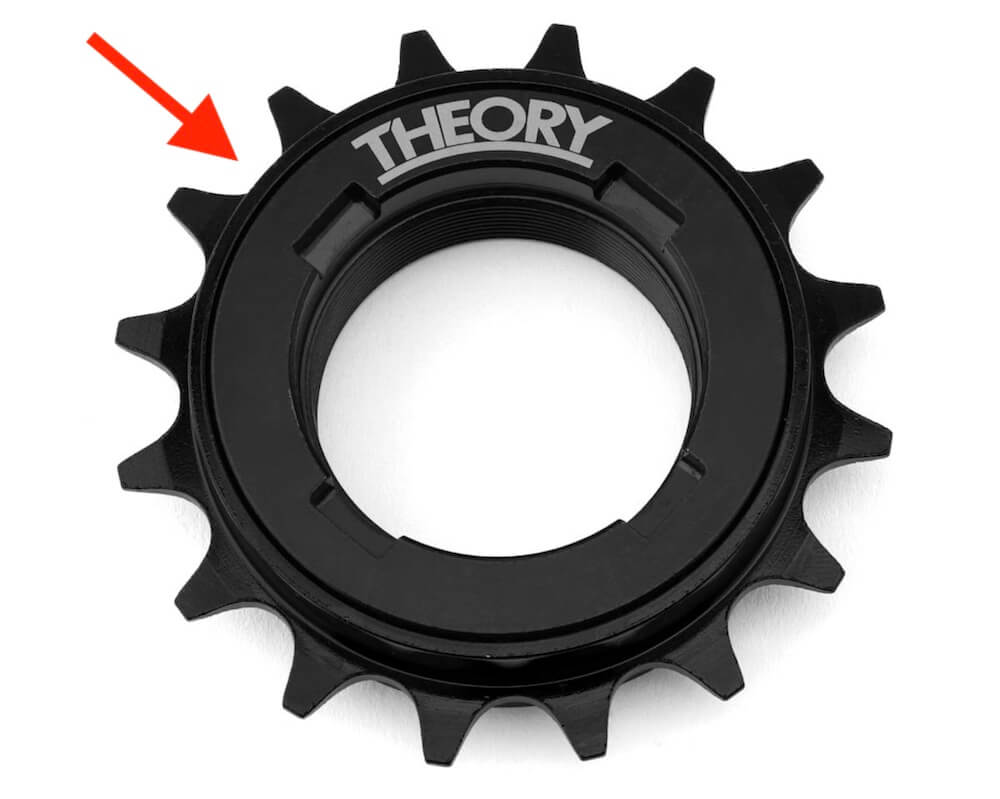
The Theory Rattlesnake freewheel is built for riders who want very quick pickup and plenty of sound.
Its nine-pawl design delivers 108 points of engagement, reducing the crank movement needed before power reaches the rear wheel.
It comes in 16T and 17T sizes with 3/32″ teeth, plus several awesome color options.
It is loud, fast to engage and well suited to racing.

The $63.00 price is higher than basic freewheels, but the performance upgrade is easy to notice and well worth it.
Theory Rattlesnake Freewheel Features
- Teeth: 16T, 17T
- Pawls: 9
- Points of engagement: 108
- Weight: TBA
- Price: $63.00
2. Excess Pro Level Freewheel
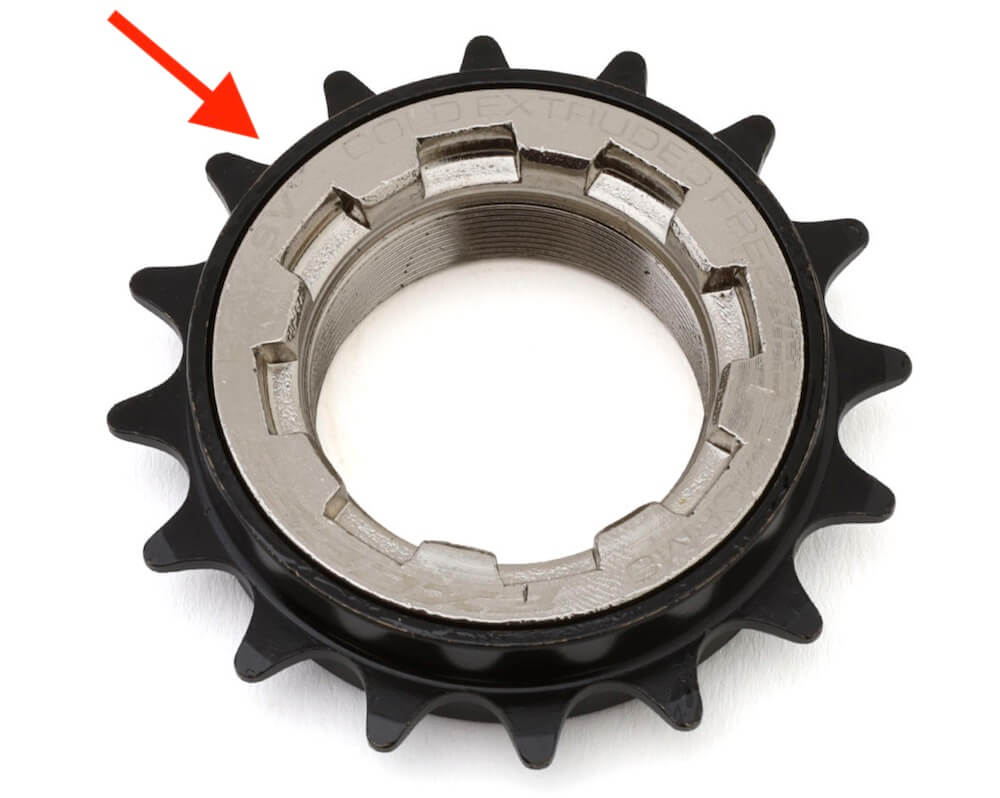
Quick engagement is the main strength of the Excess Pro Level racing freewheel.
Its nine-pawl system provides 96 engagement points, helping the drivetrain catch with very little crank movement.
That is especially useful out of the gate and during short pedal bursts between jumps.
The 16T version weighs 5.5 oz and fits both 3/32″ and 1/8″ chains.
It is not the lightest freewheel, but the strong steel construction and fast pickup make it a solid option for regular racing.
Excess Pro Level Freewheel Features
- Teeth: 16T, 17T
- Pawls: 9
- Points of engagement: 96
- Weight: 5.5 oz (155.9 g) – 16T
- Price: $45.99
3. ACS PAWS 4.1 Freewheel
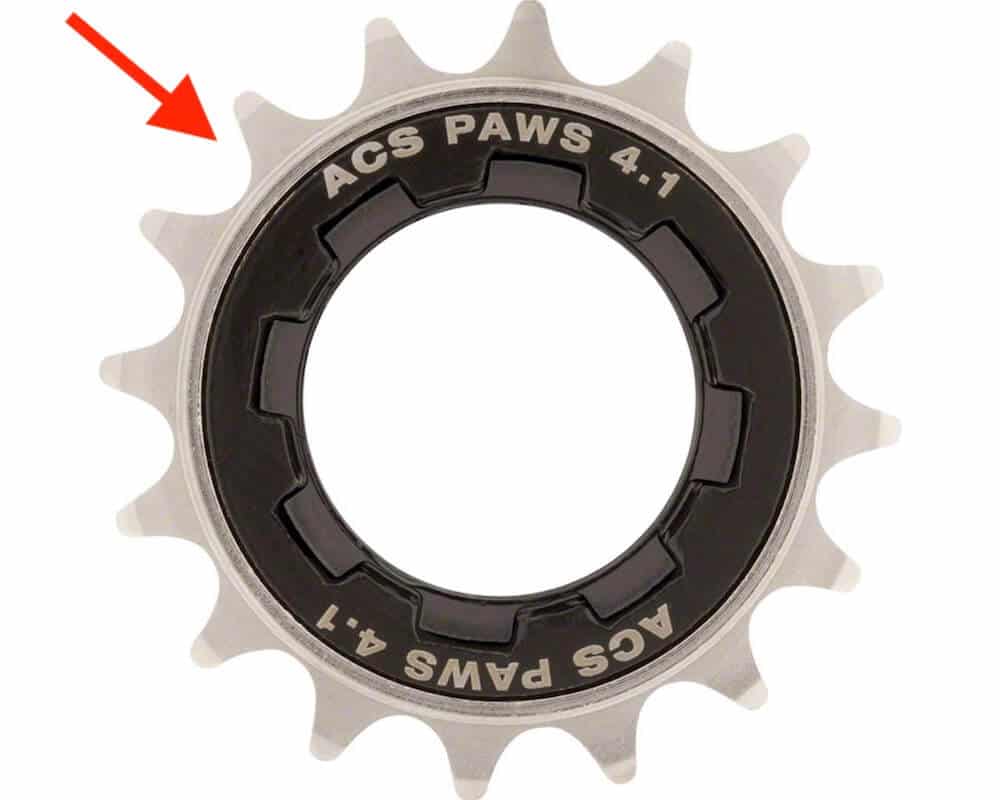
A proven design keeps the ACS PAWS 4.1 freewheel simple, dependable, and reasonably priced.
Its three pawls engage together every 12°, giving you decent 30 engagement points.
That is slower than the premium freewheels above, but still suitable for newer racers, training bikes and budget-conscious builds.
It also runs on two tracks of loose ball bearings.
The nickel-plated sprocket works with both 3/32″ and 1/8″ chains.
Overall, it is a practical choice when durability and value matter more than instant pickup.
ACS PAWS 4.1 Freewheel Features
- Teeth: 16T – 22T
- Pawls: 3
- Points of engagement: 30
- Weight: 4.0 oz (113.4 g)
- Price: $29.95
4. Box Two 108 Point Freewheel
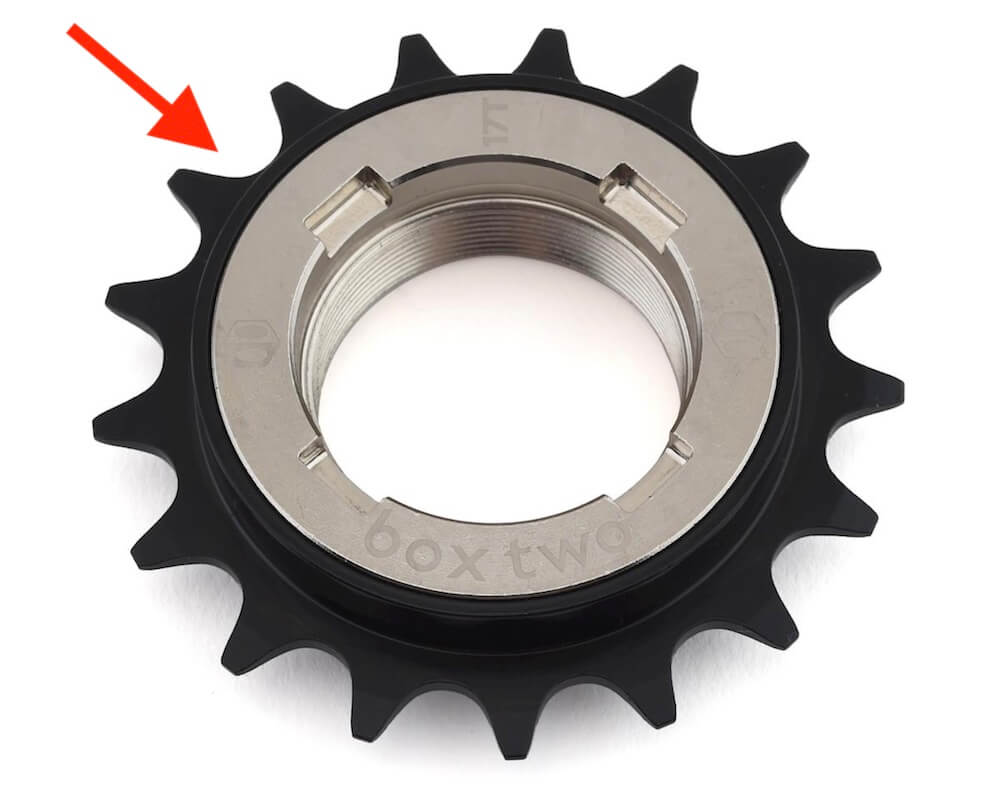
Race-tested performance is the big draw of the Box Two 108 Point Freewheel.
Its nine-pawl system provides 108 engagement points, so power reaches the rear wheel after just 3.3° of crank movement.
The heat-treated chromoly construction adds durability, while 16T, 17T and 18T options cover common race gearing.
Also, it works with both 3/32″ and 1/8″ chains.
At 5.8 oz for the 16T, it is not especially light, but the fast pickup and proven build justify the extra weight.
Box Two 108 Point Freewheel Features
- Teeth: 17T, 18T
- Pawls: 9
- Points of engagement: 108
- Weight: 5.8 oz (164.4 g) – 16T
- Price: $89.99
5. Excess EFW-S Freewheel
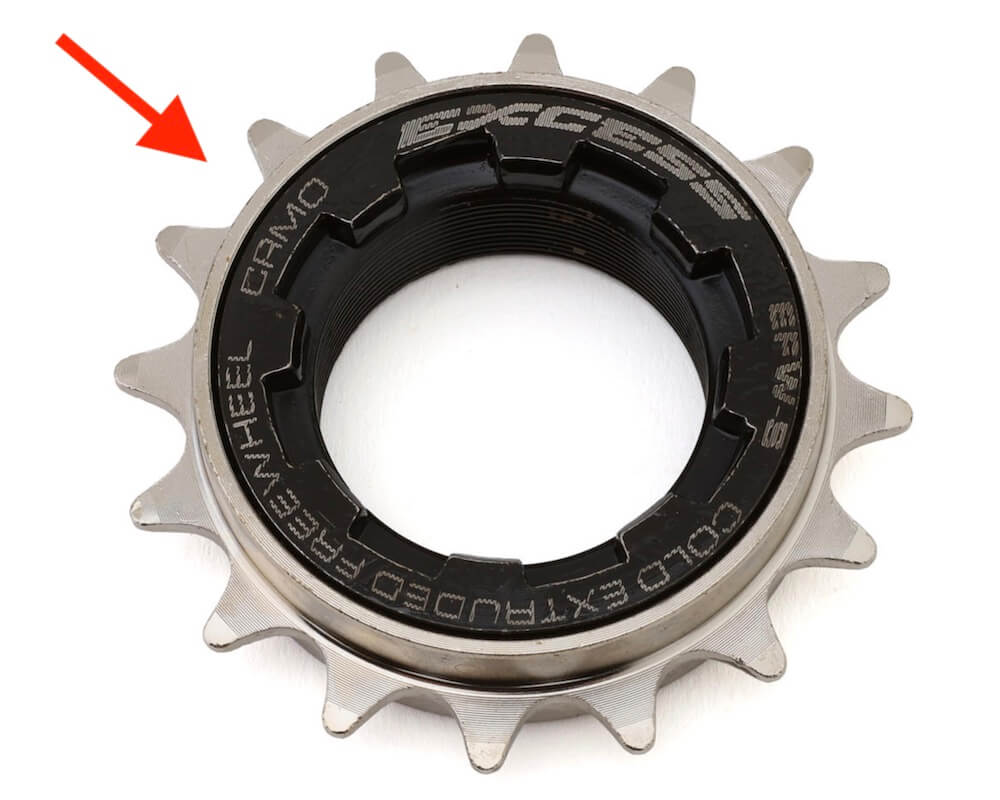
For everyday racing without the premium price, the Excess EFW-S freewheel is a practical choice.
Its three-pawl mechanism delivers 36 engagement points, so pickup is quicker than a basic freewheel but slower than the 96-point Pro model above.
The cold-extruded 4130 chromoly construction focuses on durability, while sizes from 14T to 18T cover plenty of gearing setups.
It fits both 3/32″ and 1/8″ chains.
Just note that the smaller 14T and 15T versions use a different hub thread.
Excess EFW-S Freewheel Features
- Teeth: 14T – 18T
- Pawls: 3
- Points of engagement: 36
- Weight: 4.2 oz (119.1 g) – 14T
- Price: $24.99
6. ACS PAWS M30 Freewheel
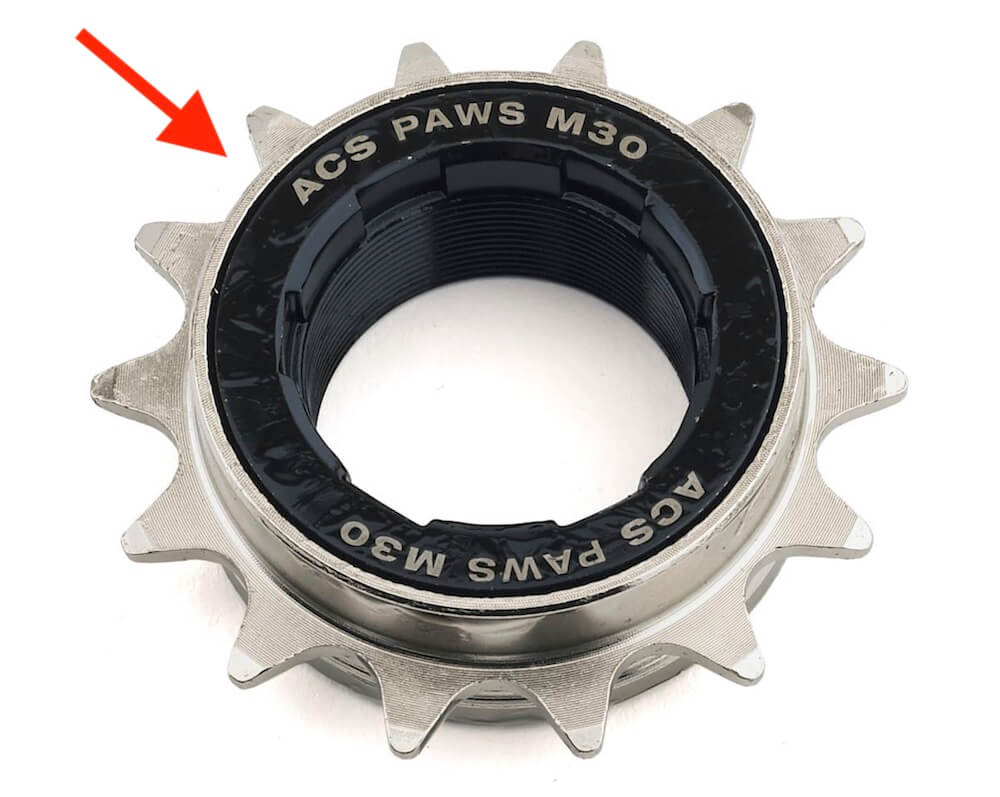
Smaller gearing setups are where the ACS PAWS M30 freewheel fits best.
It uses a metric M30 thread, which allows ACS to offer compact 13T, 14T and 15T sizes for compatible rear hubs.
Three pawls engage together every 12°, creating 30 engagement points across two loose-ball bearing tracks.
It is not a high-engagement race option, but it works well for younger riders or bikes that require a small metric freewheel.
And if you want to run a smaller BMX race chainring, this is a great solution to keep comfortable gearing ration.
ACS PAWS M30 Freewheel Features
- Teeth: 13T – 15T
- Pawls: 3
- Points of engagement: 30
- Weight: 4.0 oz (113.4 g)
- Price: $34.95
BMX Race Freewheel Vs Cassette Cog
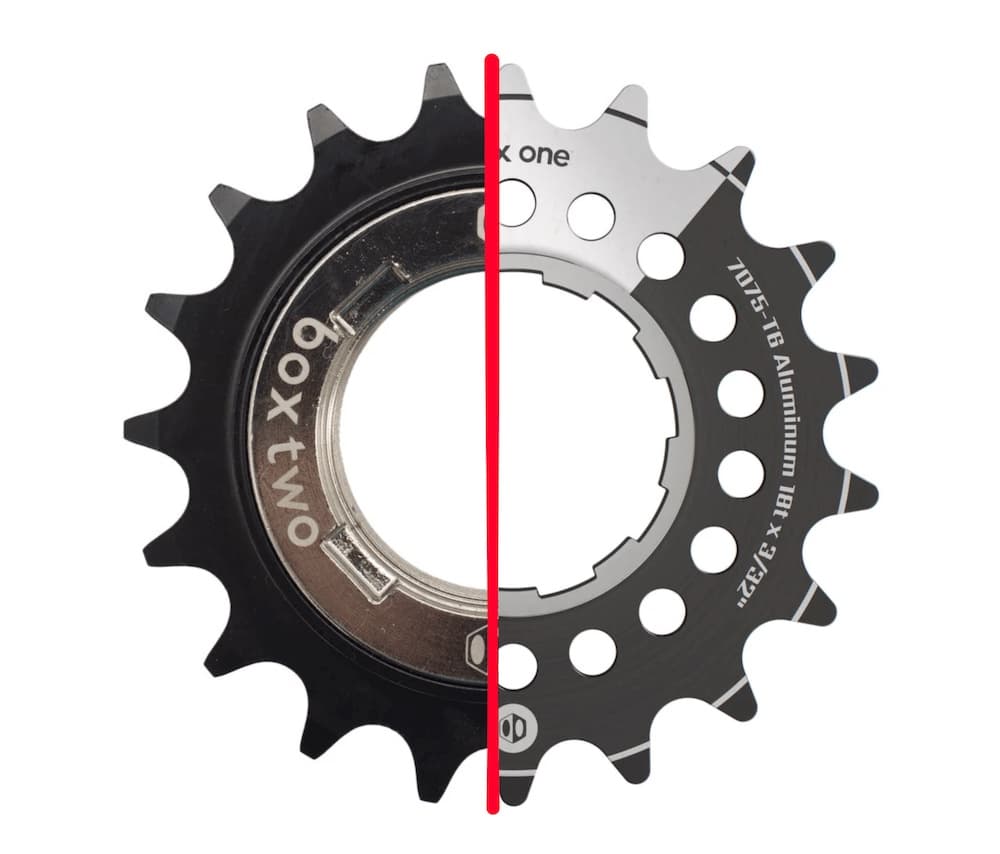
A BMX race freewheel threads directly onto the rear hub and contains its own ratchet, pawls, and bearings.
A cassette cog slides onto a cassette body, while the engagement mechanism sits inside the hub.
Both systems drive the rear wheel, but they are not interchangeable.
Freewheels are common on many entry-level and mid-range race wheels. They are simple, widely available and easy to replace.
You will also find them on old-school BMX race bikes.
Cassette cogs are usually cheaper to swap because you only replace the cog, not the complete engagement mechanism. They also give you more freedom to test different tooth counts.
So, which one is better?
A freewheel is a solid option if your current hub already uses one and you want a straightforward setup.
A cassette hub is the better choice if you change gearing often or want a wider range of lightweight cog options.
The most important thing is to buy the correct rear gear for your hub.
Important: A threaded freewheel will not fit a cassette body, and a cassette cog will not fit a threaded hub.
How To Choose The Right BMX Race Freewheel
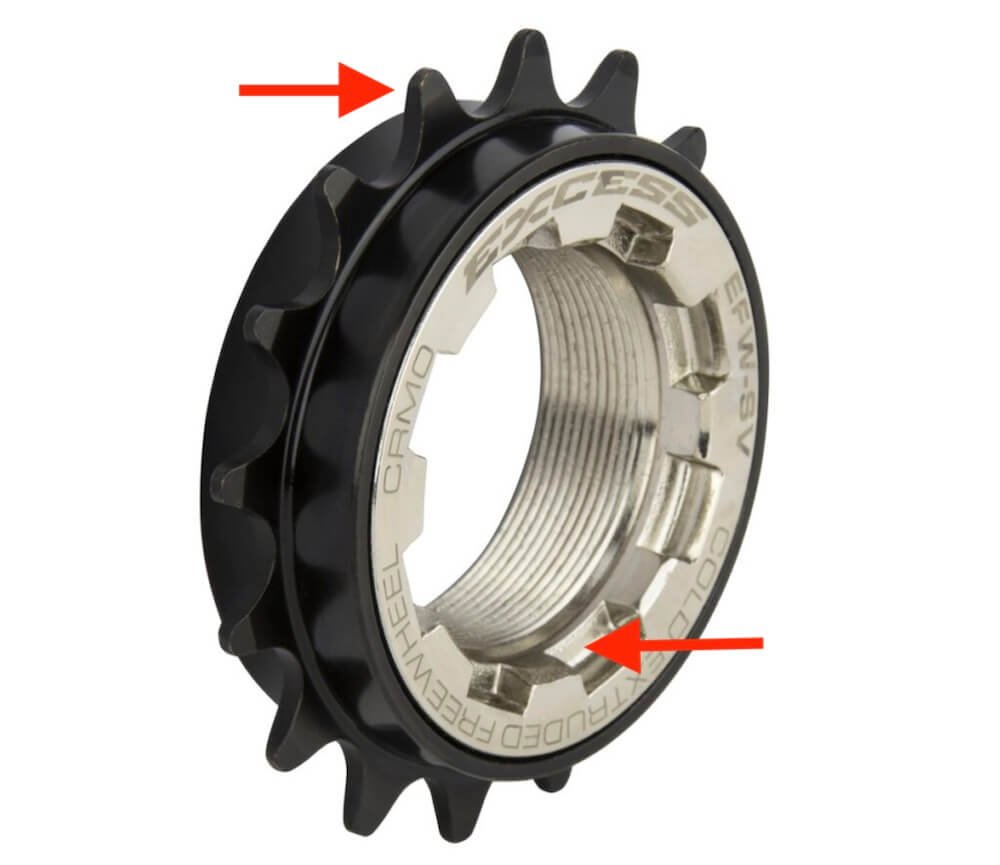
- Check the hub thread first: Most 16T, 17T and 18T freewheels use a standard thread, while smaller 13T, 14T and 15T models may require an M30 hub.
- Choose the correct tooth count: The rear freewheel works with the front chainring to create your gear ratio. A smaller freewheel makes the gear harder, while a larger one makes pedaling easier.
- Match the chain width: Most BMX race drivetrains use a 3/32″ chain. Some freewheels also accept 1/8″ chains, but always confirm before ordering.
- Compare engagement points: More engagement points reduce the amount of crank movement needed before the freewheel catches. This can help during starts and short pedal bursts.
- Think about how often you race: A basic 30- or 36-point freewheel may be enough for newer riders. More experienced racers may appreciate a faster 96- or 108-point option.
- Consider durability: Strong steel or chromoly construction is a smart choice for regular training and repeated gate starts.
- Check the available removal tool: Make sure you can get the correct tool for installation and future replacement. (You can find the best tools on Dan’s Comp here.)
- Do not choose by sound alone: A loud freewheel may sound fast, but engagement, fit and durability matter much more.
Common BMX Race Freewheel Mistakes
- Buying the wrong thread size: Standard freewheels and M30 models are not interchangeable. Always check your rear hub before ordering.
- Using a worn chain with a new freewheel: An old chain can wear the new teeth faster and may cause skipping under load.
- Ignoring early signs of slipping: Delayed engagement, missed pedal strokes or sudden slipping usually mean the freewheel needs attention.
- Installing it on dry hub threads: A light layer of grease helps prevent the freewheel from seizing onto the hub.
- Using the wrong removal tool: Freewheels can require different tools, so confirm the correct one before installation or removal.
- Forcing water into the mechanism: Pressure washing can push dirt and moisture past the seals and into the bearings and pawls.
- Using heavy lubricant inside the freewheel: Thick oil or grease can slow the pawls and create lazy engagement.
- Choosing a freewheel by noise alone: A loud sound does not guarantee faster pickup, better durability or higher quality.
- Continuing to ride a rough freewheel: Grinding, stiffness or uneven rotation can lead to bigger problems if ignored.
Conclusion: Get The Ideal BMX Race Freewheel
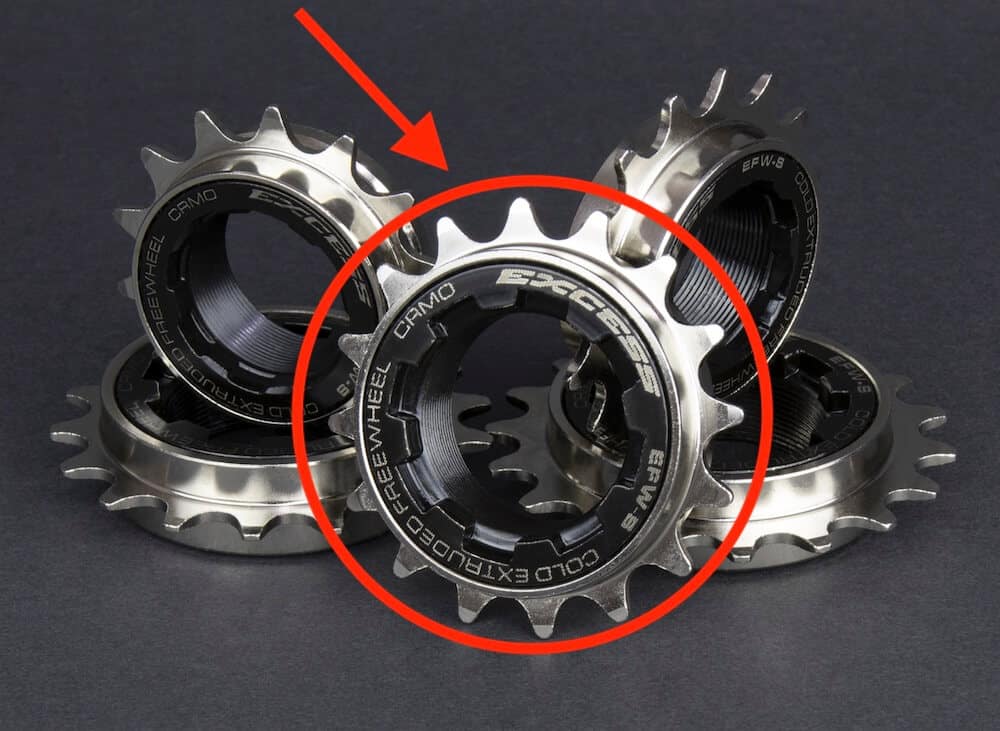
The best BMX race freewheel depends on your hub, gearing, and how quickly you want the drivetrain to engage.
For the fastest pickup, the Theory Rattlesnake and Box Two 108 Point are the strongest options.
The Excess Pro Level is another excellent choice if you want high engagement with a durable race-ready build.
For newer riders or tighter budgets, the ACS PAWS 4.1 and Excess EFW-S offer reliable performance without the premium price.
And if your hub uses an M30 thread, the ACS PAWS M30 is the correct pick for smaller tooth counts.
Before buying, check the thread size, chain width, and tooth count.
Again, do not choose by sound alone.
Get those basics right, and your freewheel will engage smoothly, work with your gearing, and give you reliable performance at the track.
FAQs About BMX Race Freewheels
What is a BMX race freewheel?
A BMX race freewheel threads onto the rear hub and contains its own ratchet, pawls and bearings.
It engages when you pedal and allows the wheel to spin freely when coasting.
What is the difference between a freewheel and a cassette cog?
A freewheel contains the engagement mechanism and threads onto the hub.
A cassette cog slides onto a cassette body, while the engagement system sits inside the hub.
Are BMX race freewheels 3/32″?
Yes, most race freewheels are compatible with 3/32″ chains.
A narrow half-link chain can also provide finer rear-wheel adjustment. See whether half-link chains are good for BMX racing.
Will any BMX race freewheel fit my hub?
No. You need to match the freewheel to the hub thread, tooth-count range and chain width.
What size BMX race freewheel should I use?
That depends on your front chainring, wheel size and preferred gear ratio.
Always consider the complete drivetrain rather than choosing the rear tooth count alone.
What does freewheel engagement mean?
Engagement describes how quickly the freewheel catches after you begin pedaling.
More engagement points usually mean less crank movement before power reaches the rear wheel.
Is higher engagement better for BMX racing?
Usually, yes.
Faster engagement can help during gate starts, short sprints and quick pedal strokes between jumps.
Does a high-engagement freewheel make you faster?
Not directly.
It reduces drivetrain delay, but rider power, gearing, technique and track conditions matter much more.
How many engagement points should a BMX race freewheel have?
Basic options may have around 30 or 36 points.
Premium race freewheels can offer 96 or 108 points for quicker pickup.
Is a smaller freewheel faster?
A smaller freewheel creates a harder gear when the front chainring stays the same.
It may increase speed potential, but it also requires more effort to accelerate.
Is a larger freewheel easier to pedal?
Yes. A larger freewheel creates an easier gear, which can help with acceleration and lower-speed tracks.
Can I install an M30 freewheel on a standard hub?
No. M30 and standard freewheel threads are different and are not interchangeable.
How long does a BMX race freewheel last?
It depends on riding frequency, maintenance, rider power and build quality.
Regular cleaning and correct lubrication can help it last longer.
When should I replace my BMX race freewheel?
Replace it if it begins slipping, engaging inconsistently, grinding or developing excessive play.
Worn or damaged teeth are another clear warning sign.
Why is my BMX freewheel slipping?
Slipping may come from worn pawls, damaged teeth, dirt inside the mechanism or poor lubrication.
Stop riding it until the problem is checked.
Why does my freewheel feel rough?
Rough rotation can point to dirty bearings, worn internal parts or water contamination.
It may need servicing or replacement.
Can a BMX race freewheel be serviced?
Some premium freewheels can be cleaned and rebuilt.
Others are better replaced once the internal mechanism wears out.
Should I grease the hub threads before installation?
Yes. A light layer of grease helps prevent the freewheel from seizing onto the hub.
Do I need a special tool to remove a BMX freewheel?
Yes. Freewheels use specific removal tools, and the correct type depends on the model.
Can I use a new freewheel with an old chain?
Only if the chain is still in good condition.
A stretched or worn chain can damage the new freewheel and cause skipping.