BMX tires can completely change how your bike feels.
Too slick, and dirt or dusty skateparks can feel sketchy.
Too light, and street riding can chew them up fast.
Too fat, and they might not even fit your frame, fork, or brakes.

That’s why picking the best BMX tires isn’t just about grabbing the coolest-looking tread. It’s about matching the tire to how you actually ride.
Street riders usually want something tougher.
Park riders often want something faster and smoother.
Trail riders need more grip and control.
And if you ride a little bit of everything, you’ll want a tire that can handle mixed sessions without feeling slow or weak.
In this guide, I’ll share my favorite BMX tires for street, park, trails, and all-around freestyle riding, plus a few simple tips to help you pick the right size, tread, and width for your setup.
This post covers:
- Quick Picks: Best BMX Tires By Riding Style
- Best BMX Tires For Street, Park & Trails
- How To Pick The Best BMX Tires?
- BMX Tire Width Cheat Sheet
- How To Make Your BMX Tires Last Longer
- FAQs About BMX Tires
Quick Picks: Best BMX Tires By Riding Style
In a hurry?
Here are my quick BMX tire picks based on where and how you ride:
- Best overall BMX tire: BSD Donnasqueak
- Best street BMX tire: BSD Donnastreet or Odyssey Broc
- Best park BMX tire: Odyssey Path Pro
- Best trails BMX tire: S&M Mainline
- Best lightweight BMX tire: Maxxis Grifter Street
- Best budget BMX tire: Kink Sever
- Best fat BMX tire: Merritt Phantom
Best BMX Tires For Street, Park & Trails
| Tire | Width | Max PSI | Weight | Price |
|---|---|---|---|---|
| BSD Donnasqueak | 2.25″, 2.4″ | 110 | 23.9oz | $32.99 |
| Cult X Vans | 2.4″ | 110 | 26.1oz | $34.99 |
| BSD Donnastreet | 2.3″, 2.4″ | 110 | 23.9oz | $32.99 |
| Odyssey BROC | 2.25″, 2.4″ | 100 | 25.6oz | $33.99 |
| Odyssey Path Pro | 2.25″, 2.4″ | 100 | 26.7oz | $35.99 |
| Demolition Momentum | 2.0″, 2.2″, 2.35″ | 110 | 19oz | $29.99 |
| S&M Mainline | 2.1″, 2.4″ | 110 | 27oz | $37.95 |
| S&M Speedball | 2.1″, 2.4″ | 110 | 26oz | $44.95 |
| Cinema Williams | 2.5″ | 60 | 23.8oz | $29.99 |
| Shadow Serpent | 2.3″ | 110 | 19.2oz | $38.99 |
| Primo V-Monster | 2.4″ | 100 | 25.5oz | $29.00 |
| Maxxis Grifter Street | 1.85″, 2.1″, 2.3″, 2.4″ | 110 | 14.9oz | $44.00 |
| Kink Sever | 2.4″ | 60 | 33oz | $24.99 |
| Merritt Phantom | 2.35″, 2.5″ | 110 | 25oz | $36.99 |
| Animal GLH | 2.1″, 2.3″ | 110 | 26.2oz | $31.99 |
(I didn’t rank these only from “best” to “worst” because BMX tires depend a lot on riding style. Instead, I included the tires I’d actually consider for street, park, trails, lighter setups, and all-around riding.)
1. BSD Donnasqueak Tire
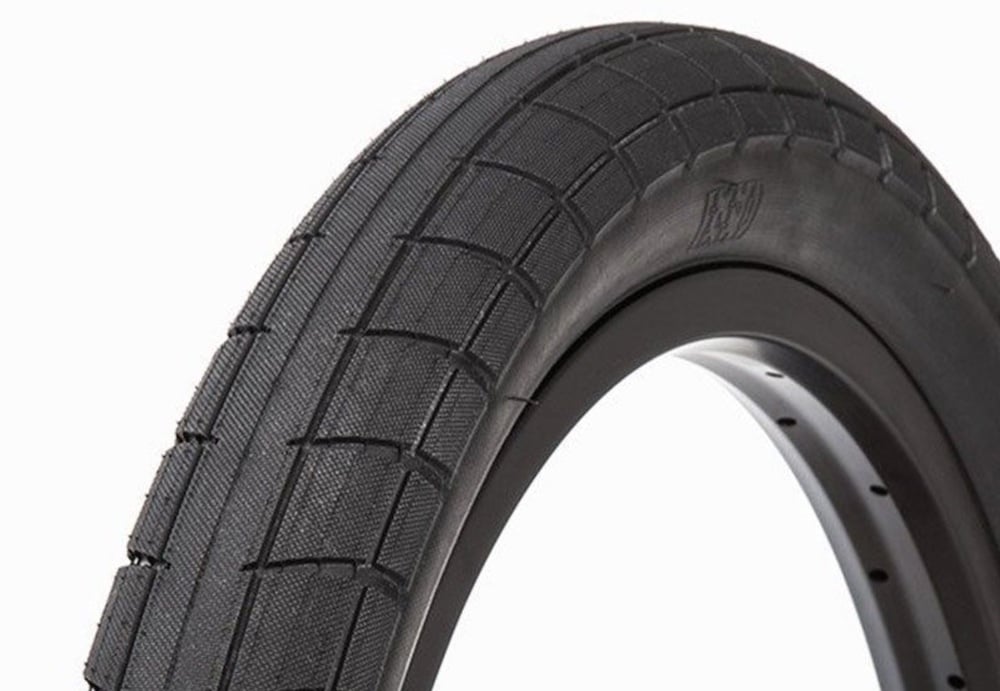
I’m adding Alex Donnachie‘s BSD Donnasqueck tire first because this is going to be my next tire.
Update: I’m riding 2.4″ version front and back for nearly a year now and cannot be more satisfied with it. The grip is amazing and the squeak, too!
Actually, this is the grippiest tire I’ve ridden so far.
I’ve seen so many pros ride it (including Garrett Reynolds!), so I absolutely needed to give it a shot. And I’m stoked!
Alex worked on this one with a low-profile tire in mind that squeaks and holds high PSI.
A smooth center for going fast and a side pattern for not slipping in corners and wallrides.
BSD Donnasqueak tire specs:
- Weight: 23.9oz (677g)
- Available in (width): 2.25″ and 2.4″
- Max pressure: 110 PSI
- Price: $32.99 (may vary)
John G.: “I didn’t want a tire that’s too fat but neither did I want a skinny one. However, when discussing the possibilities with Rok, he suggested the Donnasqueak tire by BSD. I got them in 2.25″ both front and back and I couldn’t be more stoked about them. And the level of squeak they make is so cool. Thanks!”
2. Cult X Vans Tire
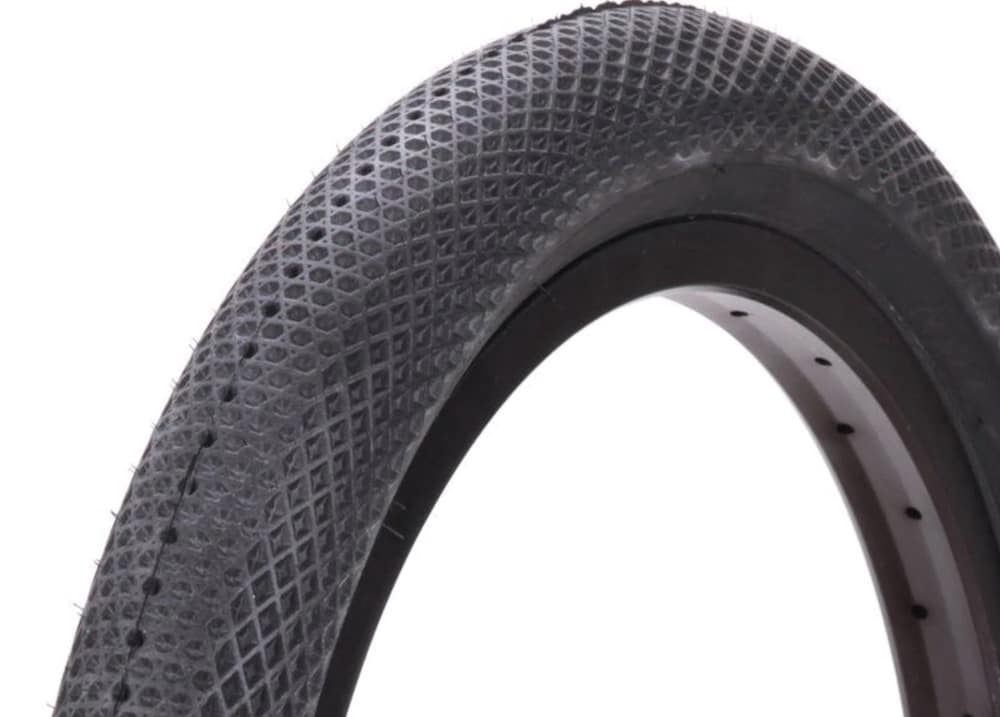
After reviewing BMX tires and checking what’s hot, The Cult X Vans waffle tire is one of the most popular out there.
The tire comes in endless color variations, including my favorite, black 🙂 . (But the camo ones look really rad!)
The waffle pattern makes this tire all-around, for street, park and trail riding.
Note: Check out my full-blown Cult X Vans tire review.
Keep in mind, this one is also available in the Wafflecup version, which is even more epic.
Cult X Vans tire specs:
- Weight: 26.1oz (740g)
- Available in (width): 2.4″
- Max pressure: 110 PSI
- Price: $34.99 (may vary)
Peter P.: “As a massive Vans fan, the Cult x Vans tires made sense to me. I already have the grips so these were a fantastic addition to my bike. Thanks, Rok, for helping me pick the right tires for my BMX.”
3. BSD Donnastreet Tire
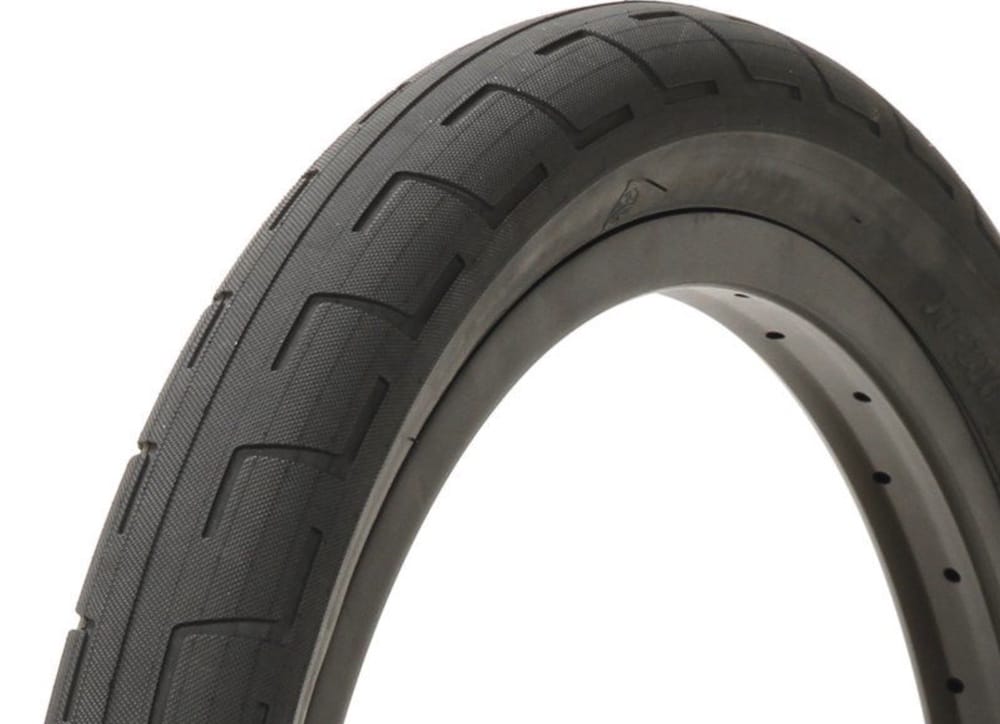
With the popularity of the Donnasqueak tire, Alex and BSD also released the Donnastreet tire.
This one has a slimmer profile and grippy sides, keeping you in place in all kinds of situations without slipping.
The highly durable rubber is the same as they use for the Donnasqueak tire.
Available in two sizes and multiple colors.
BSD Donnastreet tire specs:
- Weight: 23.9oz (677g)
- Available in (width): 2.3″ and 2.4″
- Max pressure: 110 PSI
- Price: $32.99 (may vary)
4. Odyssey BROC Tire
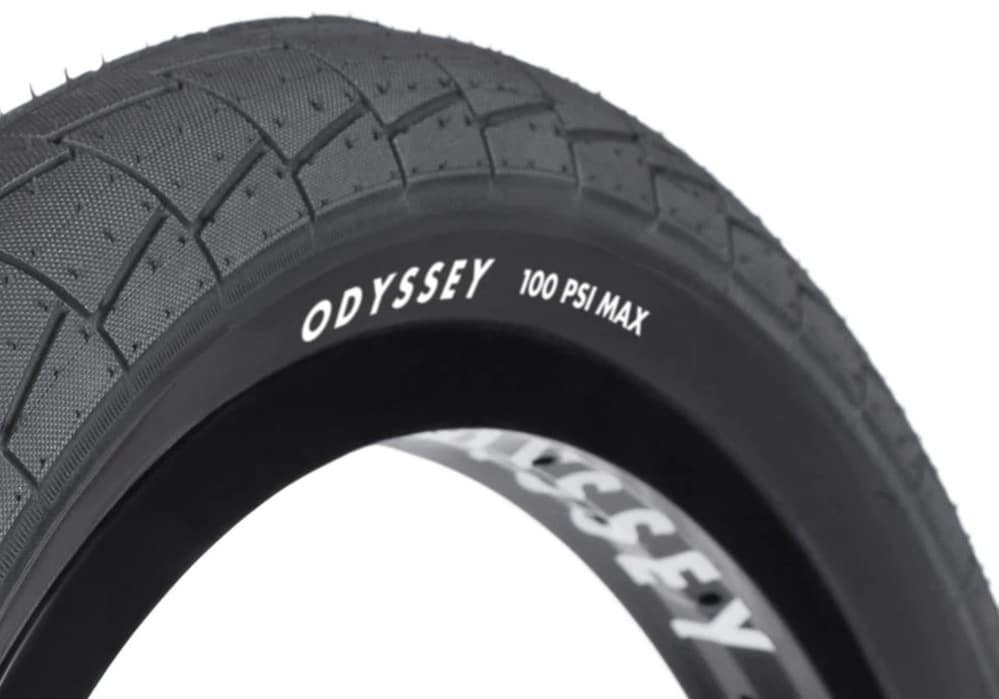
Odyssey’s Broc Raiford signature tire is another one that will keep you riding street and parks comfortably. (But some even use it for trails and have no issues.)
It features a dial tread (with micro knurling) for Broc’s riding needs while maintaining a sleek look.
Plus, the Odyssey’s R-Grip rubber compound will keep you rolling for a long time.
Odyssey BROC tire specs:
- Weight: 25.6oz (726g)
- Available in (width): 2.25″ and 2.4″
- Max pressure: 100 PSI
- Price: $33.99 (may vary)
5. Odyssey Path Pro Tire
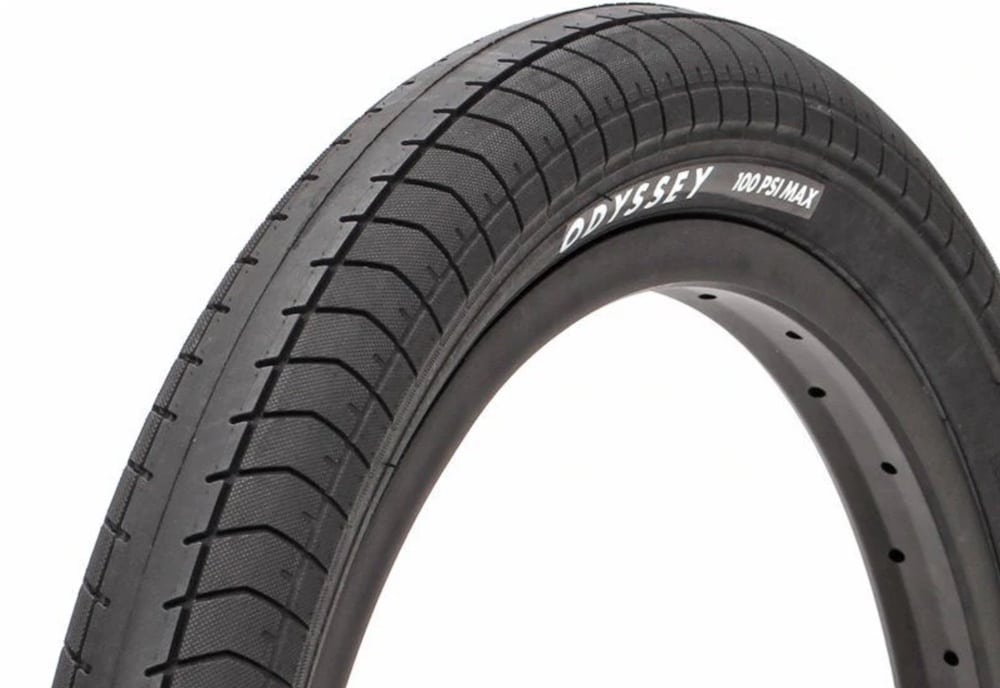
The Odyssey Path Pro tire is available for a very long time, and riders from all around the world still enjoy rocking it.
Why?
Because it’s so well-made and isn’t really style-of-riding-specific. You can use Path Pro for everything! Rail rides, grinds, transitions, etc.
Note: Don’t miss my Odyssey Path Pro tire review.
Odyssey Path Pro tire specs:
- Weight: 26.7oz (757g)
- Available in (width): 2.25″ and 2.4″
- Max pressure: 100 PSI
- Price: $35.99 (may vary)
Zack G.: “The Path Pro tires offer incredible grip, making corners feel secure. I usually keep them at 60 PSI for the right balance. Highly recommend these tires for their performance and value; they’re worth the investment for a significantly better riding experience. And because I like the more old-school look, Rok suggested going with the slimmer in the back and fatter in the front.”
6. Demolition Momentum Tire
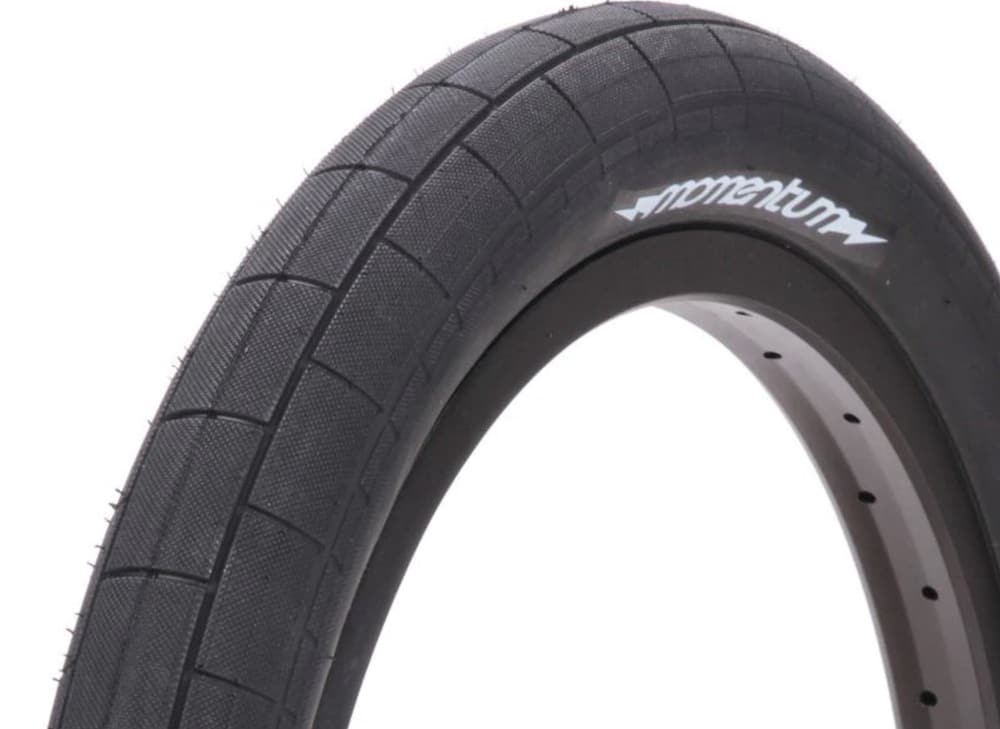
Demolition wanted to create one of the lightest available BMX tires on the market, coming out with Momentum.
Weighing at 19oz, Momentum is still ready for 110 PSI and the rectangular pattern grips like hell. Available in 2.2″ and 2.35″.
Demolition Momentum tire specs:
- Weight: 19oz (539g)
- Available in (width): 2.0″, 2.2″ and 2.35″
- Max pressure: 110 PSI
- Price: $29.99 (may vary)
7. S&M Mainline Tire
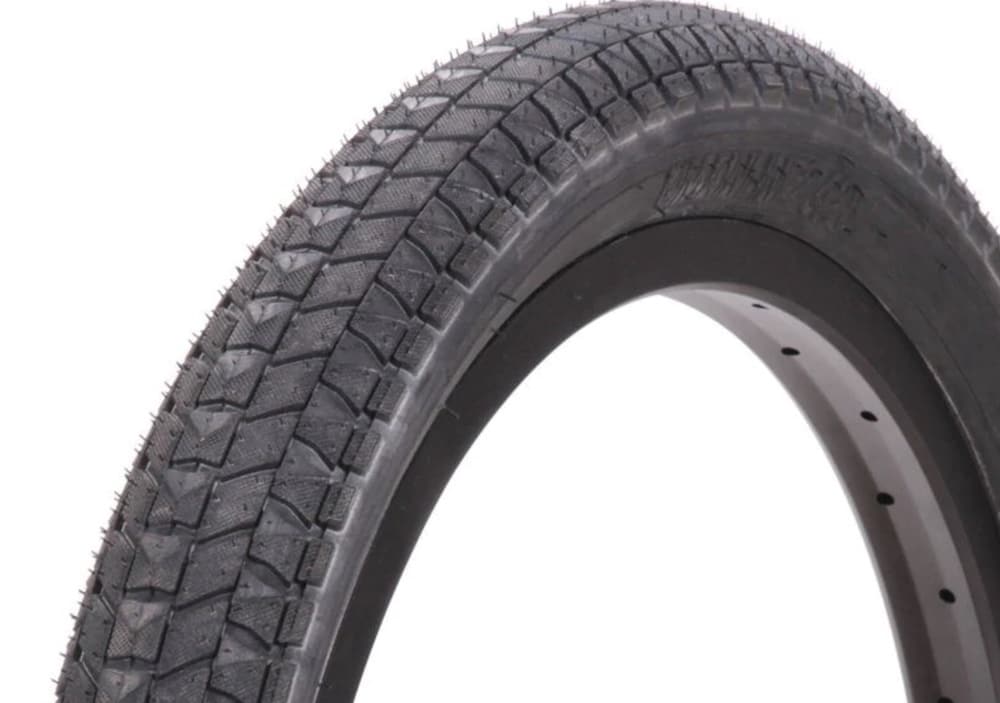
If you like to ride identical tires but slim at the rear and thick at the front then S&M‘s Mainline tire has you covered. It’s available in 2.1″ and 2.4″.
It’s a mid-weight tire with high pressure that’s more trail-oriented but works for parks, too.
I wouldn’t necessarily recommend it for street. For this, opt for S&M’s Speedball (below).
Note: Here’s my in-depth S&M Mainline tire review.
S&M Mainline tire specs:
- Weight: 27oz (765g)
- Available in (width): 2.1″ and 2.4″
- Max pressure: 110 PSI
- Price: $37.95 (may vary)
Rob O.: “After looking for fat tires, I wanted something that’s not too slick because I like to ride dirt occasionally (actually, pretty often lately, lol). Anyway, I was unsure which would be the best solution, so I chatted to Rok, and he told me to pick the Mainline tires. I ended up picking this one as my front tire and the S&M Speedball as my rear one. The duo work like a dream!”
8. S&M Speedball Tire
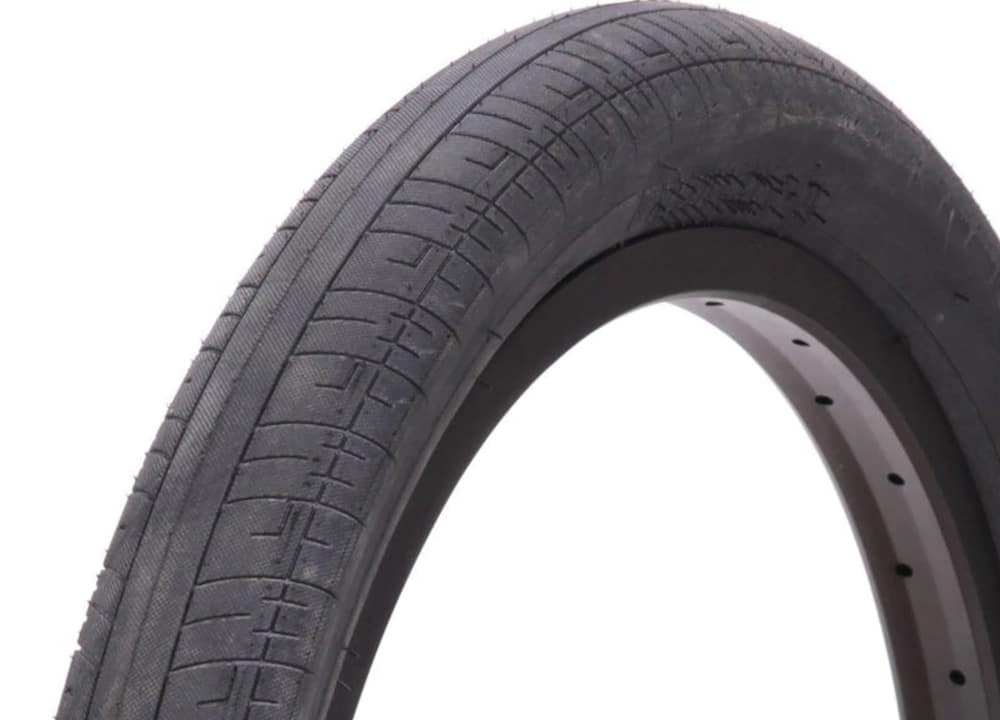
Here’s the S&M street-focused tire I was talking about earlier – Speedball.
What’s cool about Speedball is its extra protection that works really well if you run low pressure.
Moreover, the smooth center prevents rolling resistance – more speed.
And if you pay close attention, you can notice the S/M logo for the shoulder tread.
So. Cool.
Note: Have you read my extensive S&M Speedball tire review?
S&M Speedball tire specs:
- Weight: 26oz (737g)
- Available in (width): 2.1″ and 2.4″
- Max pressure: 110 PSI
- Price: $44.95 (may vary)
9. Cinema Williams Tire
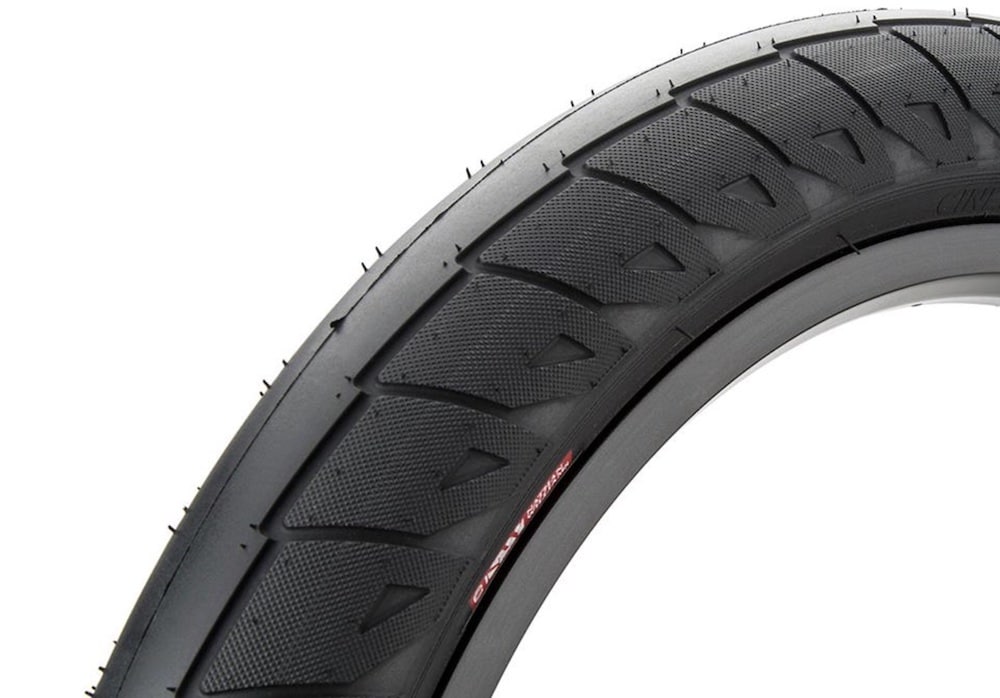
For all the Nathan Williams fans out there, I wanted to include his signature Cinema tire that comes at a whopping 2.5″.
Personally, I haven’t ridden such a wide tire yet, 2.4″ max, but am very intrigued.
If you’re into technical riding and especially rail rides, well, Cinema Williams tire is your ideal companion.
Note: I also created a comprehensive Cinema Williams tire review.
Cinema Williams tire specs:
- Weight: 23.8oz (675g)
- Available in (width): 2.5″
- Max pressure: 60 PSI
- Price: $29.99 (may vary)
Mike M.: “With the very few 2.5″ tire options on the market, I wasn’t really sure about the Cinema Williams tire because of the low max pressure. Still, Rok made me approach the PSI with an open mind and actually encouraged me to try something new. I usually ride at around 70 PSI but these feel fantastic at 60 PSI. Yo!”
10. Shadow Serpent Tire
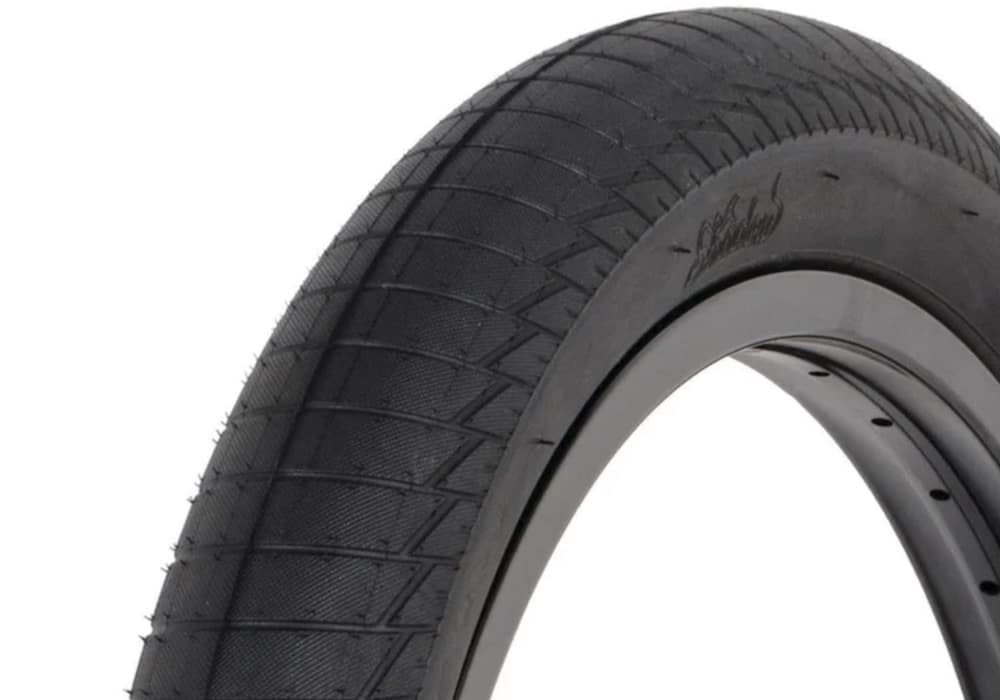
Shadow’s Serpent tire is probably the most good-looking tires currently available.
The speedy and responsive pattern makes you go faster when riding parks and ramps.
I don’t recommend running this one on the streets because it doesn’t have the extra protection that a street-first tire has.
Shadow Serpent tire specs:
- Weight: 19.2oz (544g)
- Available in (width): 2.3″
- Max pressure: 110 PSI
- Price: $38.99 (may vary)
Sebastian E.: “I tried a bunch of 2.4″ tires but they somehow don’t feel right to me. Rok then told me to try Shadow’s Serpent tire at 2.3″, and it’s of just the right thickness. Also, I really like the tread pattern, makes my bike look really good.”
11. Primo V-Monster Tire
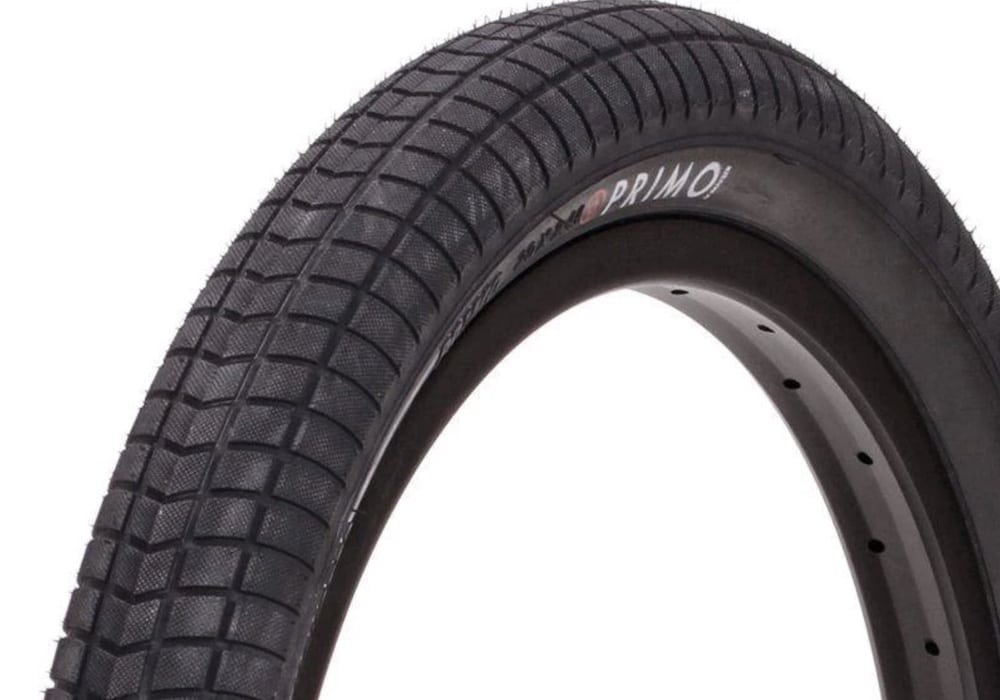
Primo V-Monster tire is around for a very long time. It is made to be lightweight but sticky with a knurled pattern throughout.
It’s an ideal BMX tire for street riding, but the great pattern makes it rideable on other terrains, too. The sidewalls are also extra tough, making the tire last much longer.
You can get it in various color choices, but, as always, my favorite are the black one.
Primo V-Monster tire specs:
- Weight: 25.5oz (723g)
- Available in (width): 2.4″
- Max pressure: 100 PSI
- Price: $29.00 (may vary)
12. Maxxis Grifter Street Tire

If you’re hunting for a light and fast BMX tire, the Maxxis Grifter should definitely be on your radar.
This tire is a favorite among park and race-style freestyle riders thanks to its low weight and super grippy compound. (It’s one of the lightest folding BMX tires out there.)
The 2.4″ is especially popular with front wheel tech lovers and nose manual junkies — it’s precise, rolls FAST, and doesn’t drag.
Meanwhile, the 2.1″ is crazy light, giving more stability and comfort without sacrificing that quick feel. (Note: It’s also available in 1.85″ – just in case.)
The Grifter grips well on smooth indoor parks, concrete bowls, and even street spots – but keep in mind, it’s not made for super rough terrain or heavy-duty street abuse.
Sidewalls are thin and lightweight to save grams, so you’ll wanna avoid hard peg grinds with these.
Need more info? Then check my Maxxis Grifter Street tire review.
<h4″>Maxxis Grifter Street tire specs:
- Weight: 14.9oz (423g) to 25.2oz (714g)
- Available in (width): 1.85″, 2.1″, 2.3″, 2.4″
- Max pressure: 110 PSI
- Price: $44.00 (may vary)
13. Kink Sever Tire
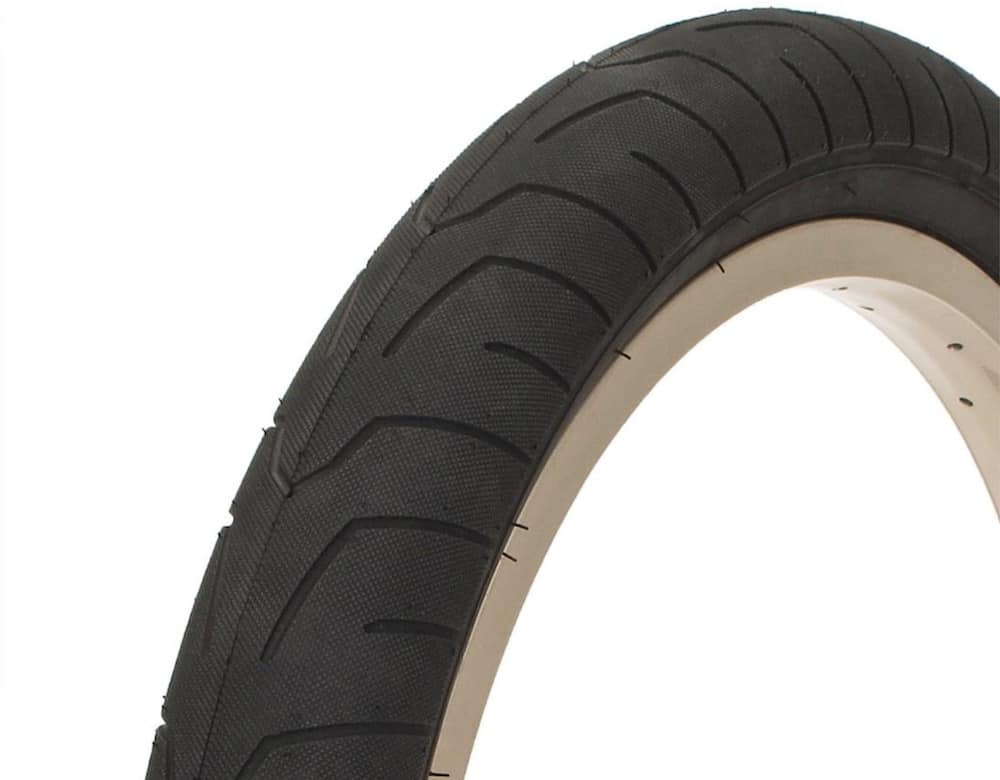
Kink’s Sever tire is a solid street pick if you like running lower pressure without your tire feeling sloppy.
It has an all-over micro-knurled surface with a recessed, directional tread, so it rolls smoothly but still hooks up when you lean it over (hey, wallrides!).
The stiff wire bead helps it hold its shape better at those softer pressures a lot of riders are using right now.
In the 20 x 2.40” size it measures about 2.38” wide, maxes at 60 psi, and weighs around 33 oz.
It’s one solid budget BMX tire!
For more details, check out my Kink Sever tire review.
Kink Sever tire specs:
- Weight: 33oz (935.5g)
- Available in (width): 2.4″
- Max pressure: 60 PSI
- Price: $24.99 (may vary)
14. Merritt Phantom Tire
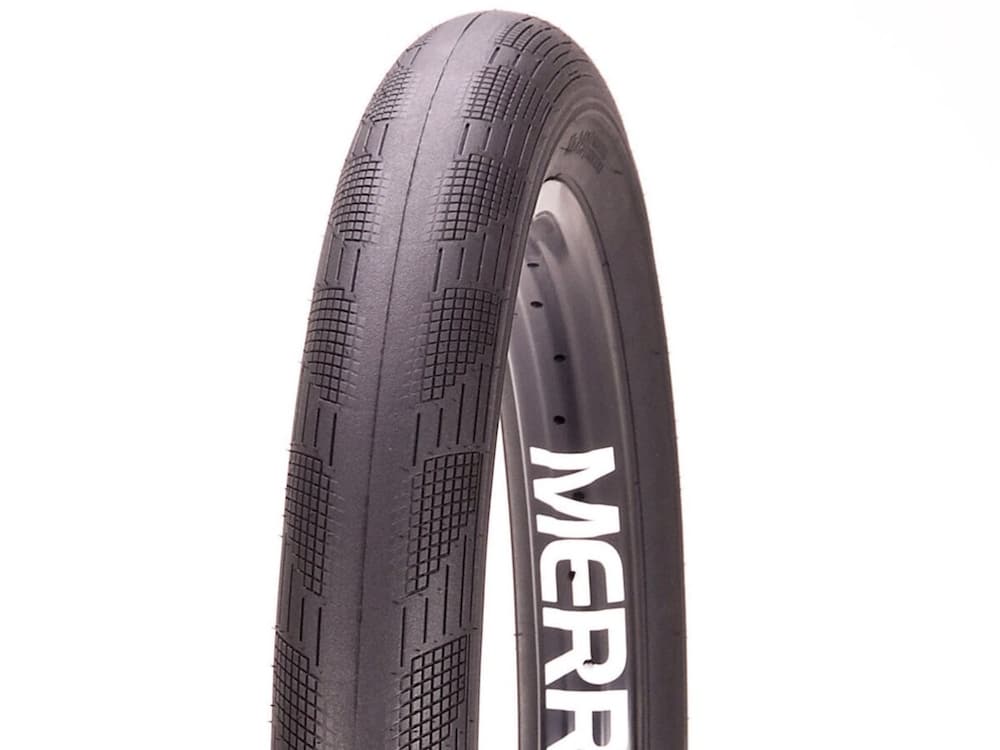
The Merritt Phantom tire is Brandon Begin’s signature model, made to be a wide, lightweight street tire that still feels fast.
It has a quick-rolling center section, then transitions into micro-knobs that add a lot of grip once you start carving and leaning the bike over.
The big standout is Merritt’s Slidewall tech, which uses a harder rubber on the sidewall to help reduce drag on grinds and protect the tire from sidewall damage.
It comes in two sizes (2.35″and 2.5″), and both sizes can be pumped up to 110 PSI.
If you want one tire that covers speed, control, and grind abuse without feeling like a tank, the Phantom makes a lot of sense.
Finally, don’t forget to read my full-blown Merritt Phantom tire review.
Merritt Phantom tire specs:
- Weight: 25oz (708.7g) to 27oz (765.4g)
- Available in (width): 2.35″, 2.5″
- Max pressure: 110 PSI
- Price: $36.99 (may vary)
15. Animal GLH Tire
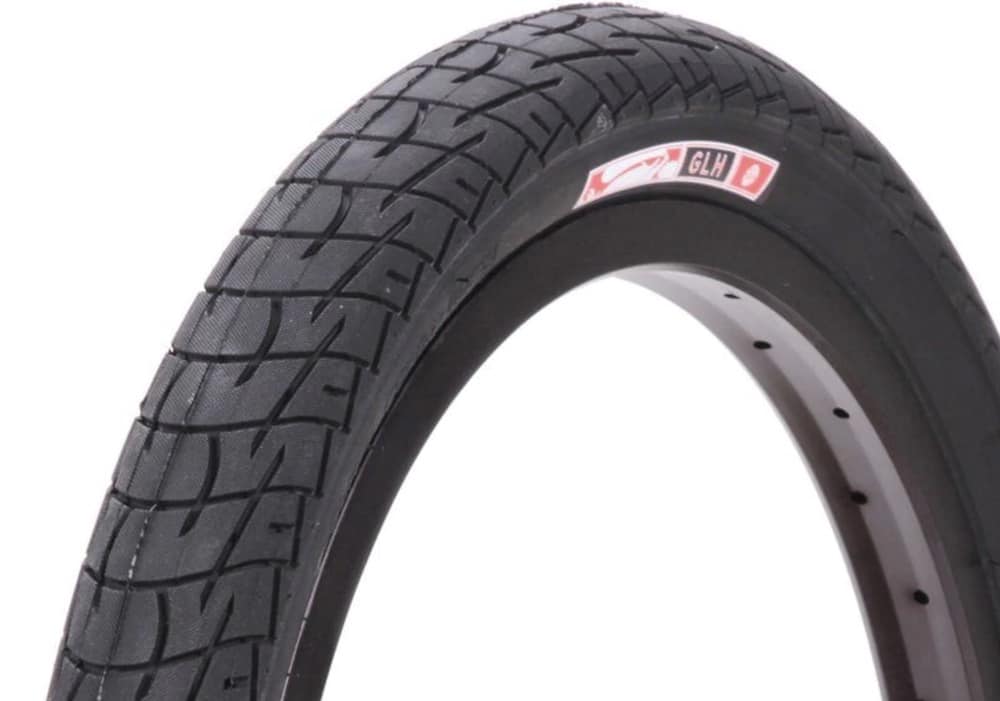
The Animal GLH tire is the one that I have been riding the longest – that’s well over 10+ years.
I extensively tested the 2.1″ and the 2.3″. The wider fits my riding better but both are insanely high-quality and long-lasting.
The GLH tire is street-approved, however, you can comfortably ride it in parks and even trails.
BEST!
I only wish they would also make it in 2.4″ or even better, 2.45″.
Animal GLH tire specs:
- Weight: 26.2oz (743g)
- Available in (width): 2.1″ and 2.3″
- Max pressure: 110 PSI
- Price: $31.99 (may vary)
Mike T.: “I wanted a reliable street BMX tire that’s not thick because I don’t like the look. I looked around but ended up talking to Rok, who immediately said to go with the GLH tires. I have ridden them for over six months, and they look almost like new. These things are epic!”
How To Pick The Best BMX Tires?
Because every riding style usually requires different tire sizes and tread patterns, I decided to help you pick the right ones if you’re a street, park, trail, or flatland rider.
Note: This guide focuses more on freestyle BMX tires, but if you ride track, check my full guide to BMX race tires, as they are a very different setup.
Here we go.
1. BMX Tires For Street Riding
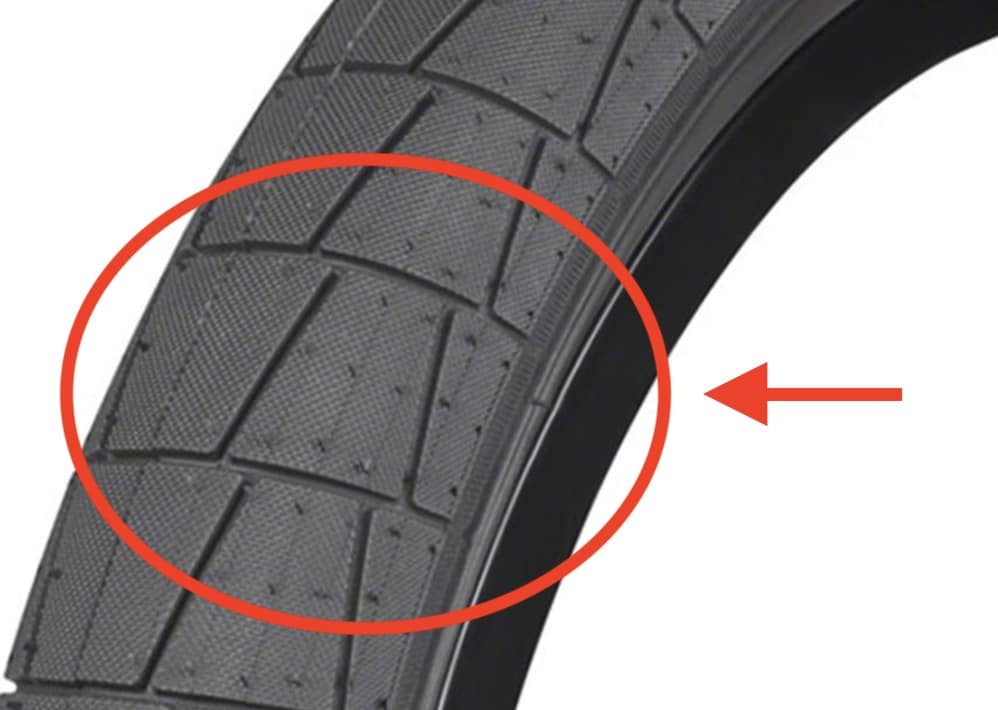
“It’s no good if it doesn’t squeak.”
Okay, joke aside (still, squeaking tires are my fav!), tires for street riders are the toughest, and there is more than one reason why.
Tread
You don’t want a tire with too much or too little tread. There needs to be just the right amount, so you still have the grip you need (especially for wallrides and on more slippery terrain).
I never was a fan of slick tires for street riding, although a few are available on the market.
Thickness
When it comes to thickness, you want to go with anything above 2.25″. Even up to 2.4″, like I’m riding at the moment. (Heck, even 2.5″.)
But really, thickness is more of a personal preference because I used to ride 2.1″ tires for MANY years and they were great for rail rides.
But times change, and I picked 2.4″ mainly because they look better. But what’s also great about fatter tires is that you can run lower PSI.
The walls of street tires are also thicker, which helps prevent them from cutting through during griding.
Weight
Lastly, please don’t be too concerned about weight when it comes to BMX tires for street riding. Yes, they will be heavier, but you need that protection that a lighter tire cannot guarantee.
Advice: Don’t go with the kevlar bead tires if you spend most of your time riding streets.
I tested two such tires, and they just didn’t work out – not grind-friendly. (But they’re OK for any other riding style, and they’re lighter than traditional bead tires.)
2. BMX Tires For Park Riding
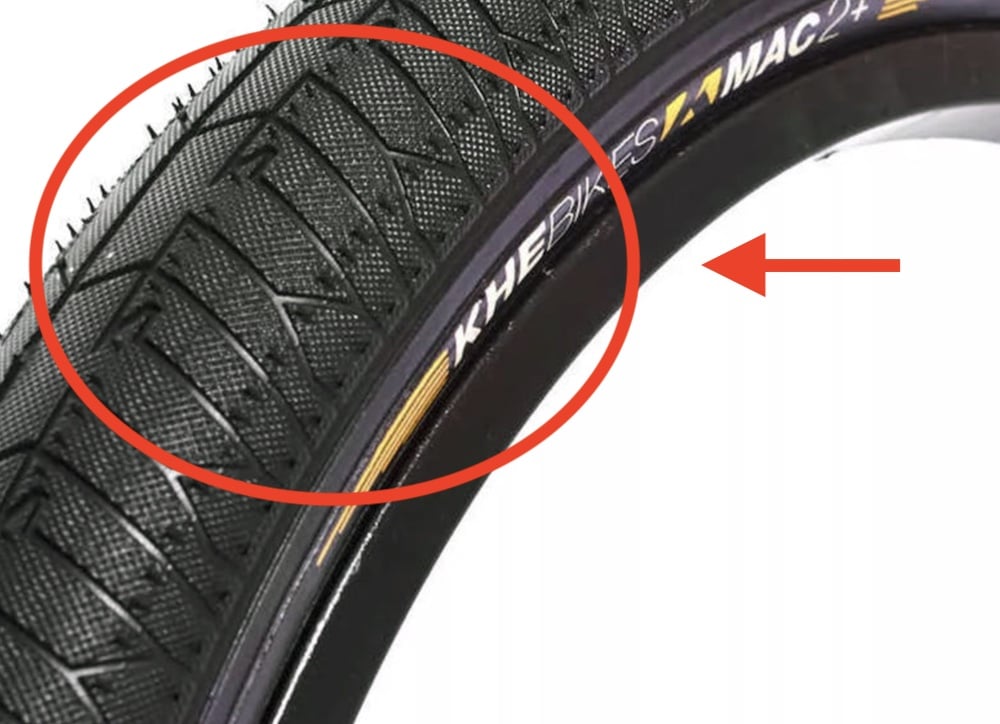
Park and street BMX tires are pretty similar. But I recommend opting for a slimmer tire if you primarily ride skateparks.
A great combo is a 2.25″ in the front and 2.1″ in the back. But many riders also go with a 1.75″ or 1.95″ in the back and 2.1″ in the front.
Remember, you can have both tires the same size. It comes down to what feels better for you and how you like your bike to look.
Note: Slimer (and slicker) tires are great for skatepark riding because they are faster.
3. BMX Tires For Trails Riding
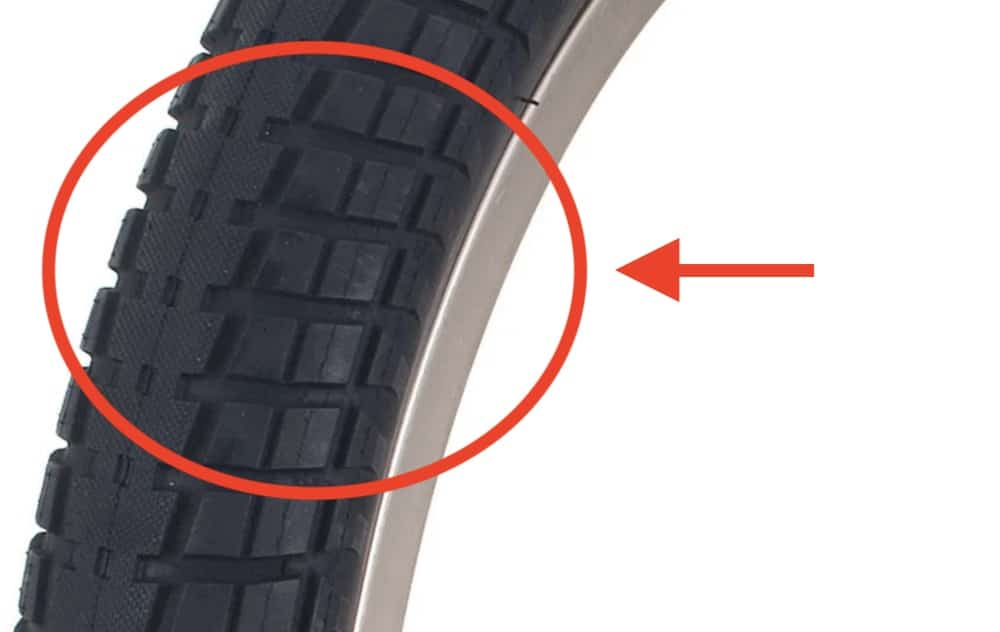
You can compare a BMX tire for trail riding with a park one with more tread.
Go with a not too thick and not too thin tire in the back, but you can play with thicker ones in the front.
Again, you are welcome to run both tires in 2.1″, for example.
And then there’s Corey Walsh, who does a ton of transition riding and trails and prefers 2.4″ in the front and the back.
You see, BMX is freestyle, so you choose what works best for you.
I’m just giving you rough guidelines if you’re starting out.
4. BMX Tires For Flatland Riding
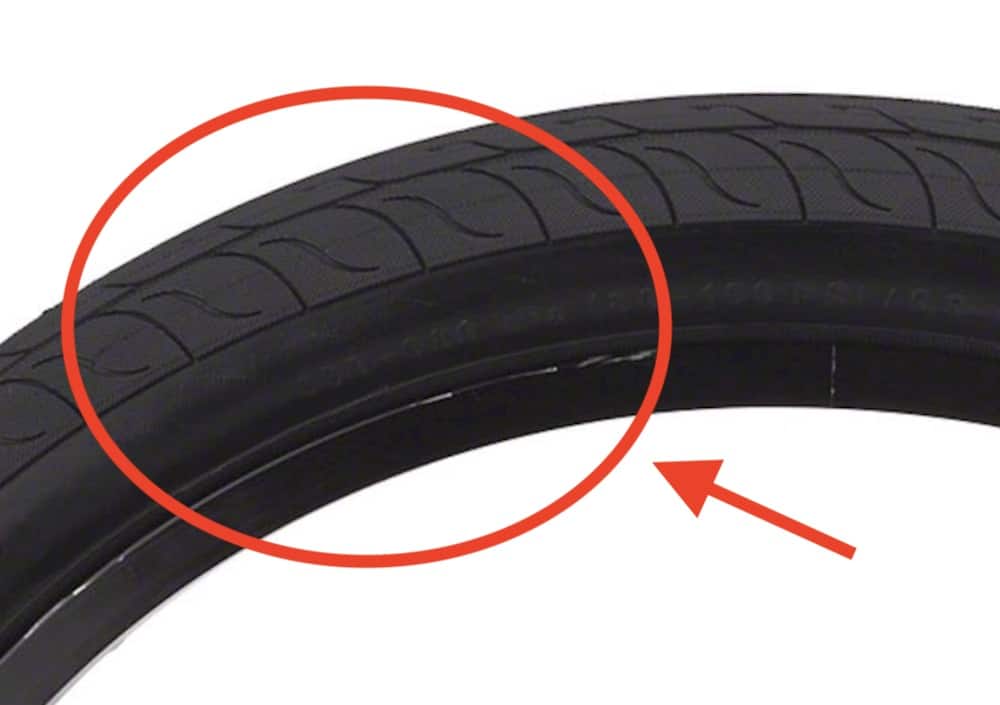
Thin (even 1.5″ wide) and slick tires, that’s what’s up when it comes to BMX flatland riding.
BUT!
More and more flatland riders are becoming hybrid riders, mixing street and flatland riding. All these dudes prefer thicker BMX tires but not too thick like street riders.
ATTENTION: If you ride brakes, you want to avoid fat tires (like 2.4″) because the brake arms may rub on the tire (as soon as your wheel goes off-center).
Also, if you have some old-school parts, thicker tires probably won’t fit because the frame and the fork are narrower.
BMX Tire Width Cheat Sheet
Not sure which BMX tire width to pick? Here’s the simple version:
- 1.75″–2.0″: Best for flatland, lighter setups, some race-style park riding, or riders who want a quicker feel.
- 2.1″–2.25″: Good for park, ramps, trails, and faster all-around riding. Still has decent volume without feeling too bulky.
- 2.3″–2.4″: The sweet spot for many freestyle riders. Great for street, park, and all-around BMX.
- 2.45″–2.5″: Best for fat street setups, extra cushioning, more stability, and riders who like that bigger tire feel. Also great if you prefer running lower PSI.
Just make sure your frame, fork, brakes, and rims have enough clearance before going wider. A tire can be “better” on paper and still be wrong for your bike.
Also, don’t trust tire width numbers blindly. A 2.3″ tire from one brand can feel noticeably different from a 2.3″ tire from another brand.
Sadly, that’s true.
Some tires run wider, some run narrower, and rim width can also change how big the tire looks once installed.
How To Make Your BMX Tires Last Longer
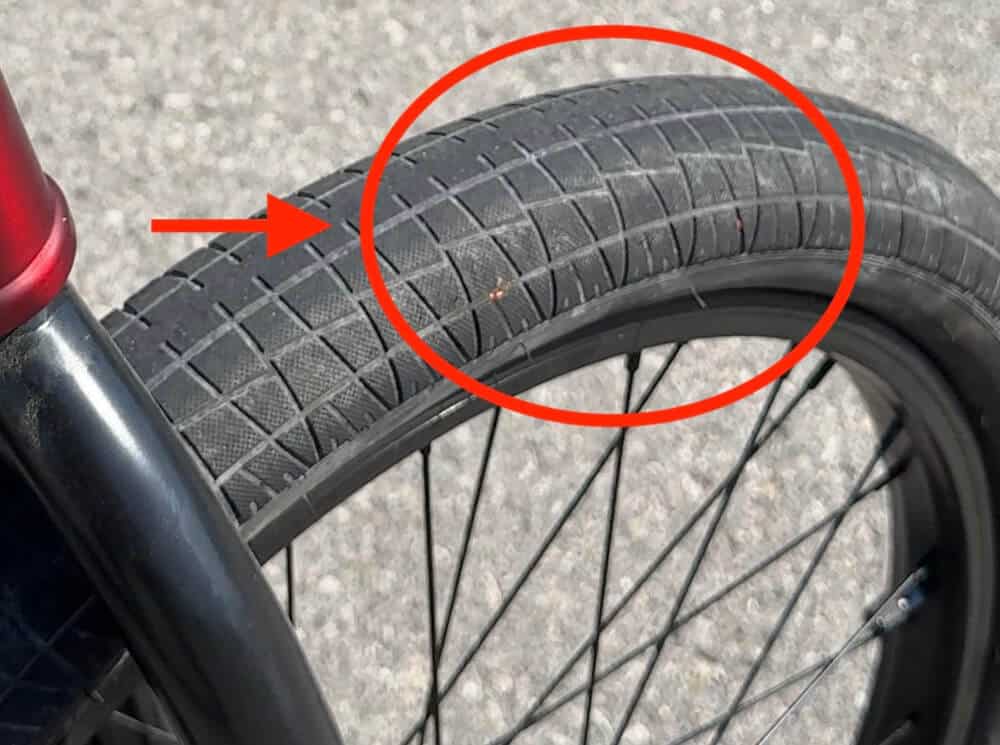
If you care for your tires properly, they will last you much longer, so you don’t have to replace them so often.
Here are a few of my personal tips to lengthen your tires’ lifespan:
- The right BMX tire pressure or PSI greatly contributes to its lifespan. I know low PSI is kind of a trend these days, but it’s not the best for tire longevity. Plus, you’ll get more flats with a low PSI than a high PSI. (By the way, the BMX tire width is also important, because the wider your tire, the lower the PSI you can ride without worrying of damaging it.)
- If you run on rough terrain (sharp objects, potholes) a lot or over broken glass, you’ll destroy your tires much quicker. (If there’s glass, I usually step down and carry my bike over it – yes, really!)
- What you can do is rotate your tires, front to back, every month. For example, if you do a lot of feeble and icepick grinds, your back tire will be damaged more than your front one, so rotate them.
- Did you get a flat? Don’t ride with a flat tire!
- Clean your tires. You might find lots of tiny objects stuck into your tires when you look closer.
- Avoid hitting curbs and copings – not only will you damage the tires, but you’ll be more likely to get a flat, too.
You might also be interested in reading how long do BMX tires last.
FAQs About BMX Tires
Are all BMX tires the same size?
All BMX tires are 20″ but they differ in their width.
The more traditional width is between 2.1″ and 2.4″. (But tires can go up to 2.55″ and below 2.1″.)
How much PSI do I need in my BMX tires?
You want to pump your tires a lot if you want to go fast, but you don’t need that much PSI if you’re into slower, technical street riding. Some riders go with 50 PSI (some even less) and some with 90+ PSI (I like it hard). Note that fatter tires allow you to ride lower PSI.
How do I choose the right size BMX tire?
Tire size depends on riding style and personal preference. Freestyle riders often prefer wider tires (2.3-2.5 inches) for stability, while racers might choose narrower tires for speed.
How long do BMX tires last?
The lifespan depends on usage, riding style, and tire quality. Regular riders might need to replace tires every few months, while occasional riders might get a year or more.
Are thicker BMX tires better for tricks?
Thicker tires provide more stability and cushioning, making them generally better for tricks and rough terrain. They also reduce the risk of pinch flats and rim damage.
What’s the difference between knobby & smooth tires?
Knobby tires offer better grip on dirt and trails, while smooth, micro-knurled tires are ideal for street and park, providing fast-rolling performance and solid traction on smooth surfaces.
Are folding BMX tires worth it?
Folding tires are lighter and easier to carry but tend to cost more. They’re great for riders prioritizing weight savings, though wire bead tires are typically more budget-friendly and durable.
Can I run different BMX tires front and rear?
Yes, you can run different BMX tires front and rear. A lot of riders like a grippier or wider tire in the front for more control, and a slightly faster or tougher tire in the rear. I rode tires like that for a long time.
Are BMX tyres and BMX tires the same thing?
Yes. BMX tyres and BMX tires mean the same thing. “Tires” is the American spelling, and “tyres” is used in places like the UK, Australia, and some other countries.
What BMX tire width should I ride?
For most freestyle riders, a tire between 2.25″ and 2.4″ is a solid choice. If you ride street, you may like 2.35″ to 2.5″ for extra cushioning and stability. If you ride park, 2.1″ to 2.35″ can feel faster and lighter. For trails, many riders like something with enough volume and grip without feeling slow. The best width is the one that fits your bike and feels right for your riding.
When should I replace my BMX tires?
Replace your BMX tires when the tread is badly worn, the sidewalls are damaged, the rubber is cracking, or you keep getting flats. Also check for bulges, cuts, exposed casing, or spots that look thin and weak. If you no longer trust the tire, replace it. Tires are not the place to gamble.
::
Note: This article was originally published on May 18, 2022. But I regularly review it and update it with necessary improvements for accuracy.