No, you’re not too old for BMX.
You can start riding in your 30s, 40s, 50s, or even later.
What changes with age isn’t whether you can ride BMX. It’s how you approach progression, recovery, mobility, strength, and risk.
I was born in 1987, and I’d much rather see an older beginner take things slowly and keep riding for years than send something way too big on day one and disappear after the first hard slam.

BMX doesn’t have an age limit.
You don’t need to ride huge rails, throw flips, or learn scary tricks for it to count, either.
Cruising, manuals, bunny hops, small ledges, pump tracks, mellow park lines — it’s all BMX.
The key is to ride within your limits, build confidence gradually, and give your body enough time to recover.
And yes, you can still progress, even if you’re older.
So if you’ve been wondering whether you missed your chance to start riding BMX, you didn’t.
You just need to start smarter.
Quick Answer: Are You Too Old For BMX?
- 30s: Absolutely not
- 40s: Still not too old
- 50s: You can ride, but recovery and mobility matter more
- 60+: BMX is still possible if you approach it realistically
- Best approach: Start slowly, ride flat, build strength, and wear protection
This post covers:
- Is There An Age Limit For BMX?
- How to Start Riding BMX At 30, 40, 50, & Beyond
- Can & Should Adults/Old People Ride BMX?
- What Changes As You Get Older?
- What Tricks Should Older BMX Beginners Learn First?
- You Don’t Need To Ride BMX Like A Pro
- Conclusion: You’re Probably Not Too Old For BMX
- FAQs About Being Too Old For BMX
Is There An Age Limit For BMX?
Okay, now let’s get serious.
NO!
There is no age limit for BMX.
So when someone comes to me with a question like, “Is 40 too old for a BMX?” I’ll say no.
BUT!
And this goes for everyone, whether 30, 40, 50, 60, etc.
BMX Is For Every Age Group!
If you’ve never done any sports in your life and then you see the Olympics BMX park competition and think, “I wanna do that!” – don’t.
Let me explain.
BMX isn’t like riding an MTB, not even riding a DH. Especially not if you’re using an electric bike!
It’s a tough sport that requires a getting-used-to-it phase. Unfortunately, this can last many months – and the longer it does, the better.
Hey, your body needs to build muscle, your ligaments need to be reactivated – and you’ll probably need to do some stretching before even thinking of jumping on a BMX bike.
Your body needs to adapt.
I’m saying all this only to help you avoid injuries.
If you can lower the chances of getting injured, you’ll be much more stoked about the sport.
Sadly, I’ve seen many dudes who jumped on a BMX, crashed and never rode again.
I don’t want that to happen to you.
Fun fact: I know it’s BMX racing, but Kittie Weston-Knauer is one of the oldest BMX riders in the world – she’s well into her 70s.
But there are also MANY freestyle shredders out there who are well into their 60s and still ripping.
How to Start Riding BMX At 30, 40, 50, & Beyond
Remember, age is just a number.
With the right approach, BMX can be a rewarding and exhilarating experience at any stage of life.
1. Choose The Right Adult BMX Bike

Pick a BMX bike that fits you well. A larger frame can offer more comfort and control.
But don’t forget to check my BMX bike size chart, which will help you pick the right size much easier.
Also, opt for a sturdy bike, preferably made from Chromoly, known for its durability.
I recommend the Kink Whip BMX bike in 21″ top tube length.
Note: Check out my top beginner BMX bike for adults pick!
2. Gear Up For Safety
Ideally, always wear a BMX helmet. Additionally, invest in knee and elbow pads to protect yourself.
What I also cannot ride without are shin guards and ankle braces.
Optionally, you can also get a pair of gloves to improve grip and shield your hands.
3. Stretching Is Mandatory
That is why I HIGHLY RECOMMEND you start with basic stretching or even doing yoga.
AT LEAST for a month.
And this also goes for those who rode BMX when younger, had a looong break, and now want to get back into it.
Focus on getting more overall body mobility – not just wrists, or legs, or shoulders.
But I’ll focus on the best exercises for BMX in one of my future posts.
Between doing the stretches and other basic exercises, like planks, pushups and squats, you can also pick up your bike (if you already have one) and ride it on flat ground – parking lots are the best.
Further reading: Is BMX a good exercise?
Riding flat is fantastic to get used to it.
4. Strengthen Your Knees For BMX

Me performing a variation of the ATG Zero program exercise
If there’s one thing that’ll keep you riding longer and with more confidence, it’s strong knees.
After decades of BMX and multiple knee injuries myself, I learned that ignoring knee health is one of the fastest ways to cut your riding career short.
If only I’d known this before my first knee injury!
What helped me the most wasn’t supplements or random workouts.
It was the ATG program (by Ben Patrick, the Knees Over Toes Guy).
Within weeks, I noticed my knees felt more stable on the bike.
And after months (I took the program for 6 months, but I still do the exercises to this day and will never stop doing them), I could ride HARDER with way LESS PAIN and actually TRUST my body again.
Note: I started with the program in my 30s. And my pain completely disappeared in 2 months.
The program focuses on simple, progressive movements that restore strength and stability in your knees, ankles, and hips – the exact areas BMX punishes the most.
Even if your knees feel “fine” right now, starting this type of training can be a game-changer.
In fact, I recommend it to JUST ABOUT any BMX rider – young, old, with strong legs or with weak legs/knees.
Think of it like preventative maintenance that not only helps you avoid injuries but also makes you feel stronger and more controlled when riding.
Check out the ATG Program here and start building the kind of knee strength that keeps you shredding into your 30s, 40s, 50s, and beyond.
For me, it’s the absolute best investment I’ve made.
5. Progress (As Slowly As Possible)

I DON’T advise going to the skatepark right away.
Another trick to help you get into BMX if you are older is picking up a scooter first. (Just don’t get the absolute cheapest one. At least a mid-priced freestyle one.)
Yes, it REALLY does help.
There are many similarities between the two sports, just that riding a scooter is much easier (no disrespect to scooter shredders – you’re killing it!).
The scooter is around three times lighter (if not more) than a BMX bike, which automatically makes it more comfortable to ride.
But the stance and learning/pulling some of the tricks are comparable (especially the basics, which are essential anyway), so progressing from a scooter to a BMX is clever.
An excellent example of that is Casey Starling. He started on scooter but later progressed to BMX – and he kills it hard!
Finally, when you think you’re park-ready, GO FOR IT, bro!
Note: If you’ve never been to the park, there are some unwritten skatepark rules to follow, but it’s best to talk to the locals. They’ll help you mix in and enjoy your sessions more.
And don’t forget about my list of the best beginner BMX tricks, so you can start progressing the right way.
Pro tip: You can also seek BMX lessons near you (if there are any). This will help you progress even faster. Or even ask for help at your local BMX shop.
Further reading: 25+ common beginner BMX mistakes and how to avoid them.
6. Listen To Your Body
Always start with a good warm-up to prepare your muscles.
And don’t push too hard – at least not initially. If you feel sore after a session, allow time for recovery to prevent injuries.
Trust me, I injured myself many times mainly because I went riding with a not properly recovered body.
You have all the time in the world to enjoy BMX, so with easy progress, you’ll come much further.
7. Stay Consistent

Set aside time each week to ride – if you can, go and ride three times a week.
Consistency leads to improvement. But the more isn’t necessarily the better. However, that’s something you’ll figure out later.
It’s also important not to forget about patience. Be aware that the progress might be gradual, but every ride is a step forward.
At the end, it’s important to know why you picked up BMX – and for me is to HAVE FUN.
8. Starting BMX At Different Ages
- Starting BMX in your 30s: You can usually progress pretty aggressively if you’re active and recover well.
- Starting BMX in your 40s: Still completely realistic, but warming up, mobility, and recovery become more important.
- Starting BMX in your 50s: I’d focus more on bike control, manuals, bunny hops, small ramps, and gradual progression before higher-risk tricks.
- Starting BMX in your 60s & beyond: There’s nothing stopping you from riding BMX, but the goal should be staying active, building skill, and choosing risk levels that suit your body.
Can & Should Adults/Old People Ride BMX?
YES!
Not only will you look a lot cooler, but BMX will also help you build muscle.
Just don’t go straight into it.
Quick recap:
- Start with stretching.
- Then mix in some weightlifting and calisthenic exercises.
- Eat healthy foods. (I didn’t mention it earlier, but it’s an important topic I will cover in one of my next posts.)
- Optional (but recommended): Get a scooter.
- Start riding BMX on flat ground (parking lots FTW!).
- Stick to the above for a few months (the longer, the better) before hitting a skatepark and thinking about trying a trick.
- Learn to listen to your body.
THERE’S. NO. AGE. LIMIT. FOR. BMX.
Go for it!
What Changes As You Get Older?
You can absolutely keep riding BMX as you get older.
But your body usually stops being as forgiving as it was at 15.
That mainly affects how you should approach riding.
- Recovery takes longer: Hard sessions and crashes may stay with you for a few days instead of disappearing overnight.
- Warm-ups matter more: Jumping straight into big hops or hard tricks cold is rarely a smart move. A few minutes of movement before riding can help a lot.
- Mobility becomes more important: Tight hips, ankles, shoulders, and hamstrings can make riding feel harder and may limit certain movements.
- Strength helps more than ever: Strong legs, core, knees, and ankles give you better support on the bike and can make landings feel more controlled.
- Risk becomes a bigger factor: You might think twice before sending something you would have tried without hesitation years ago. That’s not a bad thing.
- Consistency beats huge sessions: Two or three solid rides per week can be much better than destroying yourself in one massive session and needing a week to recover.
What Tricks Should Older BMX Beginners Learn First?
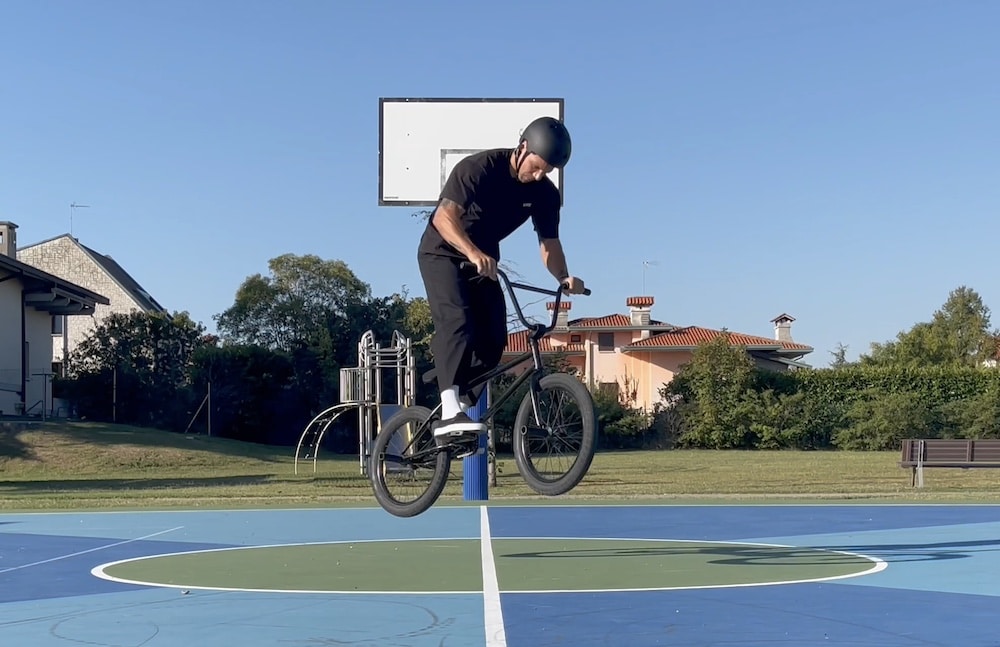
Here are the first tricks I’d work on:
- Bunny hops: One of the most important BMX basics. It helps with curbs, ledges, gaps, and pretty much every future trick.
- Manuals: Manuals teach balance and bike control without adding much impact.
- Fakies: Learning to roll backward and control the bike opens the door to 180s and plenty of park lines.
- Small 180s: Once your bunny hops feel solid, start with mellow 180s on flat ground.
- Curbs and low ledges: Hopping onto and off small obstacles helps build confidence without adding too much risk.
- Banks and mellow ramps: These are great for learning speed control, pumping, and body positioning.
- Basic carving: Getting comfortable leaning the bike through turns will make skateparks and pump tracks much more fun.
You Don’t Need To Ride BMX Like A Pro
One thing older beginners often get wrong is thinking BMX only counts if you’re doing huge tricks.
It doesn’t.
You don’t need to jump stair sets, grind scary rails, throw flips, or chase whatever the pros are doing on Instagram.
BMX can be as simple as cruising around, learning bunny hops, holding longer manuals, riding a pump track, or flowing through a mellow skatepark.
And honestly, that’s part of what makes BMX so good.
You can decide how far you want to take it.
Maybe your goal is to finally land a clean 180. Maybe you just want to jump curbs and get comfortable on ramps. Or maybe you eventually want to push into more technical street riding.
All of those count.
I’d much rather see someone progress slowly, enjoy every session, and still be riding years from now than constantly compare themselves to riders who have spent their entire lives on a BMX bike.
Ride at your own pace.
There’s no checklist you need to complete before you can call yourself a BMX rider.
Conclusion: You’re Probably Not Too Old For BMX
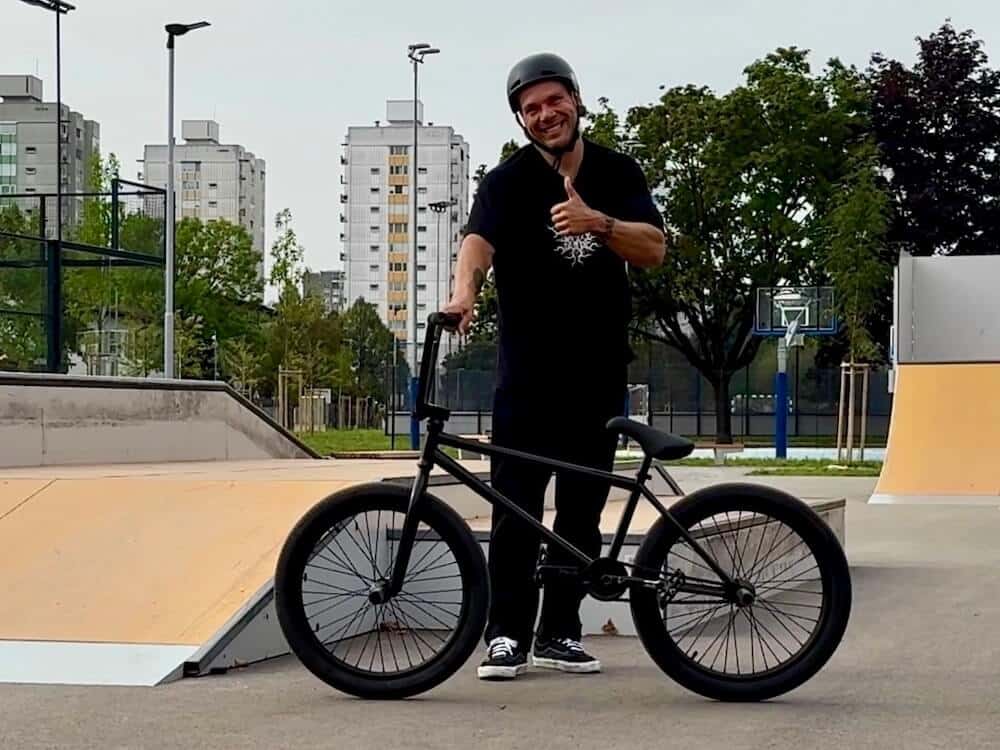
If you’re wondering whether 30, 40, 50, or even 60 is too old to start BMX, the answer is usually no.
You may not recover as fast as a teenager, and you probably shouldn’t approach every session like you have something to prove.
But that doesn’t stop you from learning tricks, improving your bike control, getting stronger, and having a seriously good time on a BMX.
Start slow.
Build confidence.
Work on mobility and strength.
Wear protection.
And give your body enough time to recover between harder sessions.
Most importantly, don’t compare your progress with riders who have been doing this since they were kids.
Ride because you enjoy it.
That’s enough.
THERE’S. NO. AGE. LIMIT. FOR. BMX.
FAQs About Being Too Old For BMX
Am I too old to start BMX?
Probably not. Plenty of adults start BMX later in life and still learn tricks, improve bike control, and have a great time riding.
Is 30 too old to start BMX?
No. Your 30s are still a great time to start BMX, especially if you stay active and give yourself enough recovery between harder sessions.
Is 40 too old to start BMX?
No. You may need to pay more attention to warm-ups, mobility, strength, and recovery, but 40 is absolutely not too old to ride BMX.
Is 50 too old to start BMX?
No. I’d simply recommend progressing more gradually and focusing on solid bike control before trying higher-risk tricks.
Can you ride BMX in your 60s?
Yes, if your body allows it and you approach riding realistically. Cruising, pump tracks, manuals, bunny hops, and mellow park riding can all be great options.
Can adults ride 20-inch BMX bikes?
Yes. A 20-inch BMX works perfectly well for adults as long as the frame size and overall setup suit your height and riding style. But I also recommend older adults to check 22-inch bikes because they may feel better.
Are BMX bikes good for adults?
Yes. BMX bikes are fun, strong, simple, and great for learning bike control. Just make sure you choose the right size instead of buying a small youth BMX.
What BMX bike is best for an adult beginner?
I’d look for a properly sized complete bike with solid geometry, sealed bearings, and a full chromoly construction. Wider tires and comfortable bars can also make learning more enjoyable.
What BMX tricks should older beginners learn first?
Start with bunny hops, manuals, fakies, basic carving, small 180s, and riding mellow banks or ramps.
Is BMX dangerous for older riders?
BMX always carries some risk, regardless of age. Older riders should be especially smart about progression, protection, recovery, and avoiding tricks that are far beyond their current skill level.
Should older BMX riders wear protective gear?
Yes. A helmet is the minimum I’d recommend, and knee, shin, and ankle protection can make a huge difference when you’re learning new tricks.
Should older BMX riders strength train?
It can help a lot. Strong legs, core, knees, ankles, and shoulders can improve bike control and make hard landings easier to handle.
Is BMX good exercise for adults?
Yes. BMX can improve balance, coordination, leg strength, core strength, fitness, and overall bike control while being much more fun than a boring cardio session.
How often should an older beginner ride BMX?
There’s no perfect schedule. Ride often enough to stay consistent, but give yourself enough recovery so you’re not constantly sore or riding tired.
Do older BMX riders recover more slowly?
Usually, yes. Recovery tends to matter more with age, so sleep, nutrition, mobility, and easier days all help.
Do you need to be fit before starting BMX?
No. You can build fitness while learning. But having some basic strength, mobility, and cardiovascular fitness will make the first few weeks easier.
Is it harder to learn BMX as an adult?
It can be, mainly because adults are usually more cautious and recover more slowly. But patience, consistency, and smart progression can take you surprisingly far.