Choosing the right BMX frame size can feel confusing at first.
A 20.75”, 21”, and 21.25” frame may look almost the same on paper, but they can feel very different once you start riding.
The main number you need to check is the top tube length.
That’s what most riders mean when they talk about BMX frame size.

In this guide, I’ll share a simple BMX frame size chart by rider height, show you how to measure top tube length, and explain when sizing up or sizing down actually helps.
Sure, the rest of the frame geometry matters, too, but you always start with the top tube (TT).
Use the chart as a starting point, not a strict rule.
In BMX, your height matters, but your riding style does too.
This post covers:
- BMX Frame Size Chart (Top Tube Length By Rider Height)
- How To Measure BMX Frame Top Tube Length
- Sizing Up Or Sizing Down Your BMX Frame
- What Size BMX Frame Do Pros Ride?
- Conclusion: Pick The Right BMX Frame Size
- FAQs About BMX Frame Size
BMX Frame Size Chart (Top Tube Length By Rider Height)
Quick guide: Most adult freestyle BMX riders ride frames between 20.5” and 21.25” top tube length. Shorter riders usually fit better on 20”–20.5”, average riders often like 20.75”–21”, and taller riders usually feel better on 21”+ frames.
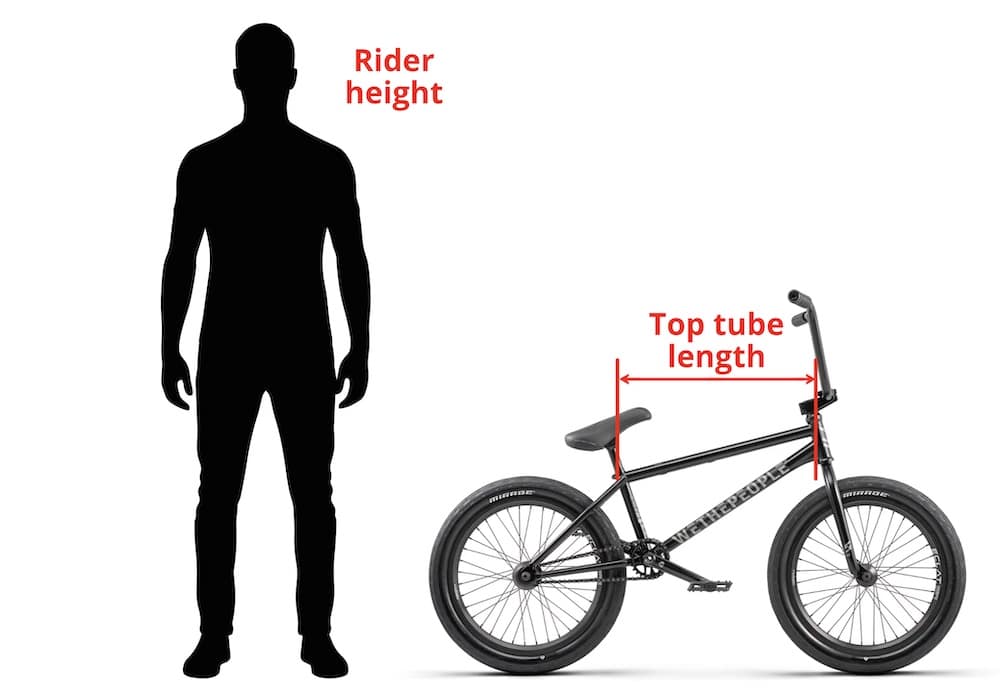
Below is a rough BMX frame size guide for your convenience:
| Rider height | Top tube length | Best For |
| 4’8″ to 5’2″ | 18.5″ – 20″ | Younger/smaller riders or flatlanders |
| 5′ to 5’4″ | 20″ – 20.25″ | Smaller freestyle riders |
| 5’2″ to 5’6″ | 20.25″ – 20.5″ | Tech/control feel |
| 5’4″ to 5’8″ | 20.5″ – 20.75″ | All-around freestyle |
| 5’6″ to 6′ | 20.75″ – 21″ | Most average adult riders |
| 5’8″ to 6’2″ | 21″ – 21.25″ | More room/stability |
| 6’+ | 21.25″+ | Taller riders/flow |
Note: If you’re choosing a complete bike, then check out my BMX bike size chart.
Top Tube Size Cheat Sheet
- 20”–20.25”: Smaller riders, younger riders, or riders who want a very responsive bike.
- 20.5”: Good for smaller adult riders or tech-focused riding.
- 20.75”: One of the most common all-around BMX frame sizes.
- 21”: Great middle ground for many adult riders.
- 21.25”: More room and stability, especially for taller riders or flowy riding.
- 21.5”+: Best for taller riders, trails, transitions, speed, or riders who like a longer setup.
Remember, choosing the ideal frame TT is more of a personal preference than anything else.
Even I, I’m 5’11,” and according to the table below, I should ride a frame with a 21″ – 21.25″ top tube (TT) length. (Don’t miss my in-depth article on BMX top tube length.)
Which I did.
For many years, actually!
But I wanted to try something different, picked a 21.6″ BSD Raider frame, and I’ll probably NEVER go smaller (maybe 21.5″).
It fits me SOOO good!
Update: I did go smaller – I’m currently riding the Cult Biggie frame in 21.5″. (Honestly, this is the best frame I’ve ridden so far.)

Fun fact: My 22″ BMX bike has a 21.75″ top tube, and it feels nice! Sure, it’s on the bigger side, but it suits my riding style comfortably.
You should also know that most of the professional BMX riders also don’t really follow any BMX frame size charts.
For the most part, they ride larger frames than they “should.”
In BMX, there are NO rules.
But I will say this: If you are a beginner, choosing a frame based on the chart above is a wise decision.
However, over time, you’ll likely want to try something new and make adjustments to your bike that are unique to you and your riding style, which will help you progress further and FURTHER.
You may also be interested in learning all and everything about BMX frame geometry and getting geeky about it.
How To Measure BMX Frame Size/Top Tube Length
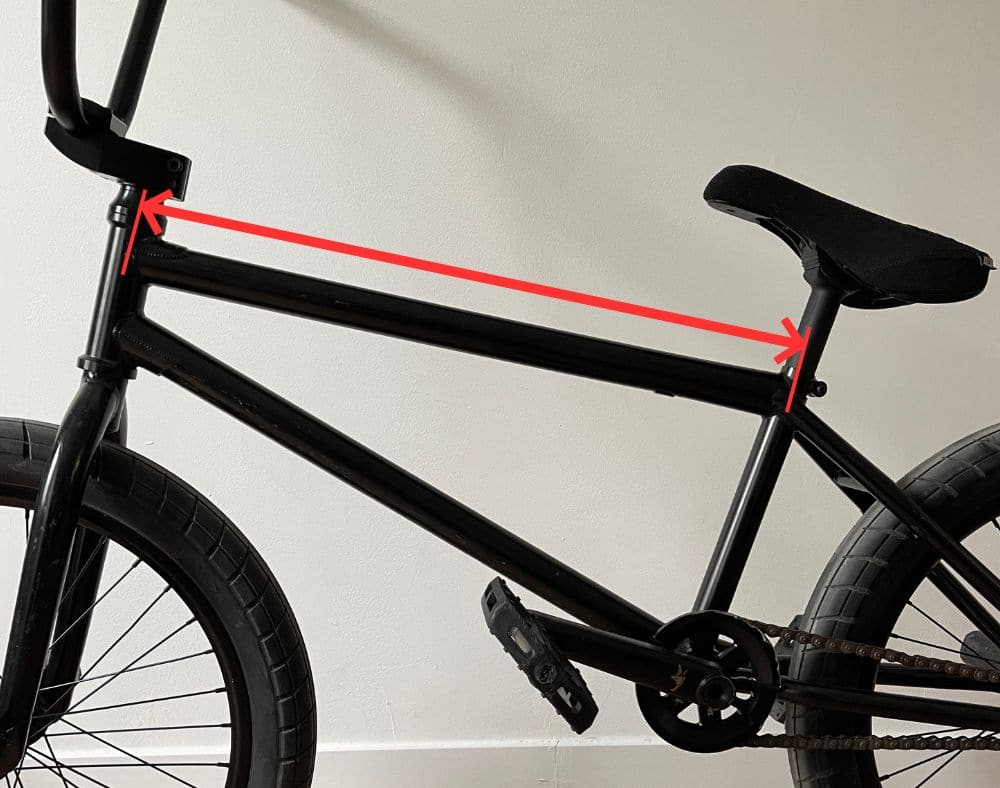
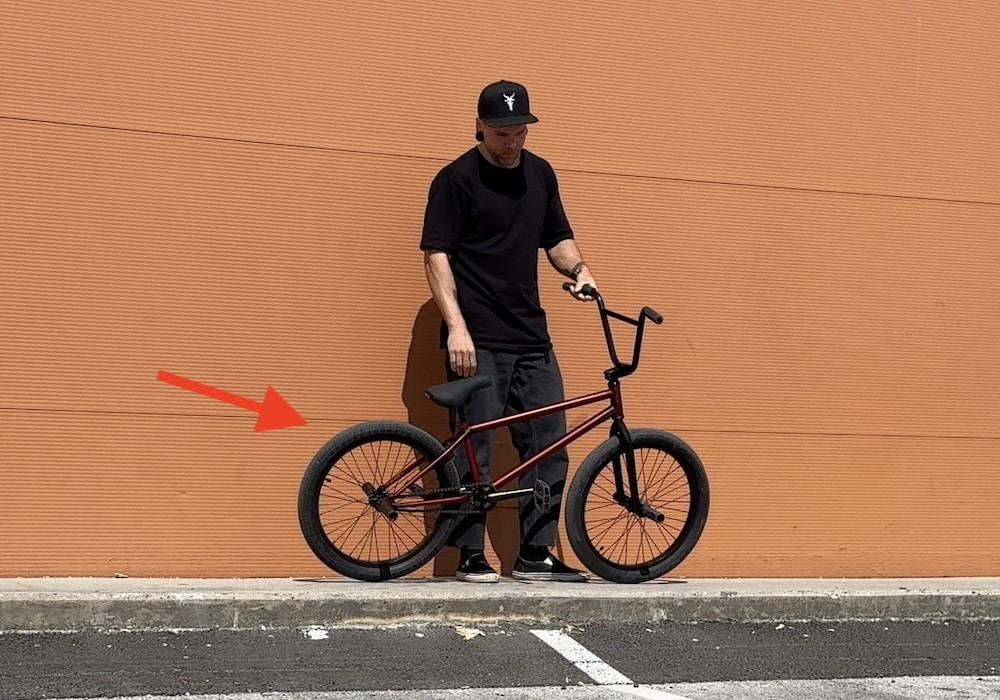
If you have a BMX bike but don’t know its size, the image above shows how to measure the top tube length.
Don’t measure from the seatpost to the bars.
Don’t measure the whole frame.
And don’t include the stem.
BMX top tube length is measured from the center of the seat tube to the center of the head tube.
That’s the number brands use when they say a frame is 20.75”, 21”, 21.25”, and so on.
Sizing Up Or Sizing Down Your BMX Frame
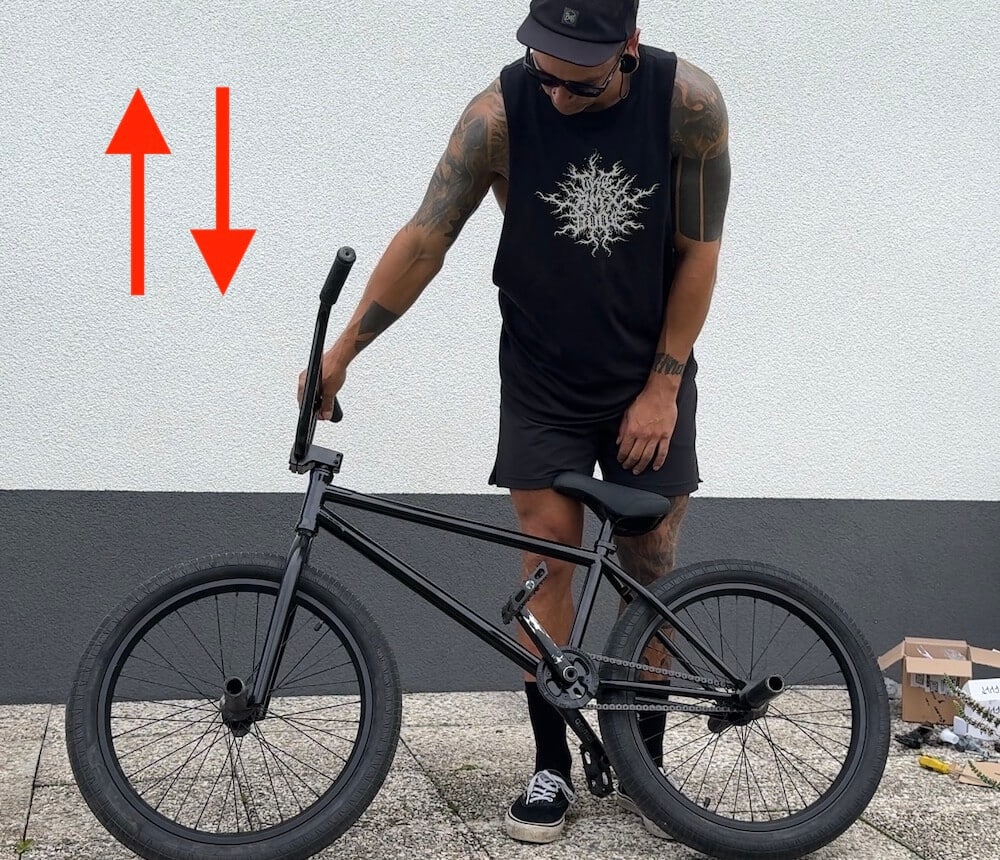
If you’ve analyzed the frame size chart above but you’re right on the edge – what to do?
Should you pick a LONGER or a SHORTER frame?
This really all depends on the riding style you do, but here are my two general recommendations:
- Why sizing up: If you like flow, riding fast and enjoy shredding trails and transitions the most, then going with a frame that’s longer will give you that extra stability that will make you feel safer and more comfortable.
- Why sizing down: If you are into technical street and park riding and you need a responsive and twitchy bike for spins, grinds and all other balancing stunts, then I recommend you go with the shorter frame version.
Remember, while you cannot modify the TT, you can play with the chainstay length to make the bike feel right for you.
Another way of tweaking the bike is by getting a different BMX stem size (shorter/longer) or shorter or longer offset forks (check out my beginner’s guide on BMX fork offset).
Your bar position (forward/backward) also makes the bike feel different. (I ride it slightly forward.)
Yup, there’s a lot of room for optimization for you to find the right frame and build the bike that suits you perfectly.
What If You’re Between Sizes?
If you’re between two BMX frame sizes, don’t stress too much.
A quarter inch can change how the bike feels, but it won’t magically make or break your riding.
Use the BMX frame size chart as a starting point, then think about how you like to ride.
- Go slightly shorter if you want a more responsive bike: A shorter top tube can feel easier to spin, pull up, whip around, and move underneath you. This can be great for tech street, flatland-style control, smaller ramps, and riders who like a quicker-feeling setup.
- Go slightly longer if you want more room and stability: A longer top tube gives you a bit more space between your bars and seat. This can feel better for taller riders, trails, bowls, transitions, manuals, and faster riding where stability matters more than twitchiness.
- Pick the middle if you’re still new: If you don’t know your riding style yet, stay close to the size chart. Don’t go super short because it sounds “tech,” and don’t go super long because a pro rider uses it. Start with the size that fits your height and adjust later.
- Think about comfort, not just tricks: If the bike feels cramped, you may hate riding it even if it spins easier. If it feels too long, it may feel harder to lift, hop, or control. The right size should feel comfortable enough that you want to ride more.
- The rest of the setup also matters: Bar height, stem length, fork offset, crank length, and chainstay length can all change how your BMX feels. So don’t blame everything on the top tube.
My simple advice?
If you’re stuck between two sizes, most riders are usually safer choosing the size that feels slightly more comfortable and stable.
You can always make the bike feel quicker with setup changes (for instance, slamming the rear wheel), but riding a cramped frame can get annoying fast.
What Size BMX Frame Do Pros Ride?
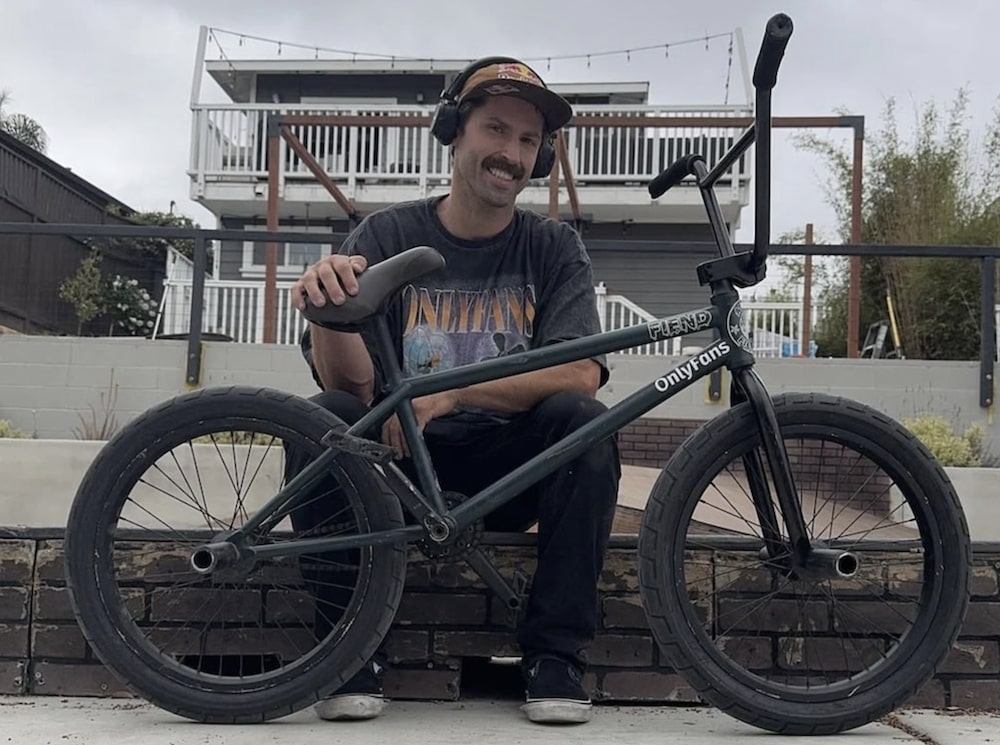
Okay, because so many requested a list of some of the top pros and what frame sizes they ride, here they are.
- Garrett Reynolds (5’7″): 20.75″
- Chad Kerley (5’6″): 20.5″
- Dakota Roche (5’6″): 20.75″
- Kriss Kyle (6’2″): 20.8″
- Reed Stark (6’4″): 21.8″
- Boyd Hilder (6’1″?): 21.2″
- Joe Jarvis (6’3″): 21″
- Broc Raiford (6′): 21.25″
- Brett Silva (6′): 21.25″
- Simone Barraco (6’1″): 21.15″
- Nathan Williams (5’10”): 21.25″
If you’re interested in the bikes pros and ams ride, check my BMX bike checks category.
Also, I created a more extensive list of pro riders’ BMX bike sizes, which you might be interested in checking.
Conclusion: Pick The Right BMX Frame Size
Getting the ideal frame is a very personal thing.
But I’m sure the BMX frame size chart above and this entire guide will HELP you make the right decision.
As a reference, I started riding BMX on a 20.5″ TT frame, but slowly transitioned to a 20.75″, then 21″ (which I rode the longest), 21.25″ and now 21.5″ (which feels THE BEST so far!).
Update: I switched to a 21.5″ Cult Biggie frame, which has the best geometry I’ve tried so far.
In short, if you’re a beginner, picking the frame according to the above recommendations would be your safest bet.
However, if you’re already riding BMX for some time and are looking to try something different, I’d recommend you size up. (This is something you won’t read elsewhere.)
But really, DO YOUR THING! (Who cares what everyone else says.)
Yo! 🤘
FAQs About BMX Frame Size
What size BMX frame do I need?
The right BMX frame size depends mainly on your height and riding style. Most adult freestyle riders usually end up somewhere between 20.5” and 21.25” top tube length. Smaller riders may prefer 20”–20.5”, while taller riders often feel better on 21”+ frames.
What BMX frame size should I ride if I’m 5’11”?
Riders around 5’11” usually feel most comfortable on a 21” to 21.25” top tube frame, depending on riding style.
Is a 21.5” BMX frame too big?
Not necessarily. 21.5” frames are great for taller riders (6ft+), especially if you like stability for flow and trails.
What is the standard BMX frame size?
Most adult BMX riders use frames with 20.5” to 21” top tubes, while younger riders and beginners often start smaller.
How do I know what BMX frame size fits me?
Use your height as the main guide: shorter riders go for 20”–20.5”, average riders 20.75”–21”, and taller riders 21”–21.5”+.
Do taller riders need longer BMX frames?
Yes. A longer top tube gives more room, balance, and comfort for tall riders. It also makes the bike more stable.
Can I ride a smaller BMX frame if I’m tall?
You can, but it will feel cramped and twitchy. Some tall riders prefer smaller frames for tech tricks, but stability suffers.
Does frame size affect tricks?
Yes. Shorter frames make spins and whips easier, while longer frames help with flow, manuals, and stability on bigger ramps.
Is BMX frame size the same as BMX bike size?
Not exactly. BMX frame size usually means top tube length. BMX bike size can also mean wheel size, especially when talking about kids’ BMX bikes, race bikes, 22” BMX bikes, 24” cruisers, or big-wheel BMX bikes.
How do I measure BMX frame size?
BMX frame size is measured by the top tube length. Measure from the center of the seat tube to the center of the head tube.
Should beginners size up or size down?
Most beginners should stay close to the size chart. Don’t go super short because it sounds easier for tricks. And don’t go super long because your favorite rider uses a big frame.
What happens if my BMX frame is too small?
If your BMX frame is too small, the bike may feel cramped, twitchy, and uncomfortable. You might feel too close to the bars, especially when standing up or pulling up.
What happens if my BMX frame is too big?
If your BMX frame is too big, the bike may feel harder to lift, spin, or control. It can feel more stable, but also slower and less responsive.